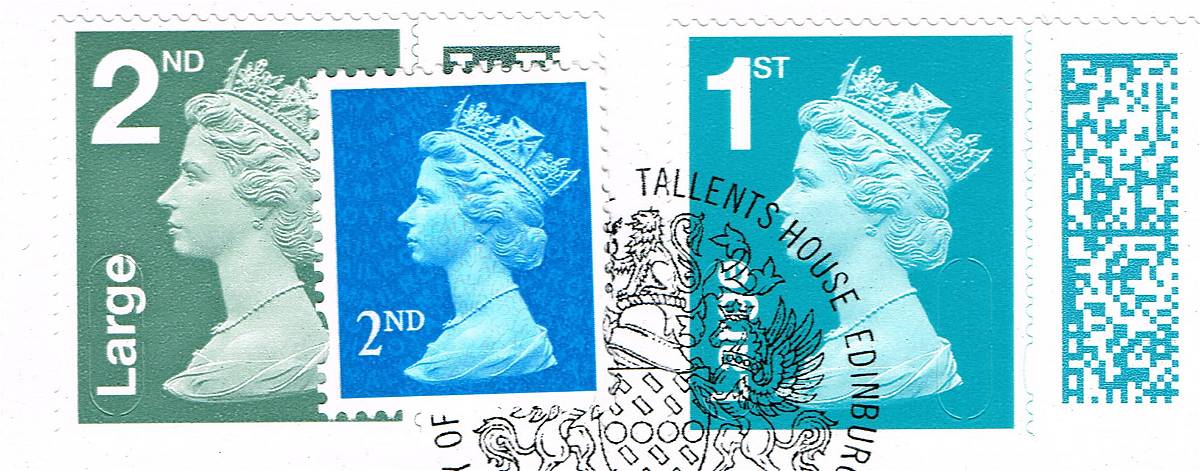
As for the question "How can they suddenly stop people using stamps that have not been previously used (i.e. cashed in)," I think the answer is that the postal machines will effectively cancel out each stamp that passes through them by use of the unique bar code on each stamp. If the stamp arrives with no postmark on it, and you try to reuse it (which you're currently not allowed to do), the reader will see it a second time and recognize it's a used stamp and reject it. But all other unused stamps -- the ones you have that have not yet gone through a postal reader machine -- remain valid for use. And stamps without the barcodes will have to be turned in for new barcoded stamps or they become invalid.
Until they change the system again in some other way, and you have to fill up your suitcases with more old postage stamps and haul them off to the local post office for them to count up to swap for whatever new stamps they come up with. Most likely, that will not be stamps at all, though, but some kind of electronic device -- like a postal meter -- that you "fill up" by purchasing postage and then apply to each letter you plan to mail until it needs refilling again. Maybe an "app" on a cell phone will do this, and a "postal printer" can be built into your phone to allow you to mail a letter? No stamps involved. The impressions from that device could, of course, have bar codes just like these stamps do.
But I honestly don't think they'll get rid of postage stamps entirely since they have a publicity value with countries bragging about their accomplishments, and so on, as well as other benefits that should keep stamps a going concerns for a long time. But governments worried about counterfeit use of stamps could do that, if they wanted to, I suppose. I hope not. In the meantime, if I were holding large amounts of older British stamps I had planned to use for postage, I'd be pretty upset.
And then there's the impact on the value of collections of modern stamps offered for sale. Even though modern stamps are extremely common and therefore have only very low value, one important factor keeping their value up is that modern stamps can always be used for postage. Buying such a collection not for its low catalogue value but for its possible postal value of, say, £1000 keeps that collection's value much higher. Now what is it worth? Much less, I'd say. So hasn't the British postal service just drastically reduced the value of collections of modern British stamps for sale? If you own an extensive collection of 1950-2020 British stamps in mint condition, I think you just lost a good deal of money.
Quote: As for the question "How can they suddenly stop people using stamps that have not been previously used (i.e. cashed in)," I think the answer is that the postal machines will effectively cancel out each stamp that passes through them by use of the unique bar code on each stamp. If the stamp arrives with no postmark on it, and you try to reuse it (which you're currently not allowed to do), the reader will see it a second time and recognize it's a used stamp and reject it. But all other unused stamps -- the ones you have that have not yet gone through a postal reader machine -- remain valid for use. And stamps without the barcodes will have to be turned in for new barcoded stamps or they become invalid.
The ARD (German television) item from a children's TV programme about the first of the German stamps with QR-code can be found here:
YRm9Pr5B12E
From about 10:25, the system is explained. From around 7:45 you can see how the list of valid codes is compiled. It is in German.
It, exactly, is as you describe. The stamps are cancelled to make previous use visible. However, it is to be expected the elimination of valid QR-codes once scanned renders the use of a canceller obsolete.
I suspect that most holdings of post-1970 stamps for postal use consist of commemoratives, which aren't affected by this announcement. It does mean that, when the exchange period for definitives has elapsed, the Machins now counted for face value purposes in sales of collections are likely to lose much of their value. But, as mooted now, it's not comparable with the wholesale loss of value for most countries' stamps when they joined the Euro and older stamps were no longer accepted for postal use.
Also, note the new QR-code stamps do not have the iridescent security overprint with year and source codes.
The stamps have an iridescent security overprint with the year code M22L. So even if you do not collect every QR-code ever issued, you can expect there will be a new stamp every year and, probably, from several sources with the usual source codes. Sheet stamps have no source code.
A lot of people complain about the designs on recent stamps, especially the pop culture topics, but I would much rather have a Bart Simpson stamp on my album page than something with an attractive design marred by an ugly QR code. At least the Royal Mail is making the QR codes look like they're on selvage.
This system only prevents mail bearing counterfeits from passing thru the system. It will not prevent fraudsters from selling counterfeirs and as long as they can do it in a pop-up fashion (operating only for a very short period of time before moving on) they can still get away with it.
"But what happens when they cancel the buyback system?"
I think I either read or inferred from=m something that the buyback system will be in place for 1 year. I just wonder how it will work for those of us outside the UK.
"I also wonder if this will eliminate all those "hidden" marks on so many stamps, the odd perforations, the hidden images, microprinting, color shifts, and other anti-counterfeiting tricks? Why would any of that be necessary anymore?"
One would think so, but the new bar-coded stamps are still going to have the security overlay.
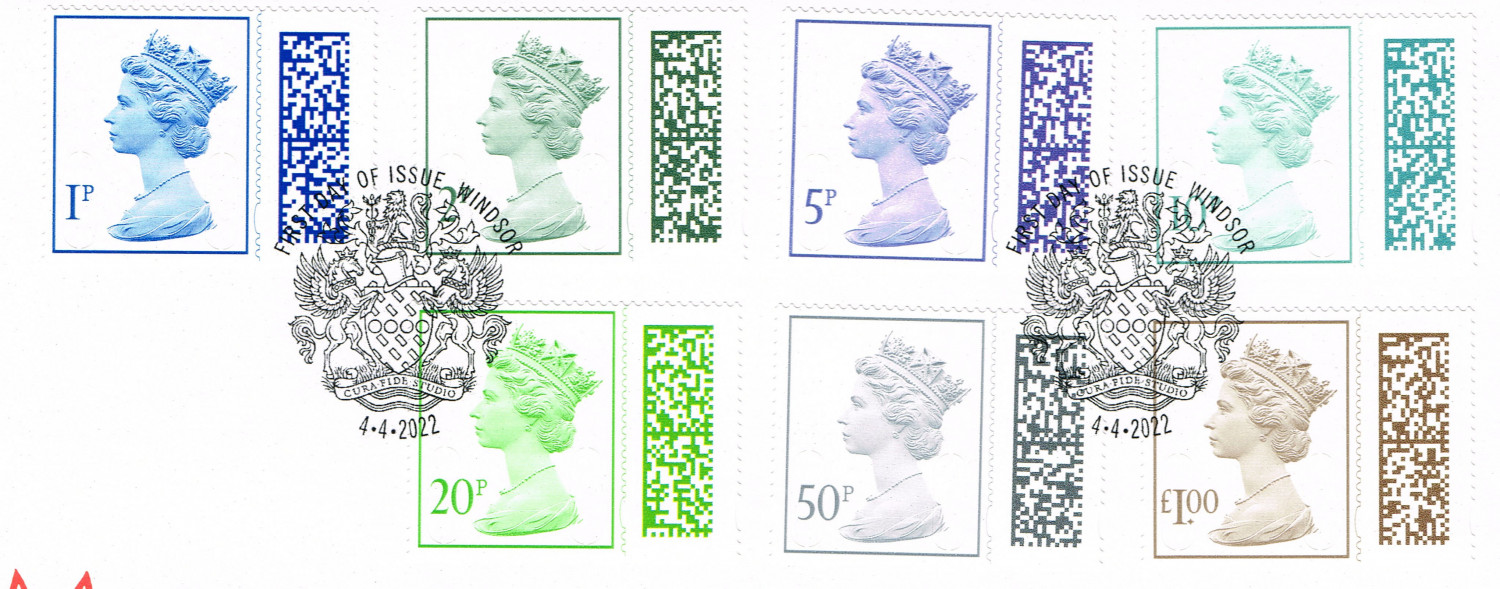
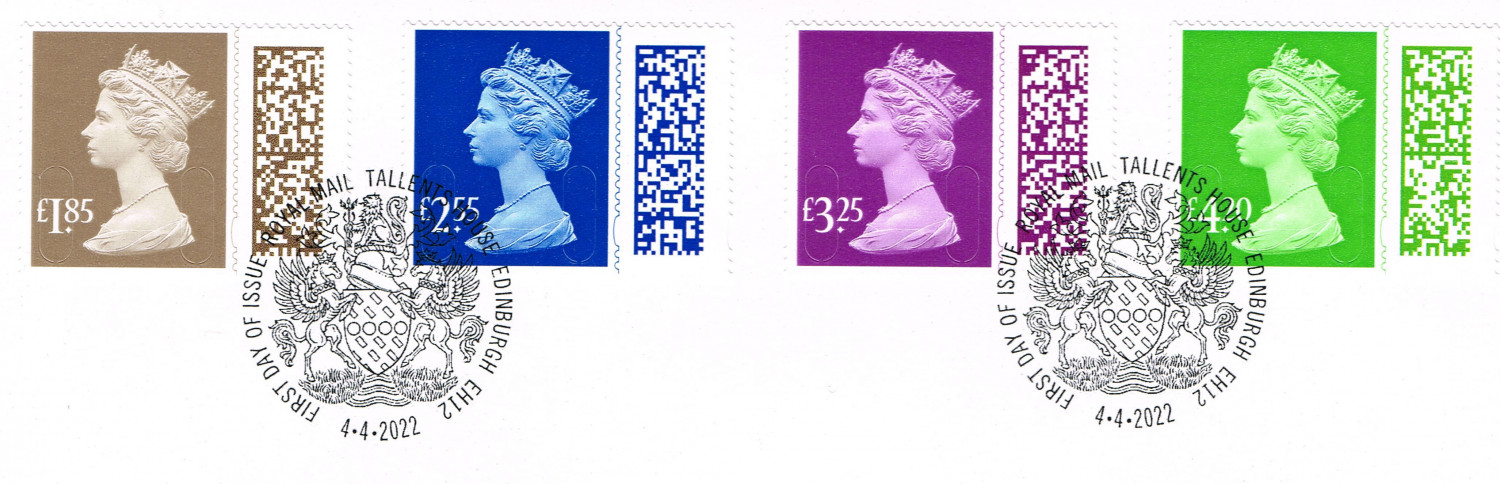
April 4th., saw the issue of the first denominated Machin stamps with the new QR-codes. The low values are now an inverted print. The high values continue to be printed as before. The stamps are much larger than the old Machins. These stamps too have the security overprints you would expect to have become obsolete. Of course, Royal Mail may have chosen to continue using such security features to make forgeries easier to recognise by the general public that would not be able to tell whether or not the QR-code is a valid one.
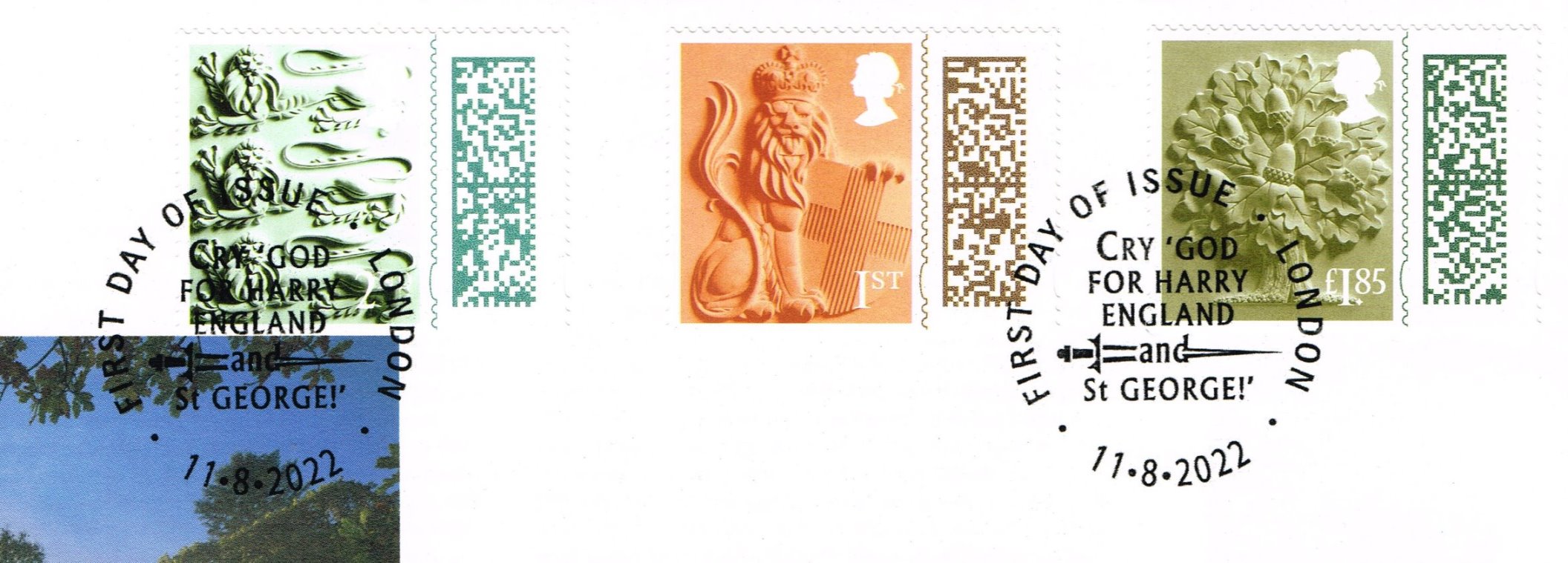
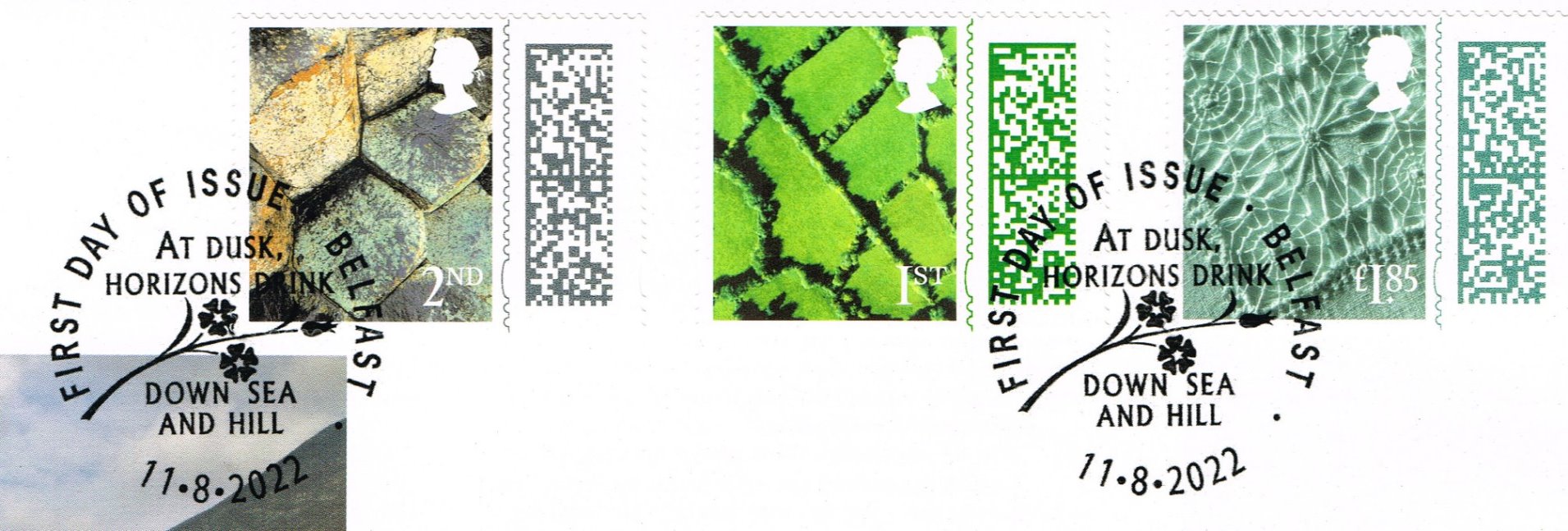
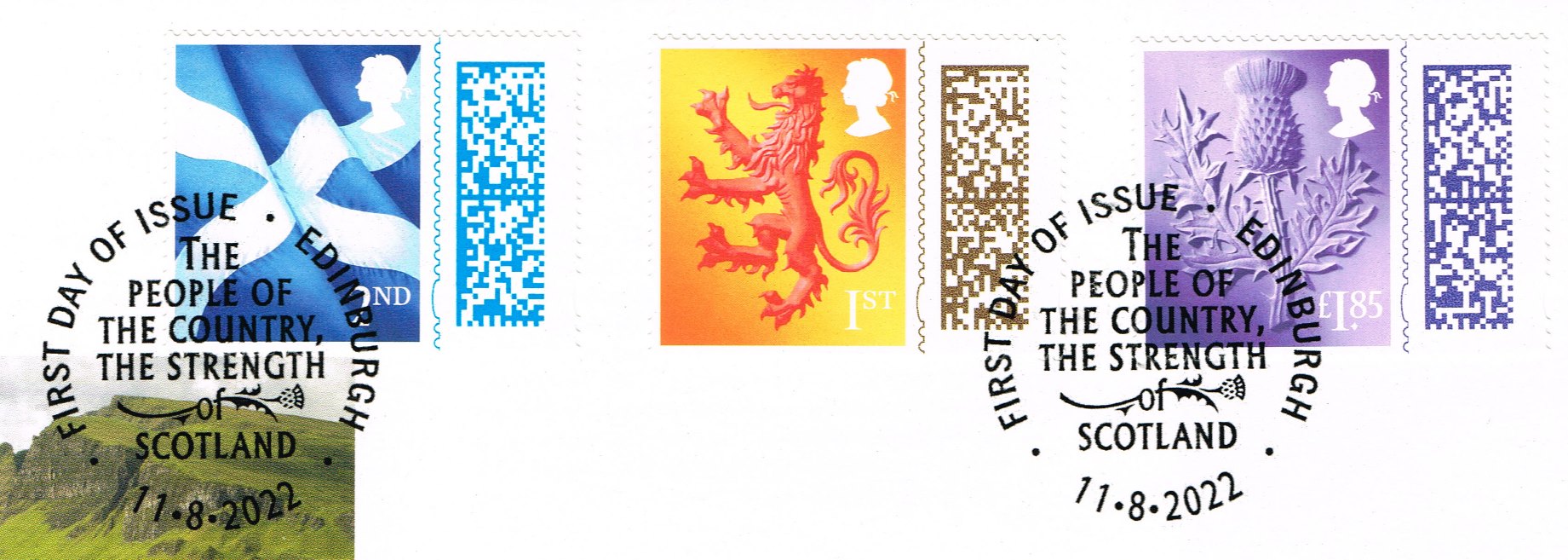
On 11 August 2022, Royal Mail re-issued the 'Country Definitives.' As is the case for the Machins, the new stamps are larger versions of the 'old' stamps and have a white area to the right of the image with a QR-like code. Between the stamp image and the part of the stamp with the digital code appear printed perforation, including the familiar security elliptical perforation. This gives the impression the code is attached to the stamp. The code is printed in one of the process colours of the stamp.
Note the very weak printing of the northeast corner of the stamp image of the second-class stamp. It is not the first time such weak printing occurred in that part of the stamp. This, however, is quite visible. Both my first day envelopes (London and the Philatelic Bureau) show this weak printing. Royal Mail has used specially prepared rolls of stamps for automatic production of first day envelopes. The question arises whether the sheet stamps have the same weak printing.
Disclaimer: While a tremendous amount of effort goes into ensuring the accuracy of the information contained in this site, Stamp Community assumes no liability for errors. Copyright 2005 - 2026 Stamp Community Family - All rights reserved worldwide. Use of any images or content on this website without prior written permission of Stamp Community or the original lender is strictly prohibited. Privacy Policy / Terms of UseAdvertise Here





 Posted 02/01/2022 11:40 pm