| Author |
 Replies: 21 / Views: 1,667 Replies: 21 / Views: 1,667 |
|
Pillar Of The Community
Australia
2156 Posts |
|
|
|
Does anyone know how to distinguish between the chalk-surfaced issue (ACSC 193) and the unsurfaced paper issue (ACSC 194)?
I read somewhere that you can use a silver coin to strike the paper, but that, if the paper is unsurfaced, this will leave a mark. This would seem most undesirable for a stamp!
Any suggestions would be greatly appreciated!
|
|
Send note to Staff
|
|
|
|
|
Bedrock Of The Community
Australia
38679 Posts |
|
|
Pillar Of The Community
Australia
4034 Posts |
|
|
Pillar Of The Community
Australia
2156 Posts |
|
|
It surprises me that so many catalogues identify chalky paper issues specifically, but without giving any guidance as to how to recognise them. I've always assumed they looked glossier, but that was about it. |
Send note to Staff 
|
|
|
Pillar Of The Community
Netherlands
6647 Posts |
|
|
Chalky paper covers a wide range of paper types. A general guidance might not be useful. But indeed, it is surprising catalogues often fail to give guidance on how to distinguish between listed paper varieties. This, however, also happens where luminescence in all its appearances is concerned. |
|
Send note to Staff
|
|
|
Bedrock Of The Community
Australia
38679 Posts |
|
|
I have read the silver solution, is a furphy,
main way to identify, is under magnification, and a pitted surface.
|
|
Send note to Staff
|
|
|
Pillar Of The Community
Australia
2156 Posts |
|
|
Oh, that's a relief!
I'll trying scanning the stamps in question at high resolution. Do you mean that the chalk-surfaced stamps have a pitted surface? |
|
Send note to Staff
|
|
|
Pillar Of The Community
United Kingdom
8636 Posts |
|
|
You should also find that the clarity of impression is greater with a chalk-surfaced than an uncoated stamp. |
|
Send note to Staff
|
|
|
Pillar Of The Community
United States
775 Posts |
|
|
Bedrock Of The Community
Australia
38679 Posts |
|
|
Quote:
Do you mean that the chalk-surfaced stamps have a pitted surface? That's what the gist of the article maintained. You are able to see the uneveness in finish of the chalk. The Author was of some note, if I recall crorrectly. Not confirmed by myself, as yet. My Database search both at home, and on this forum, failed, it was just a week or so ago, I typed something like "another opinion of the old chestnut..chalky paper" Try this discussion https://goscf.com/t/68174 br / |
|
Send note to Staff
|
| Edited by rod222 - 03/18/2022 09:09 am |
|
|
Pillar Of The Community
Australia
1692 Posts |
|
|
The worse way to determine a stamp's paper type is to rub a silver coin or silver solder anywhere on the stamp, it will destroy the stamp, doing so can scratch the paper or even damage the delicate fibres of the stamp paper. The easiest way to tell between chalk surfaced and unsurfaced paper is the sharpness of the design and the absorbedness of the ink into the paper, unsurfaced paper will absorb more ink giving the image a less appealing appearance. Below are the two 3d KGVI stamps mentioned, notice the difference of ink quality, the ACSC 193 is less absorbent than the ACSC 194, also notice the wattles at right of the unsurfaced paper showing a 'white wattles' appearance compared to the sharper details of the wattles of the chalk-surfaced paper. Both stamps were magnified by a microscope.
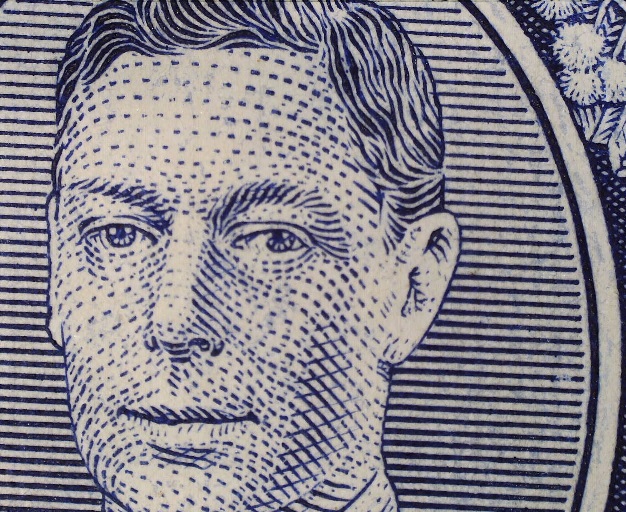
Chalk-Surfaced paper (ACSC 193)
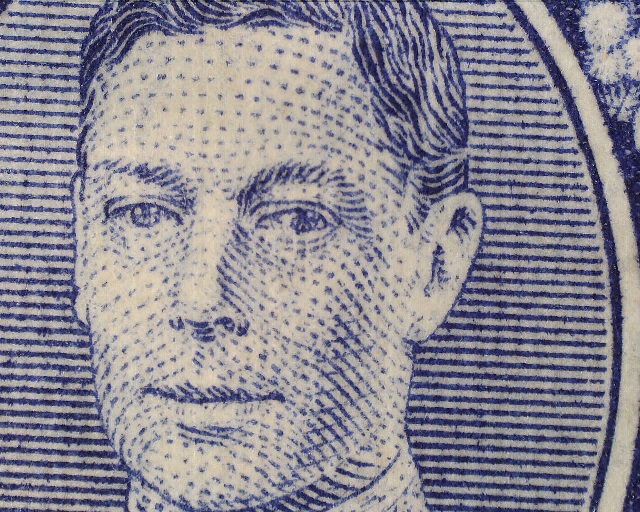
Unsurfaced paper (ACSC 194) |
|
Send note to Staff
|
| Edited by Rob041256 - 03/18/2022 10:48 am |
|
|
Pillar Of The Community
Australia
2156 Posts |
|
|
Thanks so much everyone for the responses. BTW the examples I'm concerned about are on cover, so have not been washed. Based on what I've read so far, I think this is the unsurfaced paper variety. Please let me know if you agree/disagree. 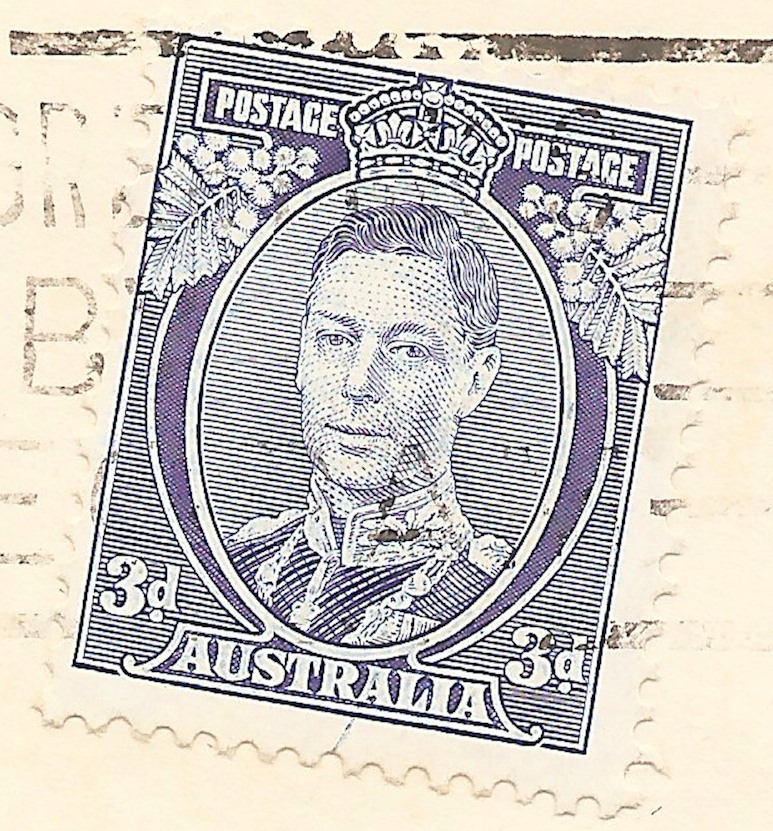 This is the other copy I have on cover, but I'm not as confident about this one. It concerns me that the top of the crown is not level, even though it does not appear to be Die I. 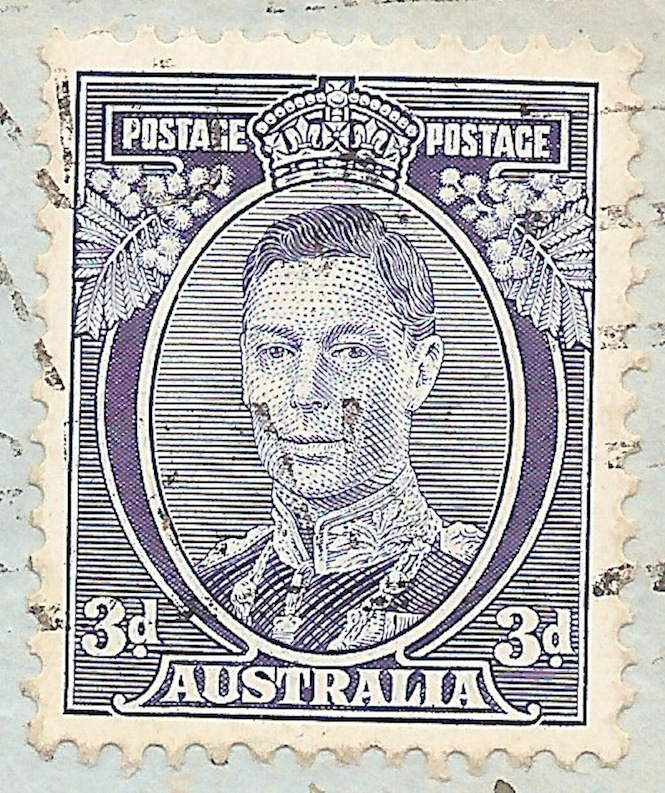 |
|
Send note to Staff
|
| Edited by jimjamtwo - 03/18/2022 6:37 pm |
|
|
Pillar Of The Community
Australia
1692 Posts |
|
|
Pillar Of The Community
Australia
2156 Posts |
|
|
This is my conclusion, Rob. Another point I would add is that the shading lines behind the portrait on the bottom stamp are very straight, but the ones on the upper stamp are a little squiggly, if that's a word.
You can see the same difference in the two examples you posted. |
|
Send note to Staff
|
|
|
Pillar Of The Community
Canada
879 Posts |
|
|
I suspect the squiggly lines in the top image are because the the stamp has been scanned at quite an angle, making pixelization more obvious. Try scanning it more upright and/or at a higher resolution. |
|
Send note to Staff
|
|
|
Pillar Of The Community
Australia
2156 Posts |
|
|
itma, the difference between the shading lines is not an artefact of the scanning process, but can also be discerned with a magnifying glass.
It's very apparent on Rob's scans as well, and they are far superior to mine. |
|
Send note to Staff
|
| Edited by jimjamtwo - 03/19/2022 5:49 pm |
|
|
Replies: 21 / Views: 1,667 |
|




 Posted 03/17/2022 8:41 pm


