| Author |
 Replies: 63 / Views: 4,988 Replies: 63 / Views: 4,988 |
|
|
|
Pillar Of The Community
Australia
937 Posts |
|
|
That's a terrific collection, 64idgaf, and beautifully presented.
Thank you for sharing it here.
Is the goal to collect them all on the penny reds? I'm wondering if you have the missing postmarks but on other stamps. |
Send note to Staff 
|
https://www.fairdinkumstamps.com Fair Dinkum Stamps - Specialising in stamps from early Australia and the colonies, Australian philatelic literature, catalogues, stockbooks and accessories. |
|
|
Bedrock Of The Community
Australia
38679 Posts |
|
|
Pillar Of The Community
Australia
980 Posts |
|
|
Quote:
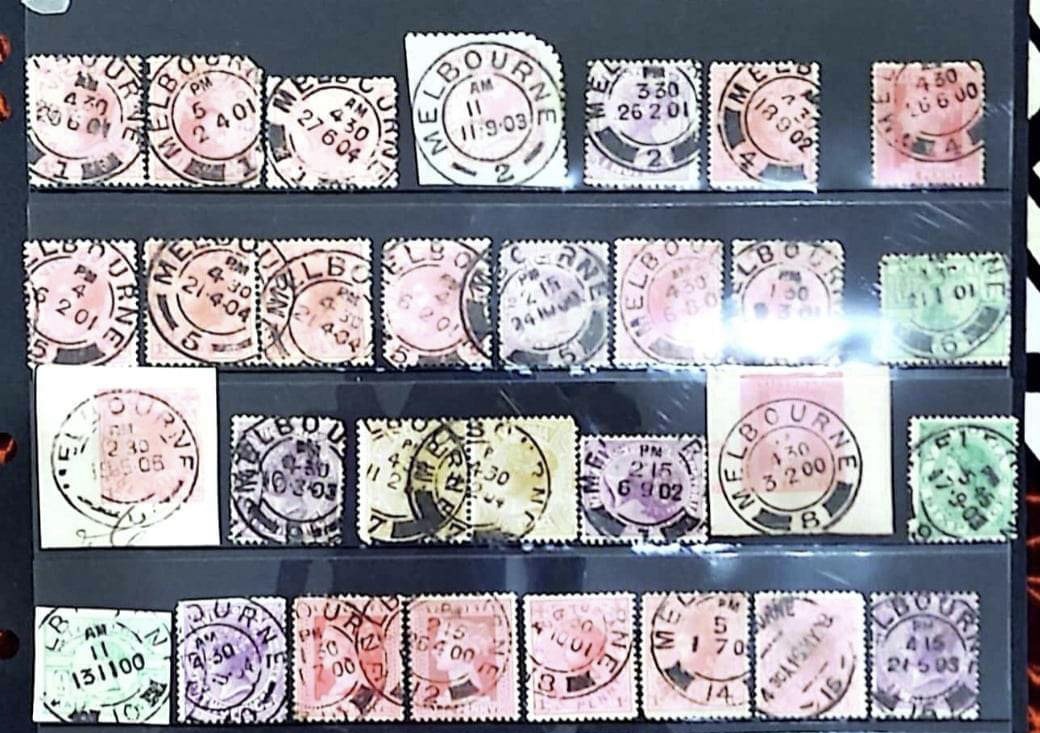
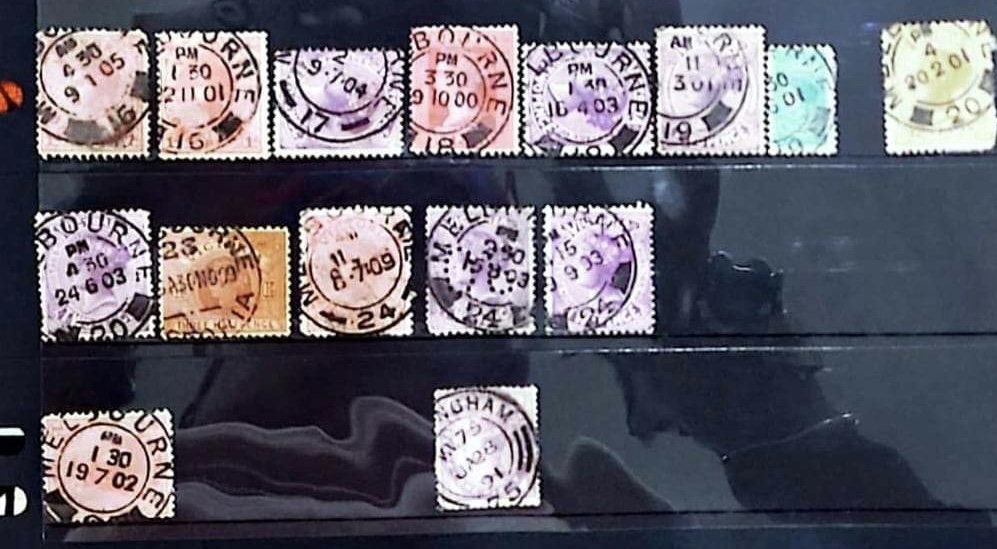
Is the goal to collect them all on the penny reds? I'm wondering if you have the missing postmarks but on other stamps. Not particularly, I purchased an accumulation of penny reds and sourced the cancels from that group. I am in the process of writing up the various time codes for each hammer number, a significant task, for sure. I'm collecting the cancels, not the stamps beneath. Linfield and Davies mentions that lower value stamps to 2½d are more likely to have the early times in the day, values over 3d are seldom seen with the early time codes. It is a rich and fascinating area of study, what you see was put together for under $100 (the price of the original accumulation). |
|
Send note to Staff
|
|
|
Pillar Of The Community
United States
7115 Posts |
|
|
Pillar Of The Community
Australia
937 Posts |
|
|
64idgaf, I can't find examples of the second types for thick arcs 1 and 2 but here are some examples of the other ones missing from your collection: 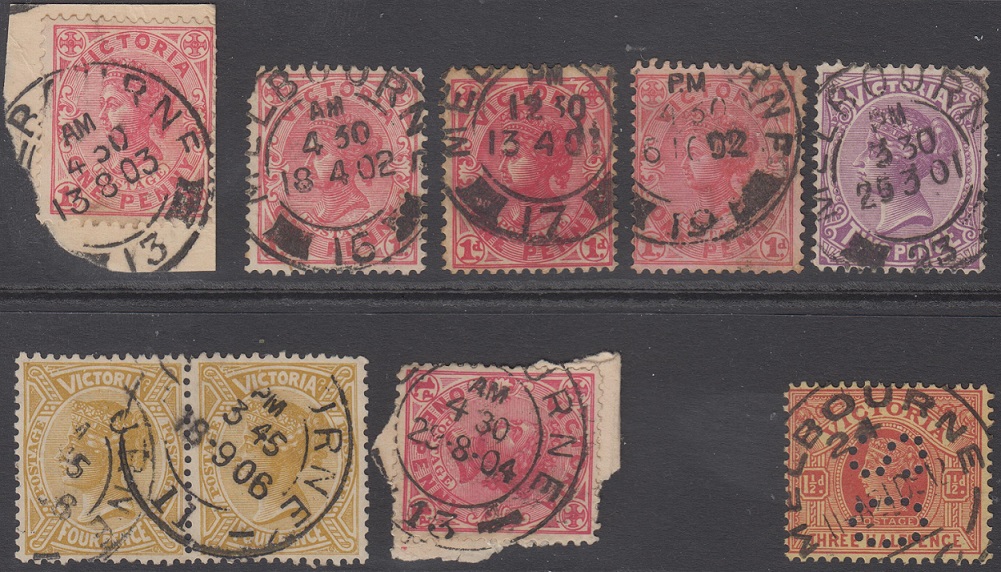 |
|
Send note to Staff
|
https://www.fairdinkumstamps.com Fair Dinkum Stamps - Specialising in stamps from early Australia and the colonies, Australian philatelic literature, catalogues, stockbooks and accessories. |
|
|
Pillar Of The Community
Australia
980 Posts |
|
|
FDS,
are these for sale? I have filled a couple of gaps since the pages were scanned but I could use a few of those pictured.
Hope you don't mind me asking.
John |
|
Send note to Staff
|
|
|
Pillar Of The Community
Australia
980 Posts |
|
|
The times codes on Melbourne cds cancellations prior to Federation are represented by letter as follows:
The first Time Code
"Post Office Notice February 1855
Letters posted in the GPO bear a distinguishing time stamp, by which hour such letters are posted can be traced.
Letters posted between
5.45pm and 9.45 am bear letter A
9.45am and 11.45 am bear letter B
11.45am and 12.45 pm bear letter C
12.45pm and 2.45 pm bear letter D
2.45pm and 3.45 pm bear letter E
3.45pm and 5.45 pm bear letter H"
The second time code was introduced in July 1861 until 1899
"A: from 6pm to 7.30am (except English mails which are stamped in the evening with a Z)
D: 7.30 am 10am
H: 10am to 10.45am
K: 10.45am to 11.30am
L: 11.30am to 12noon
O: 12noon to 12.30pm
S: 12.30pm to 1.00pm
T: 1pm to 2.30pm
V: 2.30pm to 3.30pm
X: 3.30pm to 4.30pm
Y: 4.30pm to 5.30pm
Z: 5.30pm to 6pm."
Code 'B' was introduced in 1873 for 6.30am to 7.30am but was "extremely rare"
Code 'F' from 1880-1899, time period unknown
Code 'P' 1898-1899, time period unknown
I have seen a suggestion that the same pattern was adopted for other towns such as Geelong and Ballarat but I have not seen a full range of letters to match the Melbourne ones. |
|
Send note to Staff
|
|
|
Pillar Of The Community
Australia
915 Posts |
|
|
Bedrock Of The Community
Australia
38679 Posts |
|
|
Quote:
The times codes on Melbourne cds cancellations prior to Federation are represented by letter as follows:
Thanks John. Saved -------------------------------- Regards the following I still feel my advice was correct The postmark being Hamilton, not Melbourne Or, do we have information time codes were used on ALL Victorian hand cancellers? Comments? 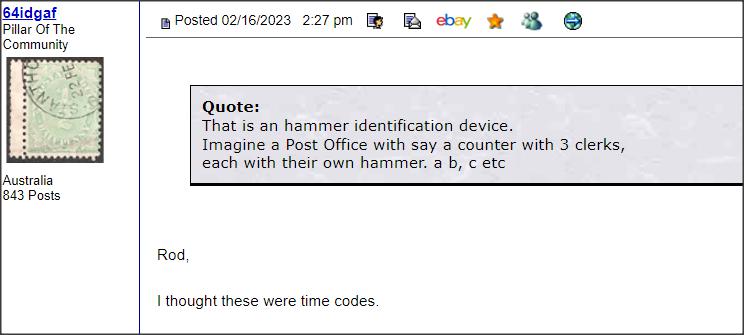 |
|
Send note to Staff
|
| Edited by rod222 - 02/18/2023 4:10 pm |
|
|
Pillar Of The Community
Australia
937 Posts |
|
|
64idgaf, they are not for sale at the moment - maybe at a later date.
Pshann, sorting coming along nicely.
The thick arcs and thin arcs (either side of the canceller number) are best sorted separately as they are two different types. i.e. thick arcs in order first then your collection of thin arcs.
Rod222, I haven't read anything about the plugs on other offices (only a vague recollection that similar time codes were used at other offices) but there must be some information out there somewhere! 'The Post Offices and Hand-held Datestamps of Victoria' by Watson, Webster and Wood (1992) probably has the relevant information but I don't have a copy. |
|
Send note to Staff
|
https://www.fairdinkumstamps.com Fair Dinkum Stamps - Specialising in stamps from early Australia and the colonies, Australian philatelic literature, catalogues, stockbooks and accessories. |
| Edited by fairdinkumstamps - 02/18/2023 5:41 pm |
|
|
Pillar Of The Community
Australia
915 Posts |
|
|
Pillar Of The Community
Australia
980 Posts |
|
|
Quote:
Rod222, I haven't read anything about the plugs on other offices (only a vague recollection that similar time codes were used at other offices) but there must be some information out there somewhere! 'The Post Offices and Hand-held Datestamps of Victoria' by Watson, Webster and Wood (1992) probably has the relevant information but I don't have a copy. Watson, Webster and Wood do list the codes seen but do not allocate these to times of the day. |
|
Send note to Staff
|
|
|
Bedrock Of The Community
Australia
38679 Posts |
|
|
Fairdinkumstamps, currently perusing WW and W With such a monumental work, it is hard to criticise, but it appears to lack both a decent Index and any sort of Acronym legend. (SDL and LDL)  Still searching for the time codes Here is their commentary on "Datestamp" Types, which you may find interesting (page not numbered) (Volume 1) 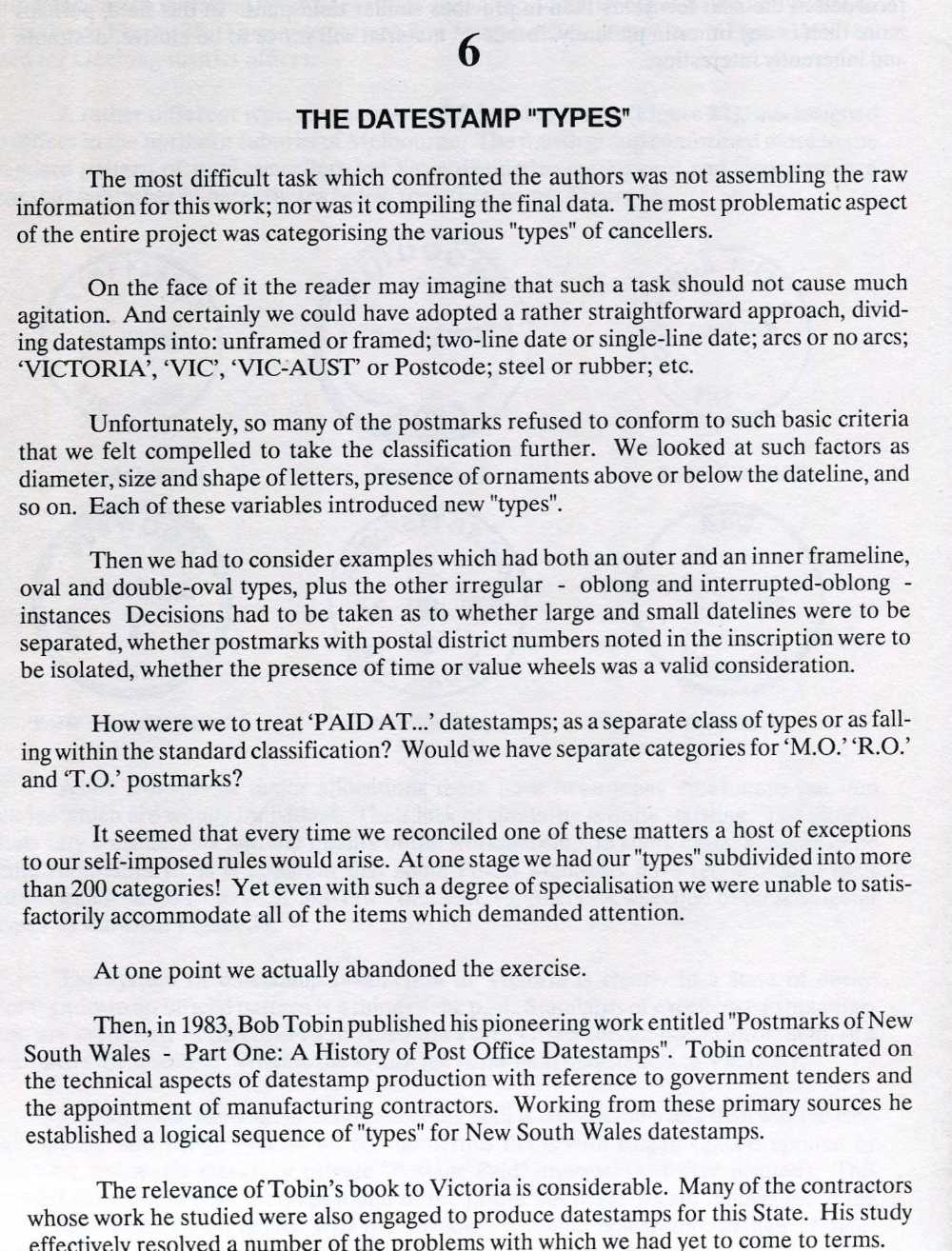  |
|
Send note to Staff
|
| Edited by rod222 - 02/18/2023 7:49 pm |
|
|
Bedrock Of The Community
Australia
38679 Posts |
|
|
Another MELBOURNE duplex image 1883 Bib: Watson Webster and Wood (Volume 2) Page 4 Under "A major new find" ISBN07316 7593 2 (set) 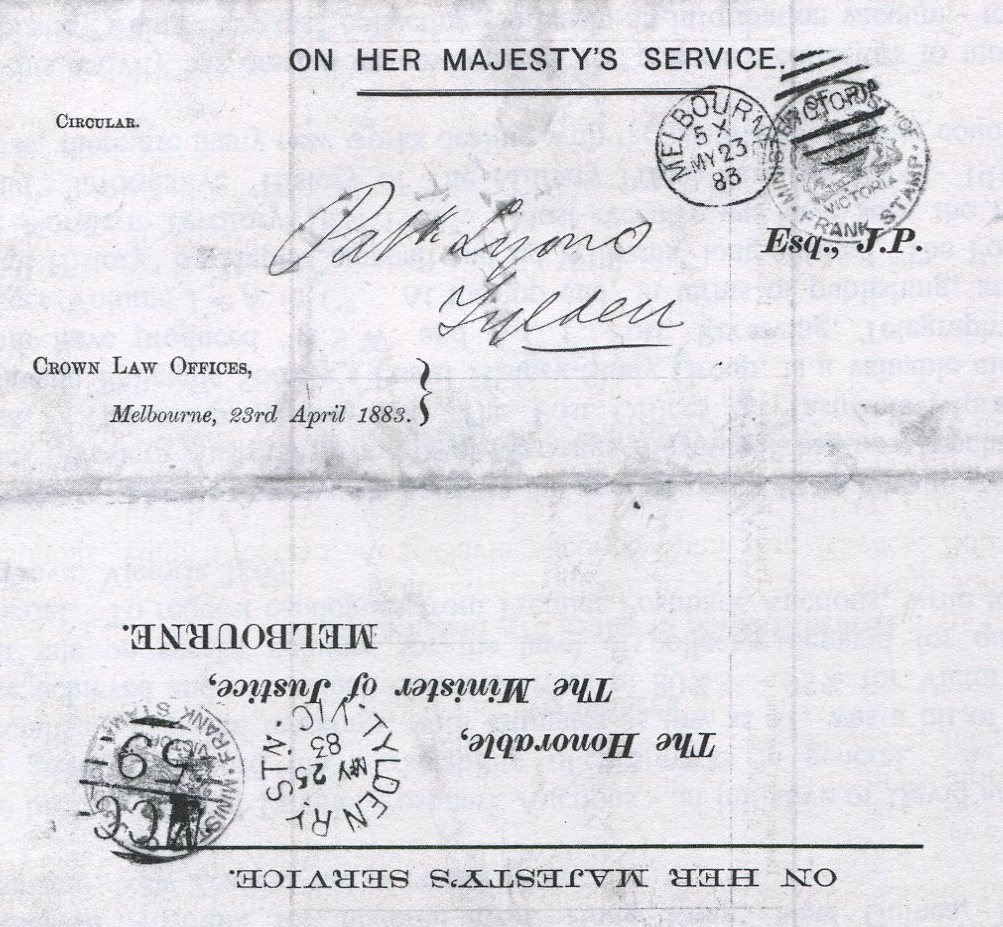 |
|
Send note to Staff
|
|
|
Pillar Of The Community
Australia
937 Posts |
|
|
Thanks Rod222 - interesting to read of the logistical difficulties. The LDL and SDL that you wonder about are in the fourth paragraph of that excerpt, i.e. Large Date Line and Small Date Line. These images of Clermont's LDL and SDL are from the Queensland publication, available from the Toowoomba Stamp Club's website: https://www.toowoombastampclub.org/images/qsd2.pdf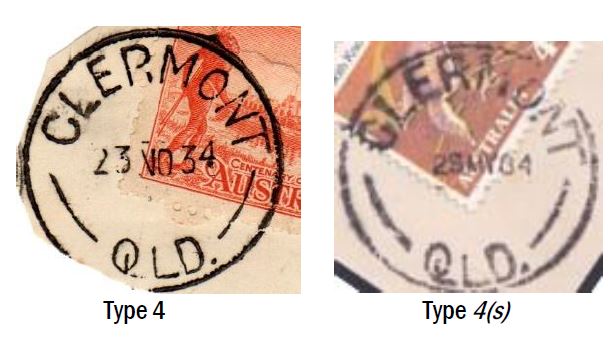 |
|
Send note to Staff
|
https://www.fairdinkumstamps.com Fair Dinkum Stamps - Specialising in stamps from early Australia and the colonies, Australian philatelic literature, catalogues, stockbooks and accessories. |
| Edited by fairdinkumstamps - 02/18/2023 9:42 pm |
|
|
Replies: 63 / Views: 4,988 |
|




 Posted 02/17/2023 7:07 pm