| Author |
 Replies: 20 / Views: 3,409 Replies: 20 / Views: 3,409 |
|
Pillar Of The Community
United States
936 Posts |
|
|
I got this modern counterfeit of Scott #5790a with a shifted perforation:  Here is a "normal" counterfeit:  the two booklets side by side: 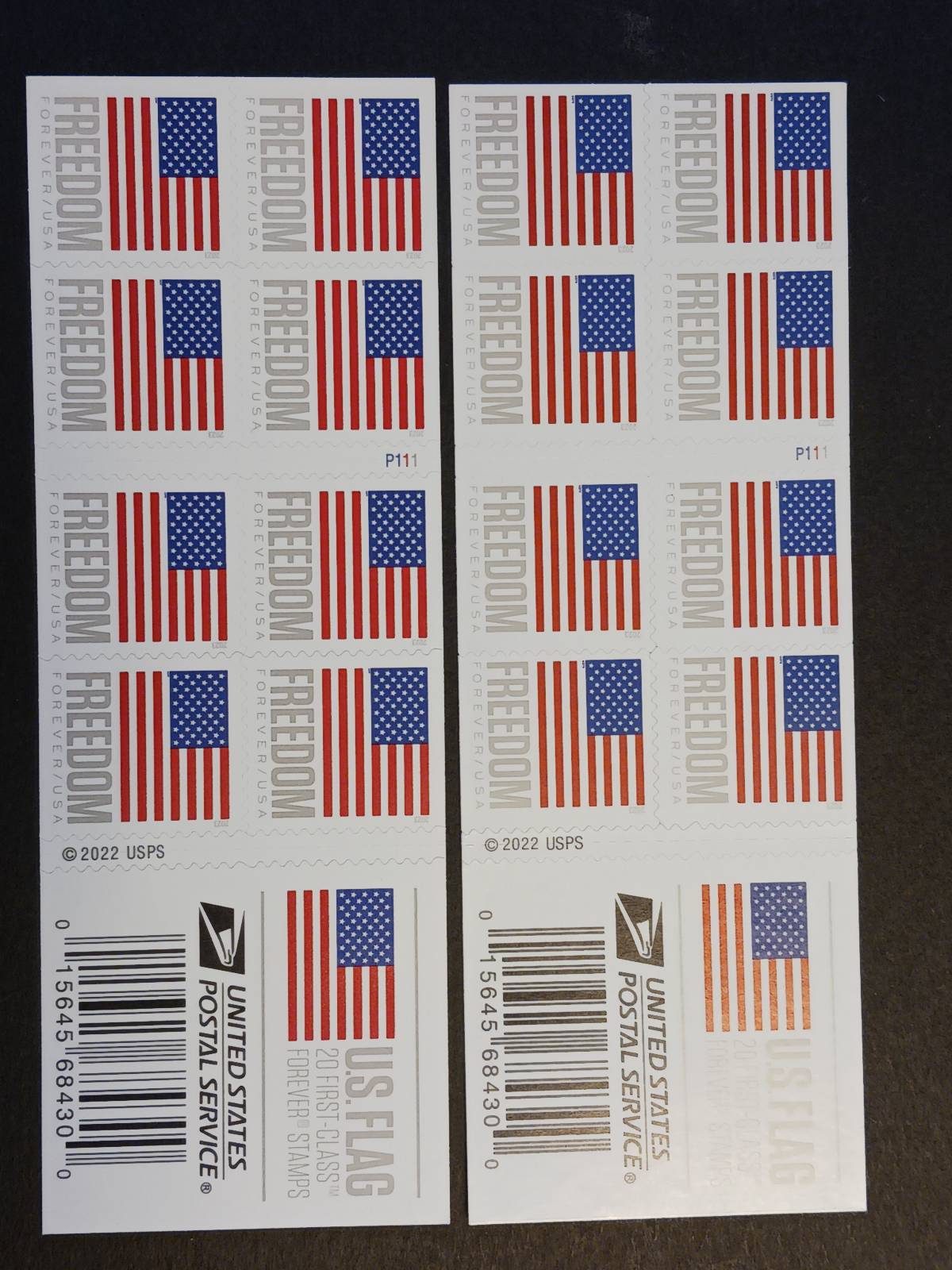 I found the same shifted perf pattern on a counterfeit of Scott #4641-4: 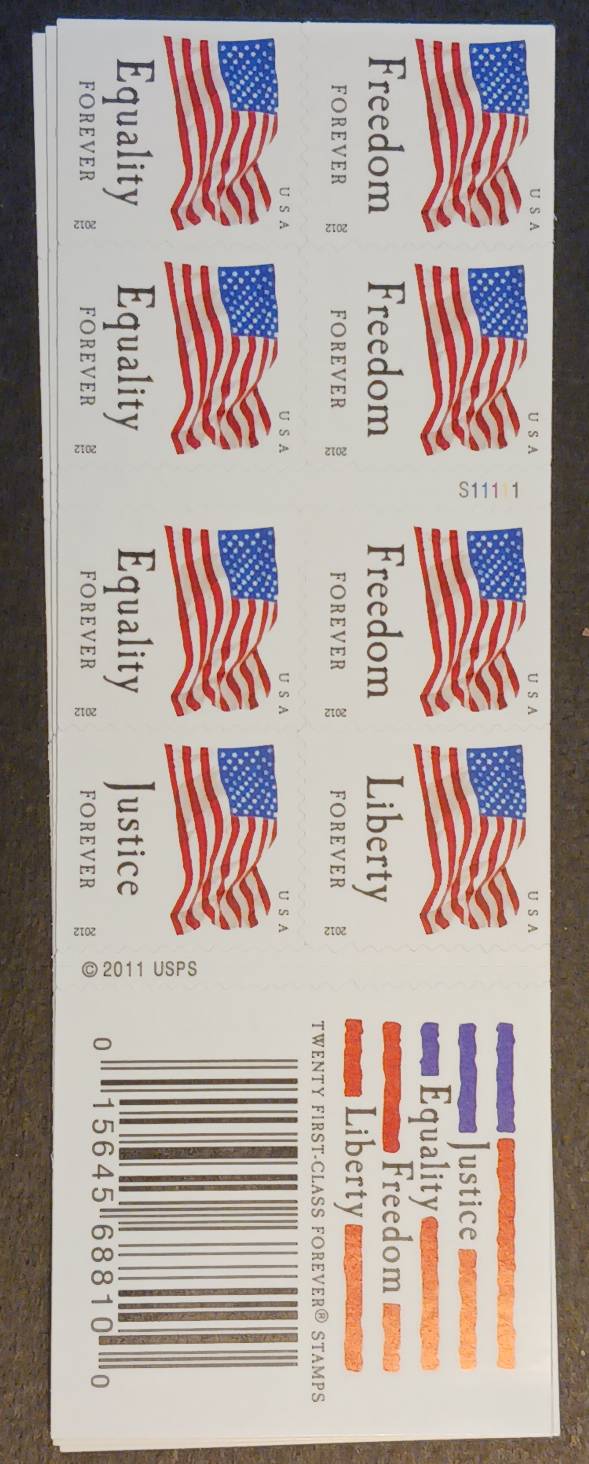 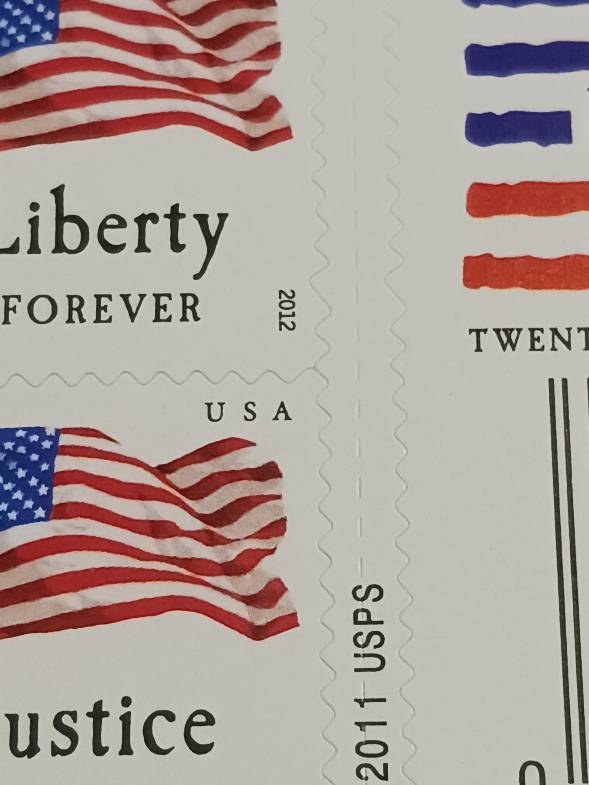 But have not seen a "normal" perf on this counterfeit. So I am not sure if this counts as an "error", or simply the only way this counterfeit was issued. |
|
Send note to Staff
|
|
|
|
|
Pillar Of The Community
Canada
1648 Posts |
|
|
Things like this have been found in Canadian issues, called ski slope. It is caused by faulty die cutting mat.
In my opinion- In the picture of two side by sise- If you look closly at the 3 perfs below it, you will notice the roundness of them is not consistent, smaller, or even pointed in the case of the 3rd perf down from the slope. Did the extra takeup used on the makeup of the cutting mat on those 3 perfs account for the lenghtening of the "ski slope" causing the irregularity? |
Send note to Staff 
|
| Edited by No1philatelist - 08/26/2023 9:44 pm |
|
|
Bedrock Of The Community
12743 Posts |
|
|
Not sure why people are treating these Chinese fakes as philatelic items. It just serves to give them more legitimacy than they deserve. They are costing the postal service millions of dollars and cheating good people in the process. We end up paying higher rates to compensate. They should go in the burn pile. And shame on Scott for publishing a catalog dedicated to this. |
|
Send note to Staff
|
|
|
Pillar Of The Community
United States
936 Posts |
|
|
Not sure why people are treating these Chinese fakes as philatelic items. The same reason people collect other Cinderellas (Christmas seals, Philatelic Expo stamps, etc.): because they tell a story that collectors find interesting. |
|
Send note to Staff
|
|
|
Bedrock Of The Community
12743 Posts |
|
|
They are NOT Cinderella's. Xmas seals and philatelic expo stamps were not created to defraud the postal service. That is a ridiculous comparison. |
|
Send note to Staff
|
|
|
Valued Member
United States
126 Posts |
|
|
Most likely collected in the name of information education history and curiosity? Many see banning these ideas as counter productive! |
|
Send note to Staff
|
|
|
Bedrock Of The Community
United States
10855 Posts |
|
|
Counterfeiting stamps is almost as old as stamps themselves. There were counterfeit revenues during the Civil War period, for example. And the 1890's era postal counterfeits. Studying them is also an old part of the hobby. The big difference here is that we are talking about large scale counterfeits of every new issue, so they are current and readily available, not historical counterfeits of small quantities. Still, they do have a story to tell; feeding the hand that is biting you is a decision each must make for themselves. |
|
Send note to Staff
|
|
|
Pillar Of The Community

United States
1144 Posts |
|
|
Quote:
And shame on Scott for publishing a catalog dedicated to this. I think it is a useful informational tool to have a competent authority providing a catalog of identifying features of the genuine items and the fakes. However the catalog should not glorify the modern fakes with high prices that would create a market for them. Mint or used, I think the CV should be between 10% and 50% of face. The classic fakes (pre-1980) do seem popular, as are Sperati forgeries, but the modern counterfeits are worse than CTO wallpaper and should be discouraged from collecting. |
|
Send note to Staff
|
|
|
Bedrock Of The Community
12743 Posts |
|
|
Quote:
I think the CV should be between 10% and 50% of face The irony is there would not be a catalog dedicated to them if they were not assigned high relative catalog values. The chicken or the egg thing. |
|
Send note to Staff
|
|
|
Moderator
United States
12330 Posts |
|
|
In my opinion, these are not forgeries; they are counterfeits which I think is the commonly accepted terminology here in the US.
I think that noting counterfeits in a catalog is appropriate (for educational/historical purposes) but applying catalog numbers/values crosses the line into making them a collectible and ultimately supporting illegal activities.
Don |
|
Send note to Staff
|
|
|
Bedrock Of The Community
United States
10855 Posts |
|
|
Quote:
I think that noting counterfeits in a catalog is appropriate (for educational/historical purposes) but applying catalog numbers/values crosses the line into making them a collectible and ultimately supporting illegal activities. Since the genuine stamps have catalog numbers, the counterfeits having a number is pretty much automatic. However I agree about having values. |
|
Send note to Staff
|
|
|
Bedrock Of The Community
12743 Posts |
|
|
How about they get no catalog number and no catalog value and if you want to "collect" them then have at it. |
|
Send note to Staff
|
|
|
Bedrock Of The Community
United States
10855 Posts |
|
|
How about "that is never going to happen". They are counterfeits of genuine stamps, so they are going to get numbered as XXXXCFT. People can complain all they want, but Scott has never listened much before. (And no, I do not collect them and have no intention of ever starting). |
|
Send note to Staff
|
|
|
Pillar Of The Community
United States
936 Posts |
|
|
It really does not matter if we like the massive counterfeiting that is currently going on. It is going on, and those stamps are getting mixed into our world. I've gotten them on letters. I've heard of them being sold to dealers as discount postage. I'm sure many collections are getting them mixed in inadvertently.
It is not just current stamps, I just got some modern reprints of Scott # 3259, 1998 Postal Card Rate - Uncle Sam; Scott #3661-64 American Bats. Who knows why they are counterfeiting 37 cent stamps???
These modern counterfeits are really good. They are tagged, the perfs are pretty close to the originals, and the images are really close. I can't tell them apart from the real ones without having reference examples to compare them to. The differences now amount to different graininess upon magnification and slightly different colors.
There are many practical reason to be documenting what is going on:
If you are buying stamps on the secondary market, how can you be sure you are not buying a counterfeit?
Without a central listing of what has been counterfeited, how do you know which ones to be suspicious of?
|
|
Send note to Staff
|
|
|
Bedrock Of The Community
United States
10855 Posts |
|
|
The die cutting is often a way to tell the counterfeits, they don't seem to get that right yet. |
|
Send note to Staff
|
|
|
Bedrock Of The Community
12743 Posts |
|
|
Quote:
Without a central listing of what has been counterfeited, how do you know which ones to be suspicious of? And who has this central listing and how does the general public know it exists? Does everyone buying stamps stop and look at "the central listing" before they pay? Is the central listing up to date? Look, I get it. But let's be real. We can come up with all types of justifications for bringing these Chinese fakes into the mainstream of the hobby, but it doesn't change what they are or what the intent is in creating them. IMO if anybody has a responsibility to educate the public it is the USPS and they have done an abysmal job. They waited until the problem was truly out of control and now warn people about the problem. Warn people?! How does the average consumer know that these are fake. Try finding one detailed press release from the USPS that clues people in as to what to look for. And even that would be next to useless because the fakers are continuously upping their game. The entire thing is ludicrous. What needs to happen, as with Fentanyl, is for the very tippy-top of our government needs to let China know that this is unacceptable and then enforce actual consequences. For some reason that never happens. |
|
Send note to Staff
|
|
|
Replies: 20 / Views: 3,409 |
|




 Posted 08/26/2023 6:36 pm


