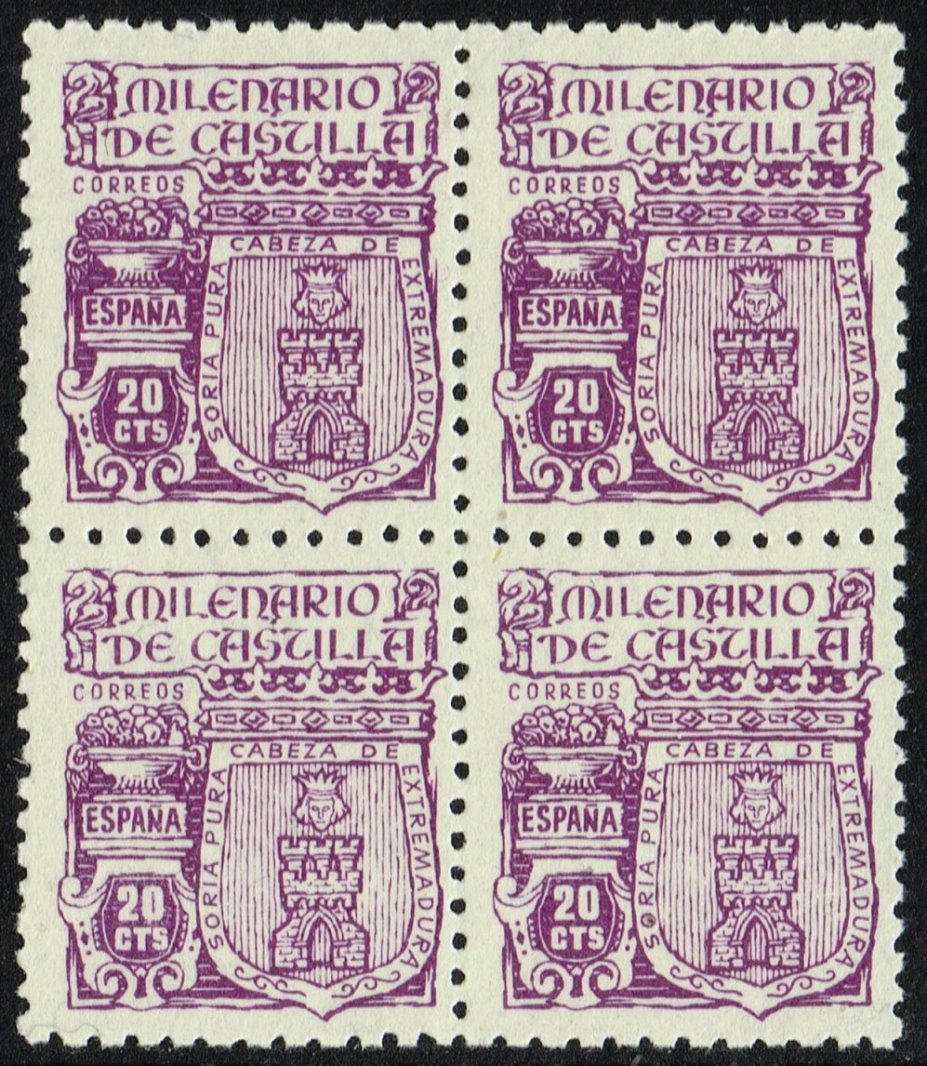
 March 1944, Arms of Soria, Edifil 974
During 1944, Spain issued nine stamps commemorating the 'Milenario de Castilla.' This issue does not appear to align with historical facts: the County of Castile was founded towards 860. The year 943 or 944, however, is considered a pivotal moment in the history of Castile. Nor does it coincide with the festivities celebrating this millennium organised in Burgos, between 22 August and 12 September 1943. It, however, should not be discarded that the issue, like the festivities of the preceding year, were propagandistic, conveying the messages:
• Castile is the mother of Spain,
• Fernán González, 'Caudillo' and liberator of Castile,
• Franco is the heir of Fernán González and the Franco-government that of the independent Castile,
• the people of Spain and the Falange stand with Franco.
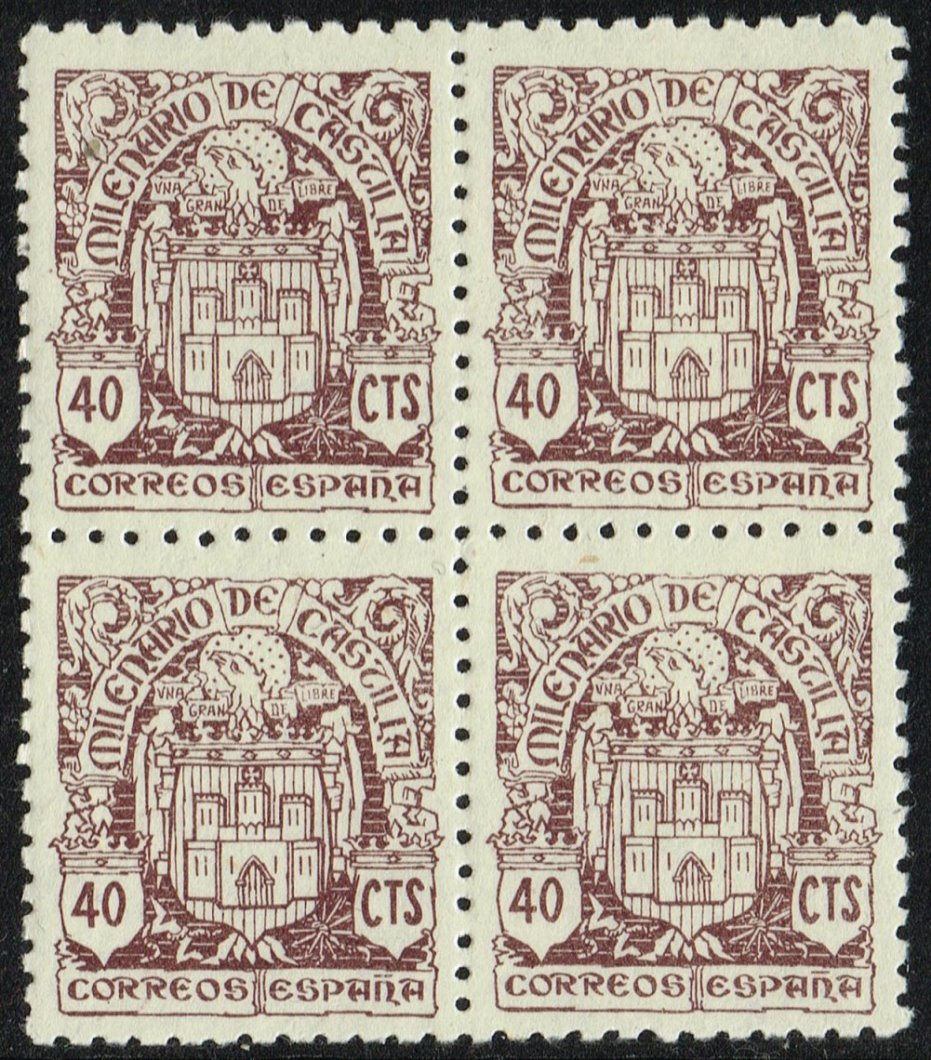 April 1944, Arms of Castile, Edifil 975
In 722, the Umayyad conquest of the Iberian Peninsula was halted in the mountains of Asturias. By the middle of the ninth century, the Christian Kingdom of Asturias had expanded south to the banks of the Duero River. To protect the borders of his Kingdom of Asturias against Muslim incursions, King Ordoño I delegated the governance of those territories to relatives. Towards the year 860, a certain Rodrigo became count of an area known as Al-Qila (meaning 'los castillos') to the Muslims.
Like many nationalist dictatorial regimes, General Franco's regime (ab)used history to forge a national identity. The regime would legitimise itself as protector of the legacy and values of historical figures. It would not be uncommon to draw on historical figures and events that border on the mythical. During the civil war, the nationalist band, already, had issued stamps depicting Catholic Kings and Rodrigo Díaz de Vivar "El Cid." History and legend meet in the figure of El Cid, drawing on an epic poem of which the veracity has not always been established.
 May 1944, Arms of Ávila, Edifil 976
Already in 1938, the falangist Victor de la Serna proposed to celebrate the 'epiphany' of Castile. He dated this to the period between 930 and 940. According to De la Serna, Castile by use of arms had defeated 'the foreign and effeminate.' It had been a firm believe within the Falange that Castile had united the Spanish nation and expanded the Empire. They also held the believe that for Spain to be reborn after the civil war it should follow the example of Castile in the tenth century.
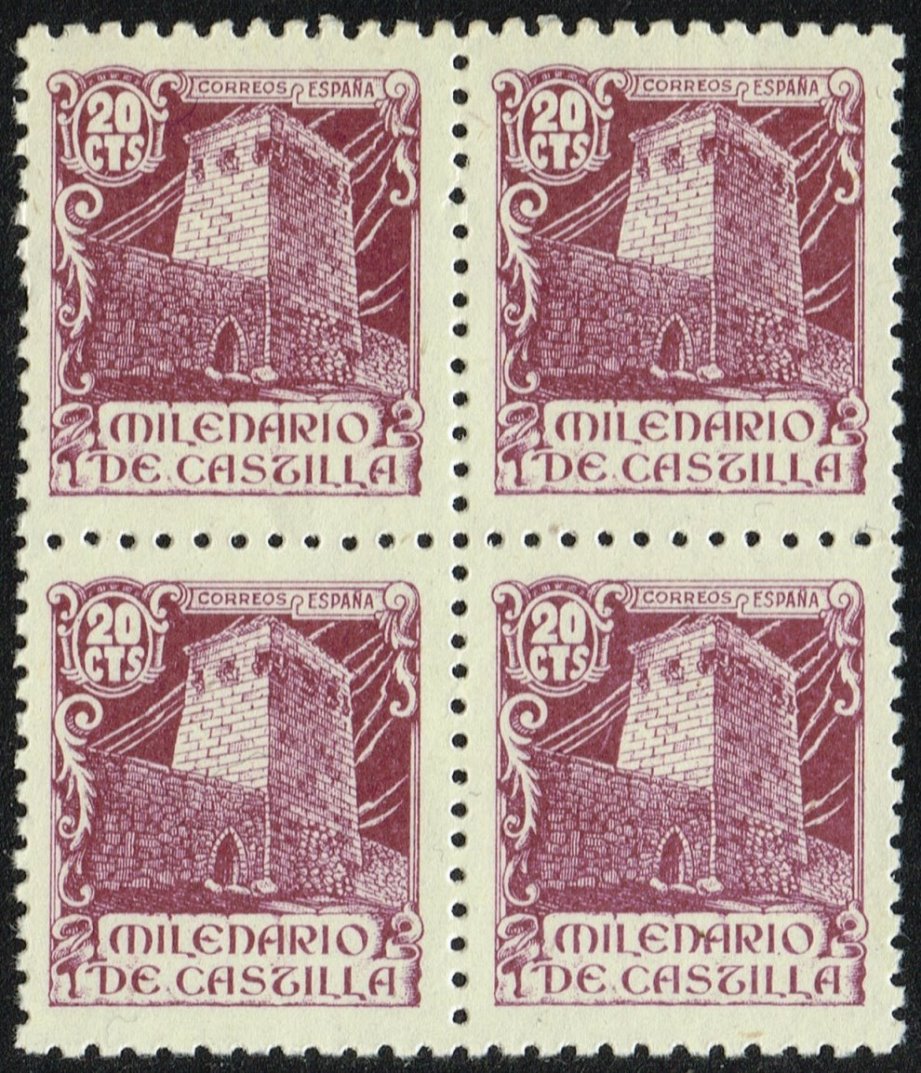 July 1944, Castle, Edifil 977
This 'epiphany' of Castile ensued, the self-proclamation as Caliph by the Umayyad Emir of Cordoba, Abd al-Rahman III, in 929. His attempt to subject the Christian Kingdoms on the northern border of his Caliphate resulted in a defeat by King Ramiro II of León and García Sánchez of Pamplona at the Battle of Simancas, in 939. The troops of Count Fernán González of Castile played an important role in the victory over the Caliphate of Córdoba at Simancas. This Christian victory resulted in the southward expansion of the Christian Kingdom of León from the Duero River to the Tormes River.
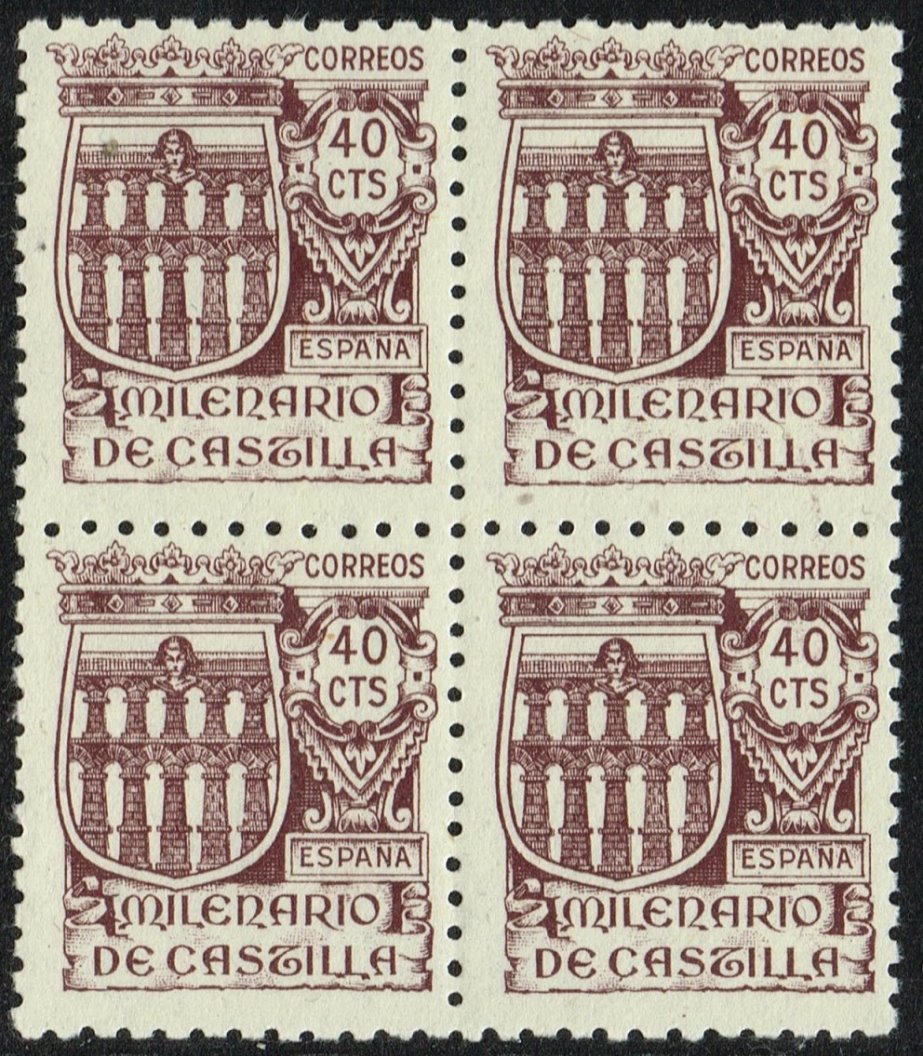 June 1944, Arms of Segovia, Edifil 978
By 943 or 944, Fernán González became dissatisfied with the interference of King Ramiro II of León in the defence of the county and rose in rebellion against the king. He, however, was captured and stripped of his title of Count of Castille. From documents, it appears he reconciled with the king and regained the title of Count of Castile. Making use of a dynastic crisis ensuing the death of King Ramiro II, in 951, Fernán González succeeded in gaining increasing autonomy for Castile.
 December 1944, Armour of Count Fernán González, Edifil 979
Like that of "El Cid," much of the history of Fernán González "the Good Count" derives from an epic poem. This written more than two centuries after his death and mixes facts with legend.
 September 1944, Arms of Ávila, Edifil 980
In 1938, the military under the command of General Franco were preoccupied with ending the war and consolidating its rule of Spain. De la Serna's proposals did not come to fruition. The idea to celebrate the Millennium of Castile resurged in 1942. The national office of propaganda issued an order to organise a public act of culture and propaganda in Burgos that was the historic capital of Castile and been the seat of the National Defence Junta during the civil war. Knowing that the Falange in Valladolid, already, had honoured Fernán González, a local politician decided to celebrate Fernán González who was a native of the Province of Burgos.
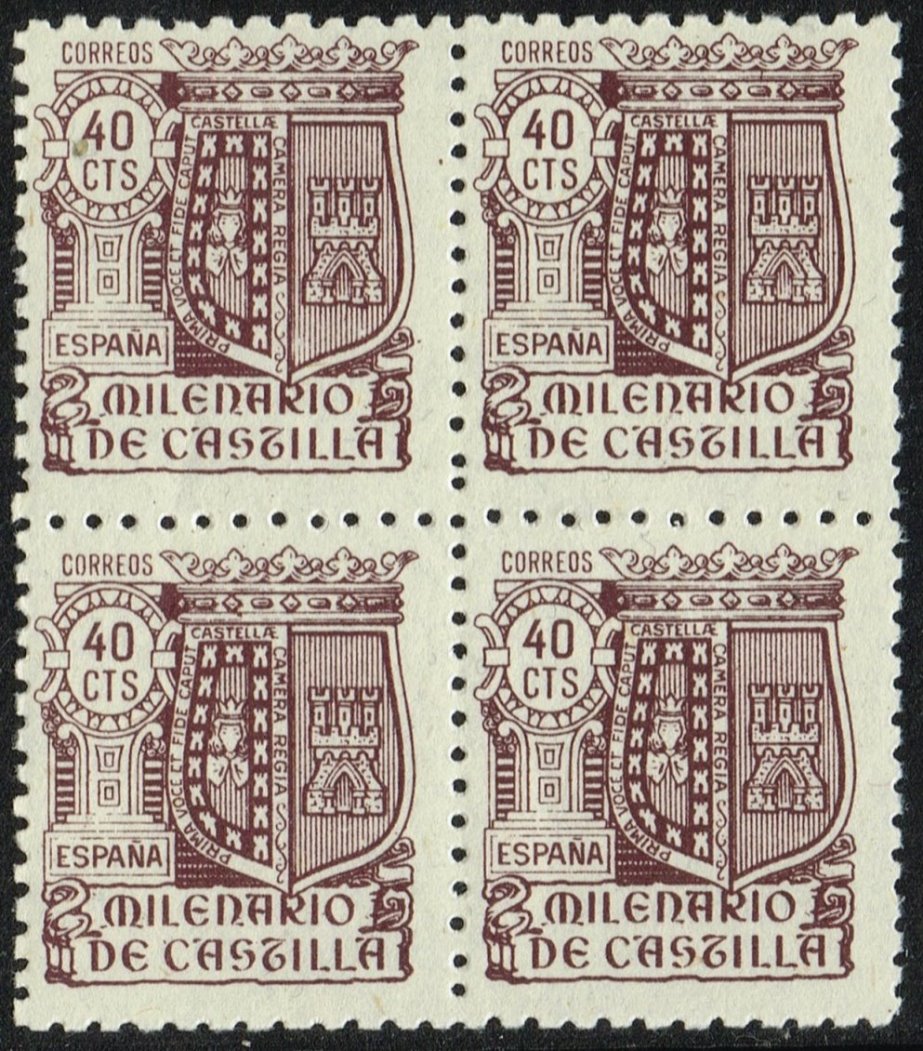 August 1944, Arms of Burgos, Edifil 981
When the organisers invited the Minister of Education to partake in the celebrations, the Minister replied the celebrations should have a national and even universal character. The reply was a polite message to the initiator of the celebrations, a local politician, to transfer the organisation to the local and regional authorities. It however stopped short of ordering the organisation of the events by the central authorities that, only, would support in the organisation. Likely, this was done to hide that the festivities would not just celebrate the independence of Castile, but also be a homage to the "Caudillo" himself as saviour of the fatherland as had been Count Fernán González.
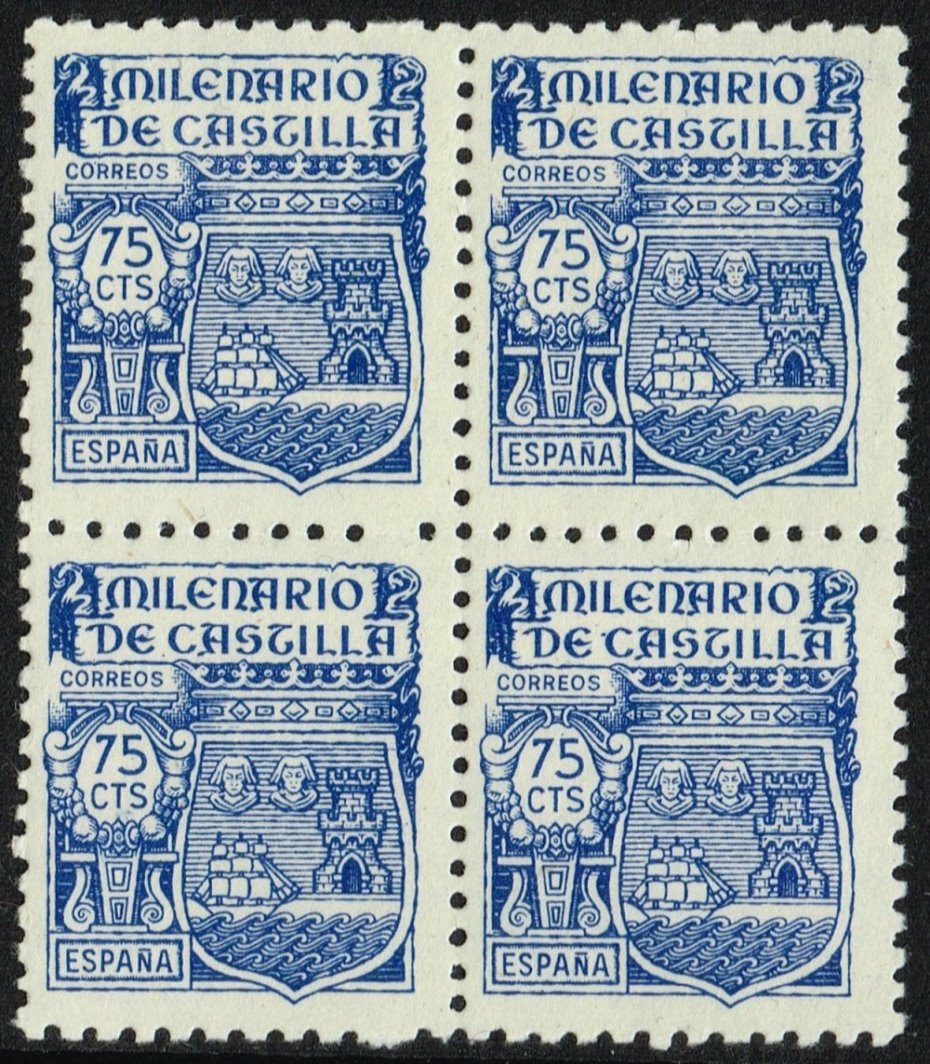 December 1944, Arms of Santander, Edifil 982





 Posted 05/26/2024 07:27 am


