First some miscellaneous and sundry...
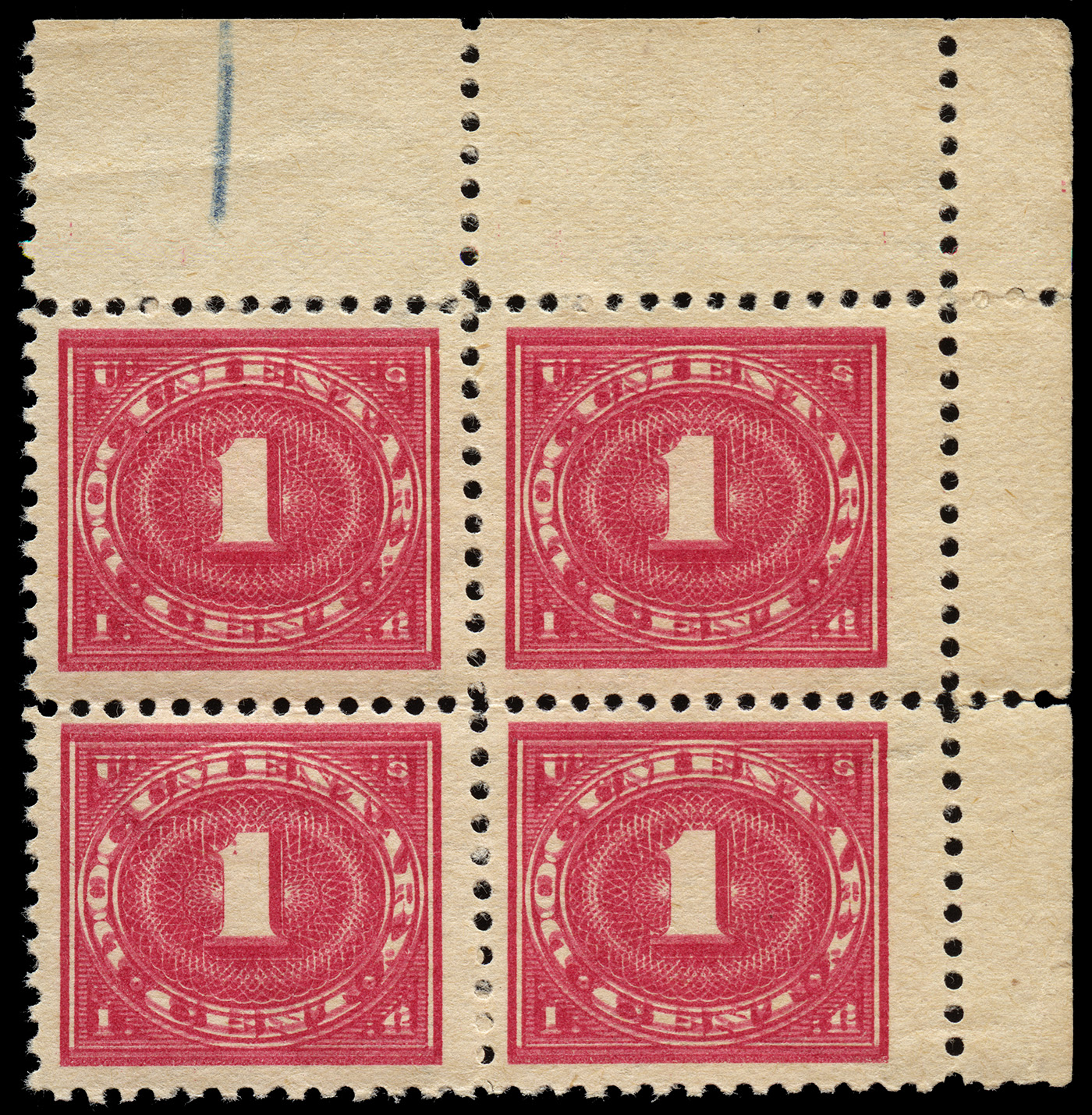
Nice NH block of 4 of the R228 double impression. Spacing and direction is different from the other block I have, so why not?
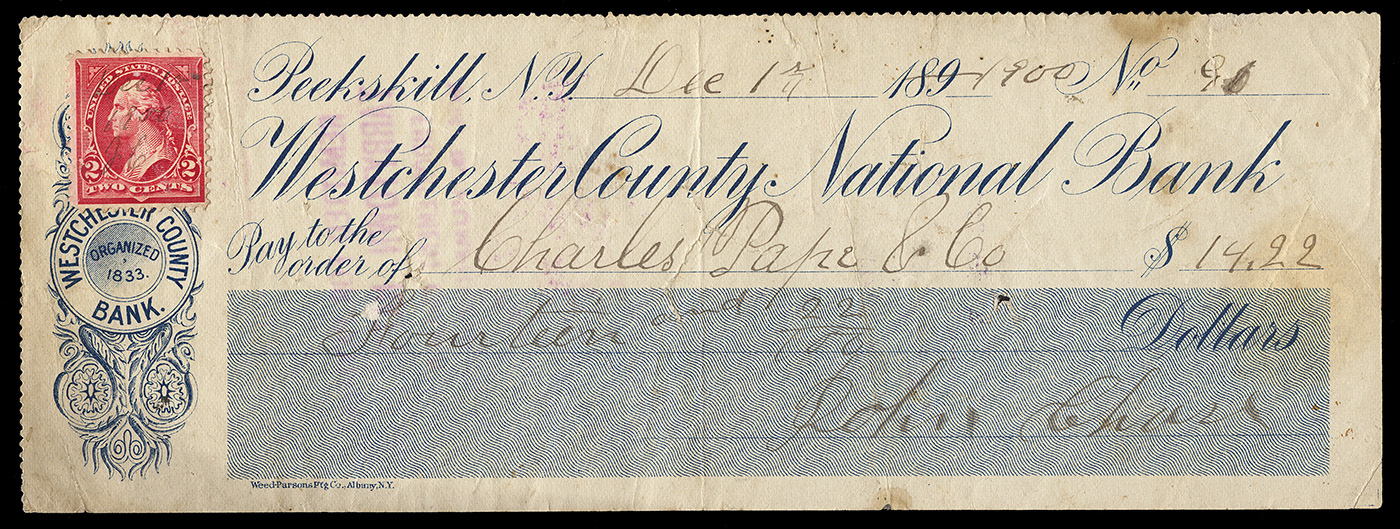
A nice improper usage check from "Peekskill" in New York.
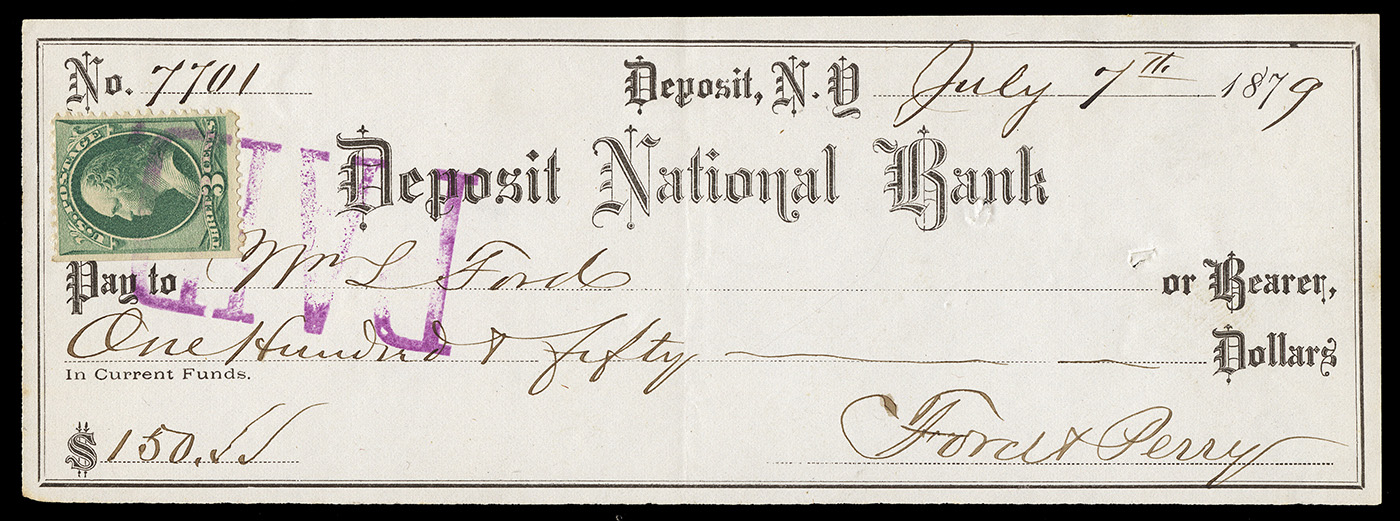
Another improper usage, actually overpaying the 2-cent rate, tied by a huge PAID handstamp cancel.
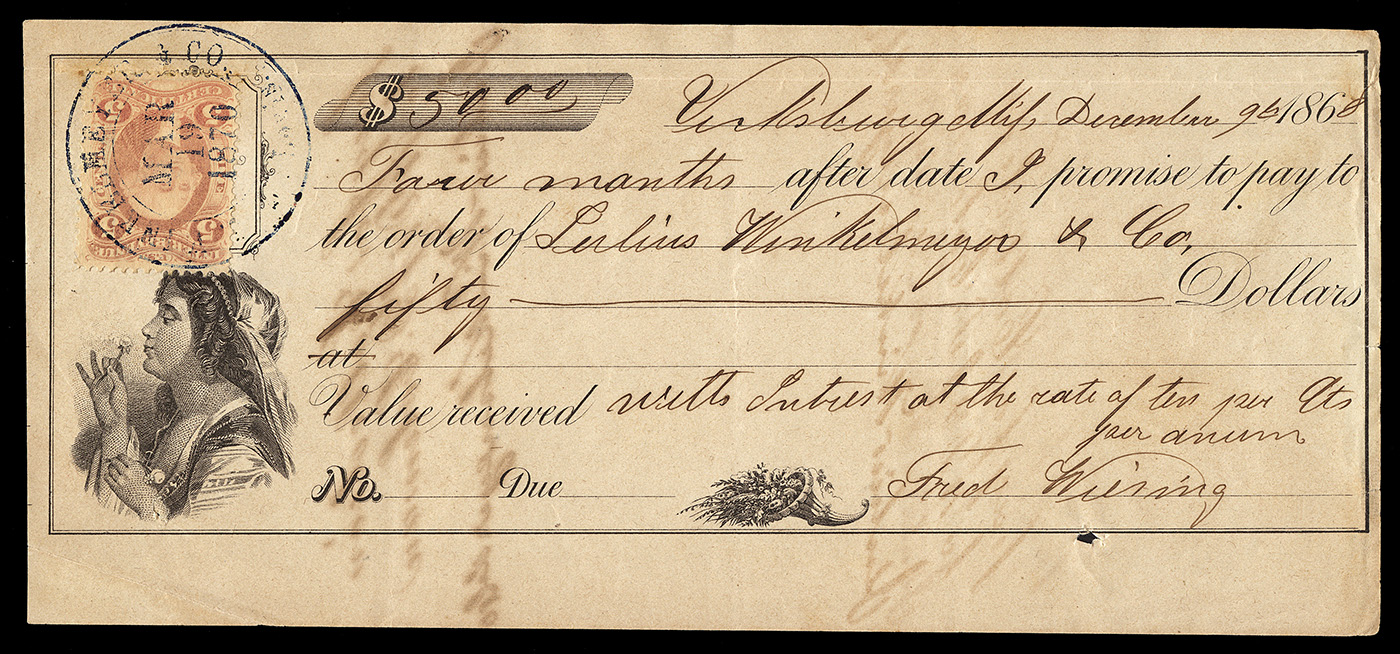
1868 promissory note, dateline Vicksburg, Mississippi, with the stamp tied via a SOTN "Winkelmeyer & Co." handstamp cancel.
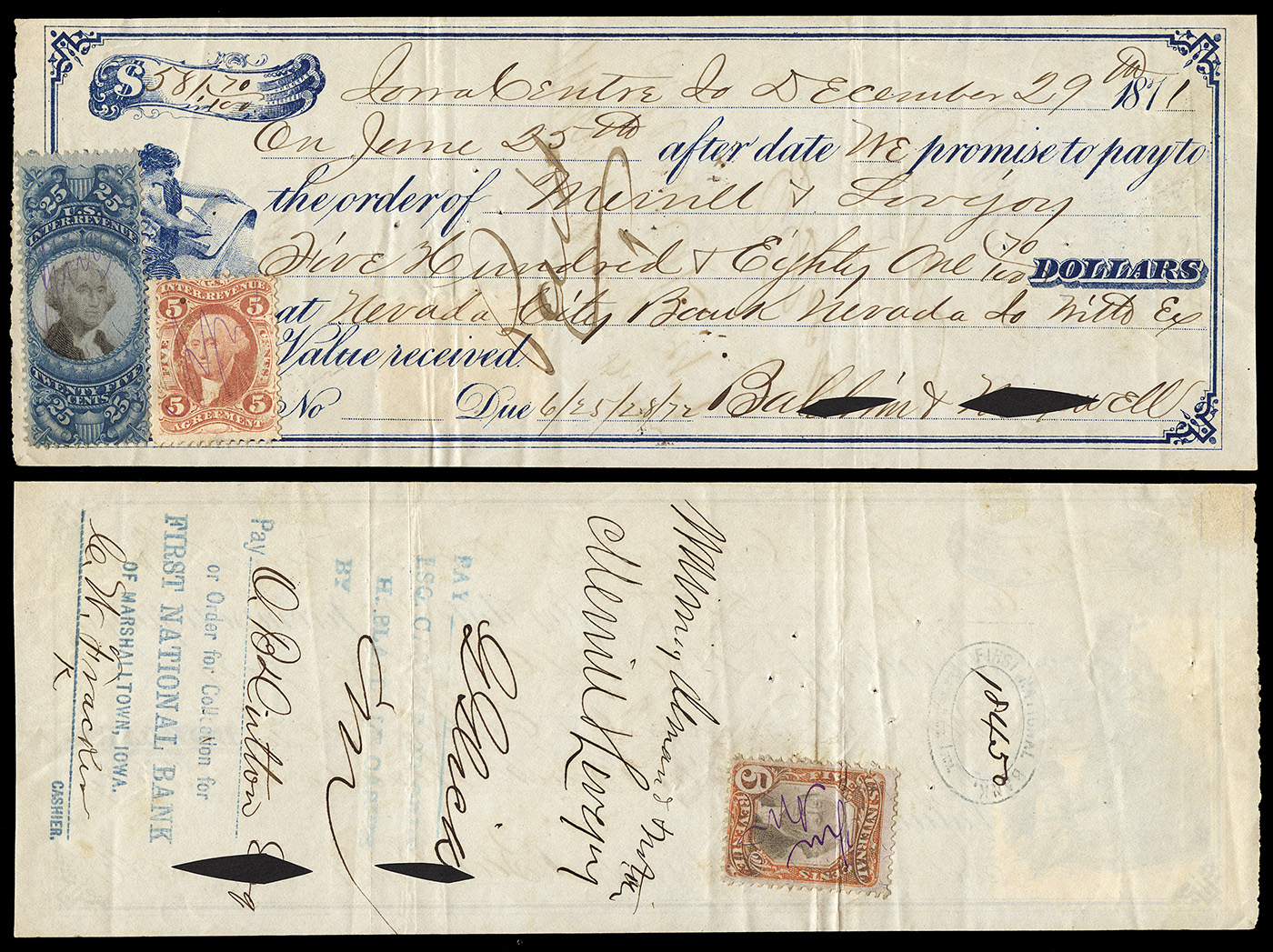
1871 promissory note with 1st issue, 2nd issue, and 3rd issue revenues affixed. I'm not sure what the transaction is on the reverse, as 30 cents was the correct rate on the front. Normally, I would expect a protest to be on the back, but I don't see any language to that effect.
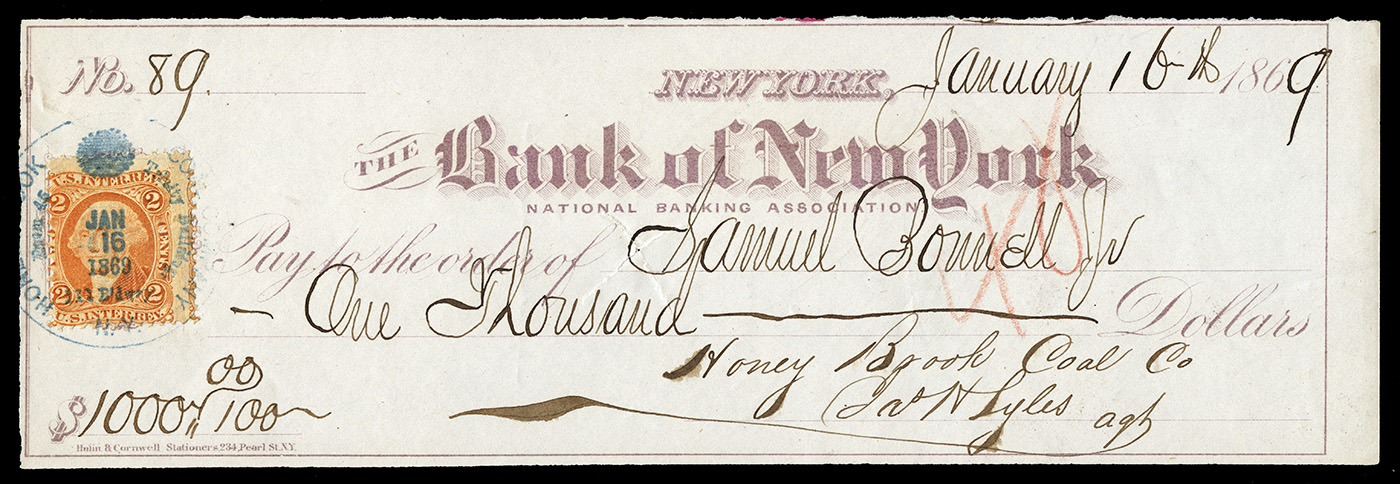
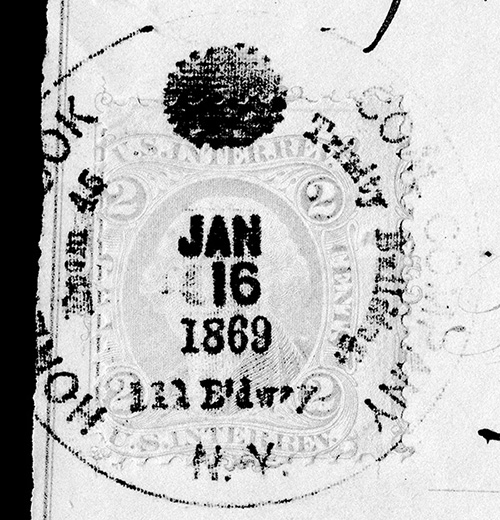
1869 check with an R15c tied by a very interesting large-format Honeybrook Coal Co. cancel.
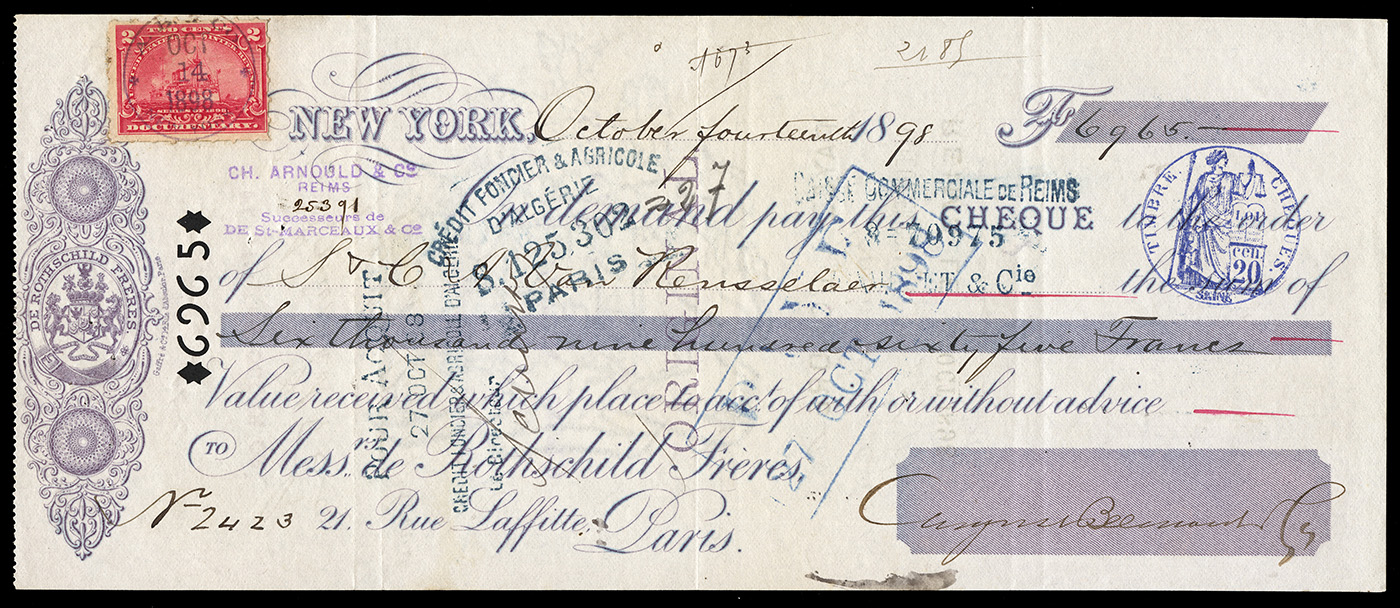
1898 draft with a French imprinted/handstamped revenue in addition to a 2-cent battleship documentary.
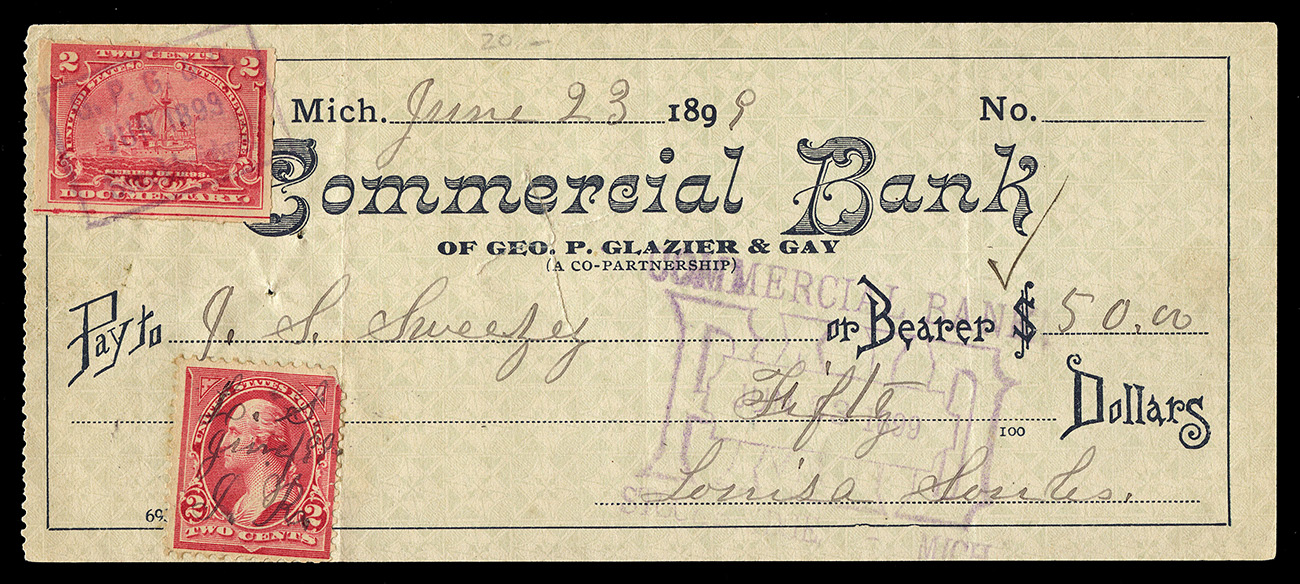
Improper use chack from Stockbridge, Michigan that was caught and then correctly taxed. It's interesting to me how so many improper uses from the Spanish American War period originate in Michigan. It's the state with by far the most examples I've seen.
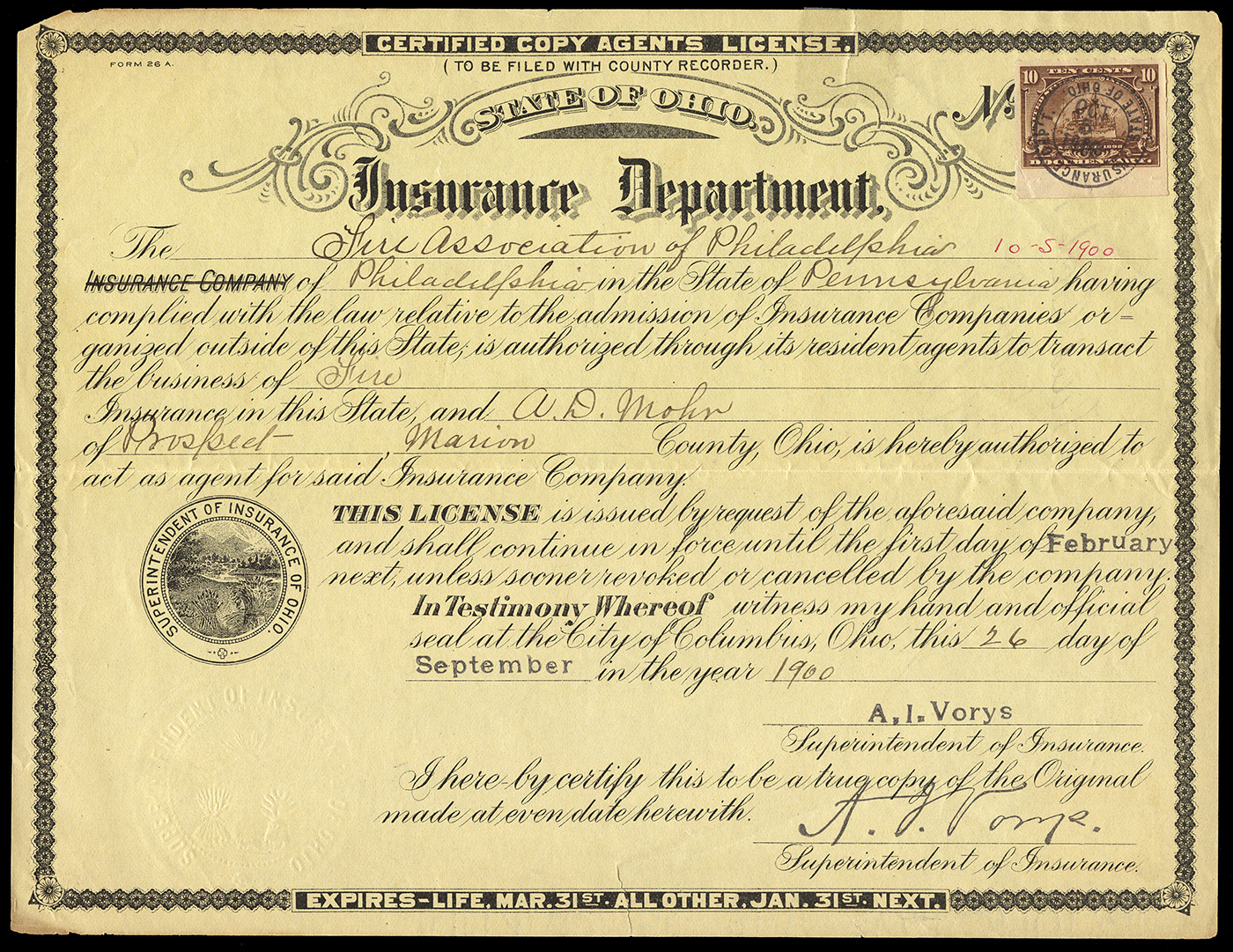
A lovely 1900 Certified Copy Agent's license certificate with a 10-cent battleship affixed, featuring a bold well-placed handstamp cancel.
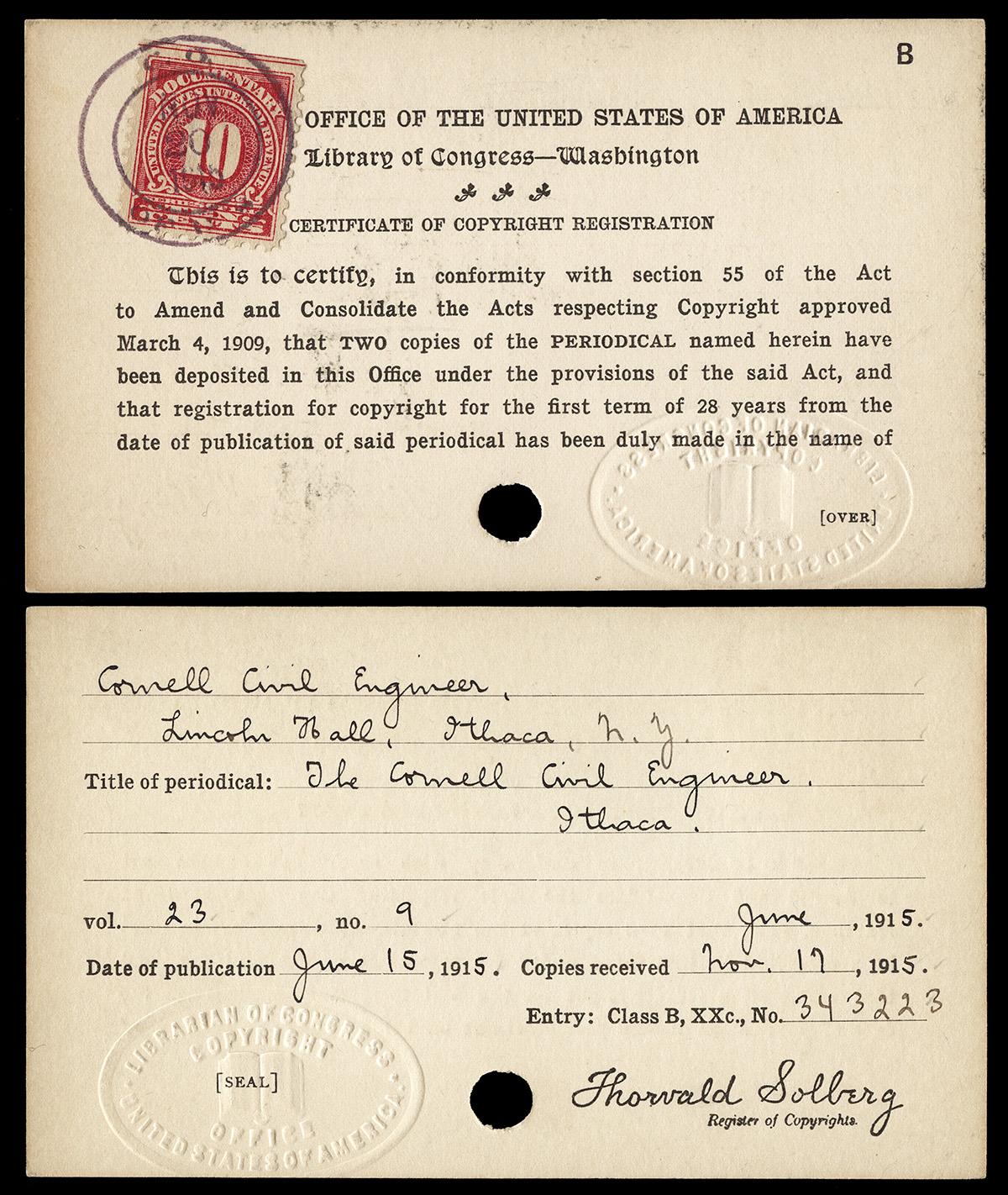
A wonderful 1915 index-card-sized certificate of copyright registration from the Library of Congress with 10-cent documentary affixed, tied with handstamp cancel. Also features a crisp oval seal from the Librarian of Congress at bottom.
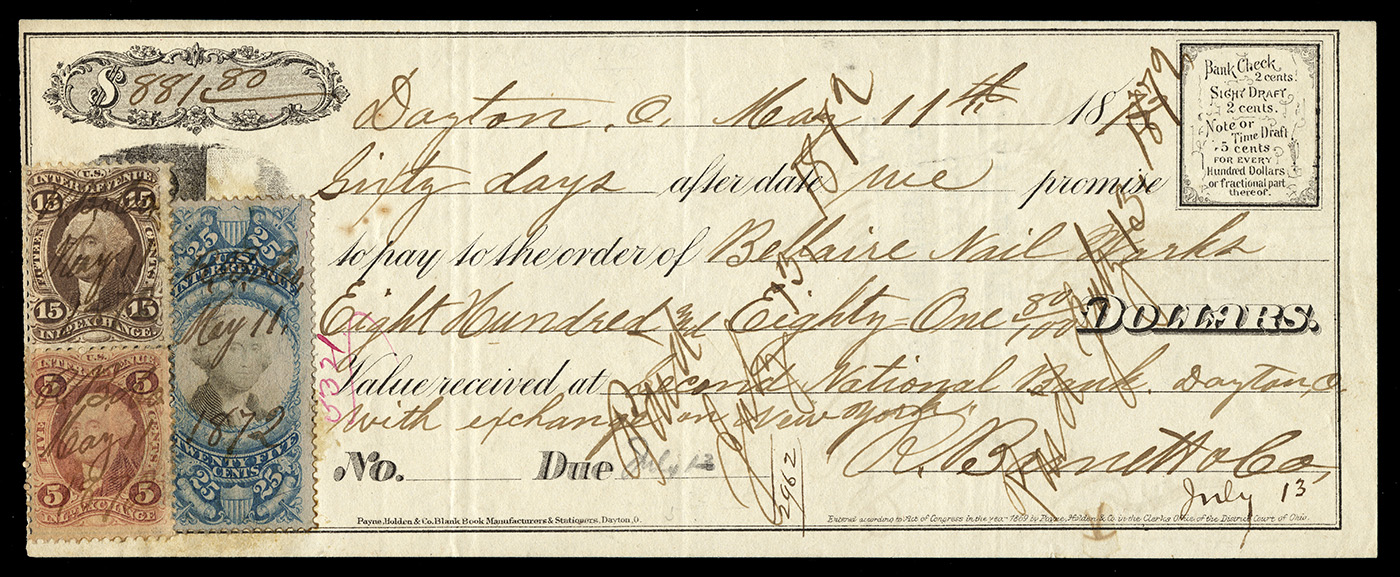
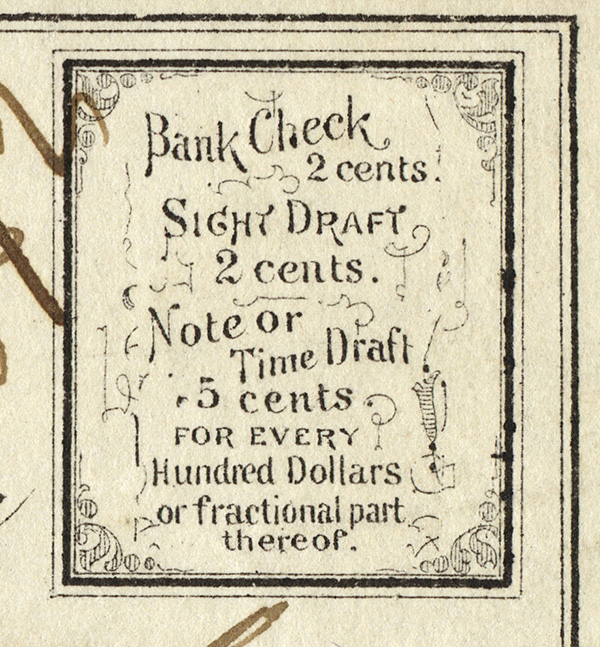
An 1872 promissory note with three revenue stamps affixed paying 45 cents tax. Fairly mundane, but what caught my fancy was the spot for the tax stamp to be affixed at upper right, which contains explanation of common rates to be used. Fairly unusual, IMO.
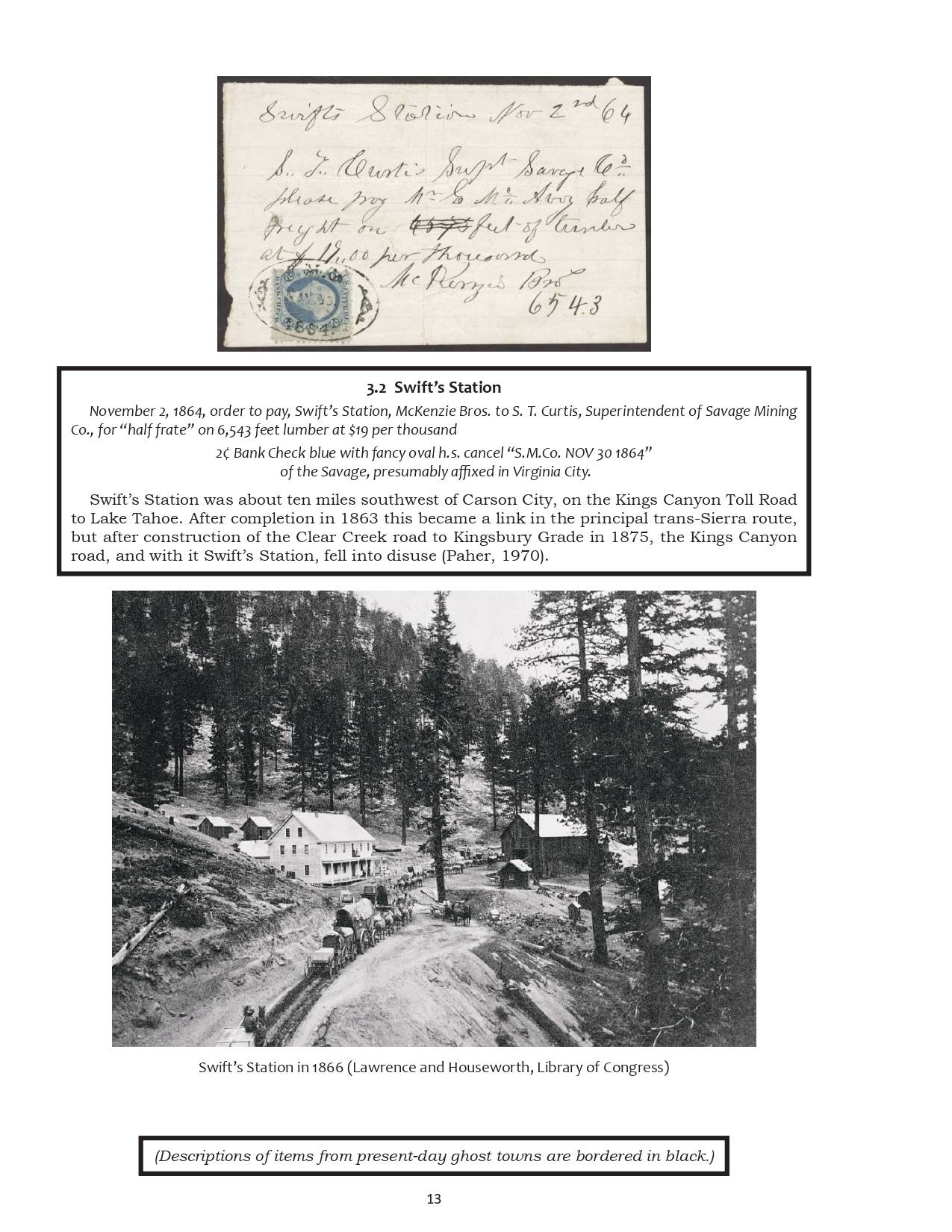
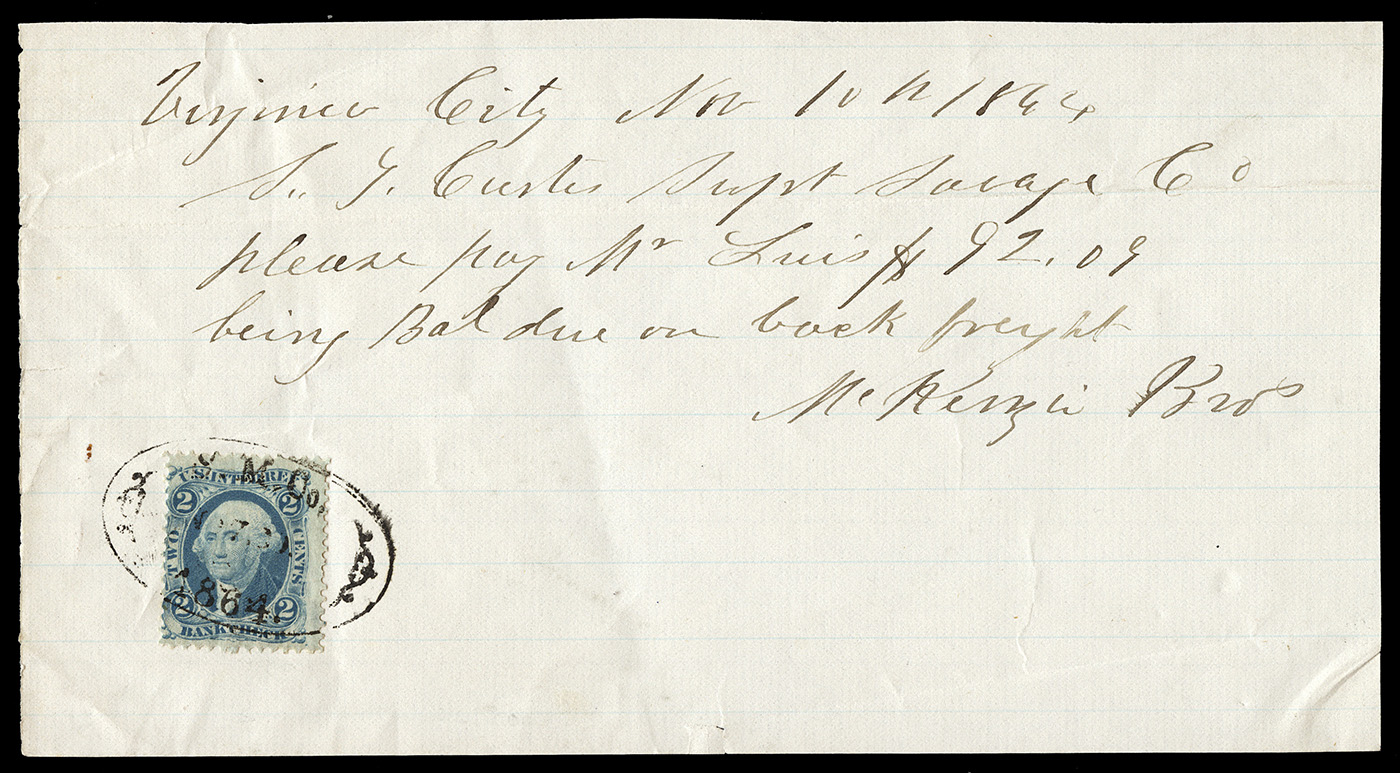
1864 holographic check featuring an unusual oval handstamp from the Savage Mining Company, a cancel type I've not seen from them before.
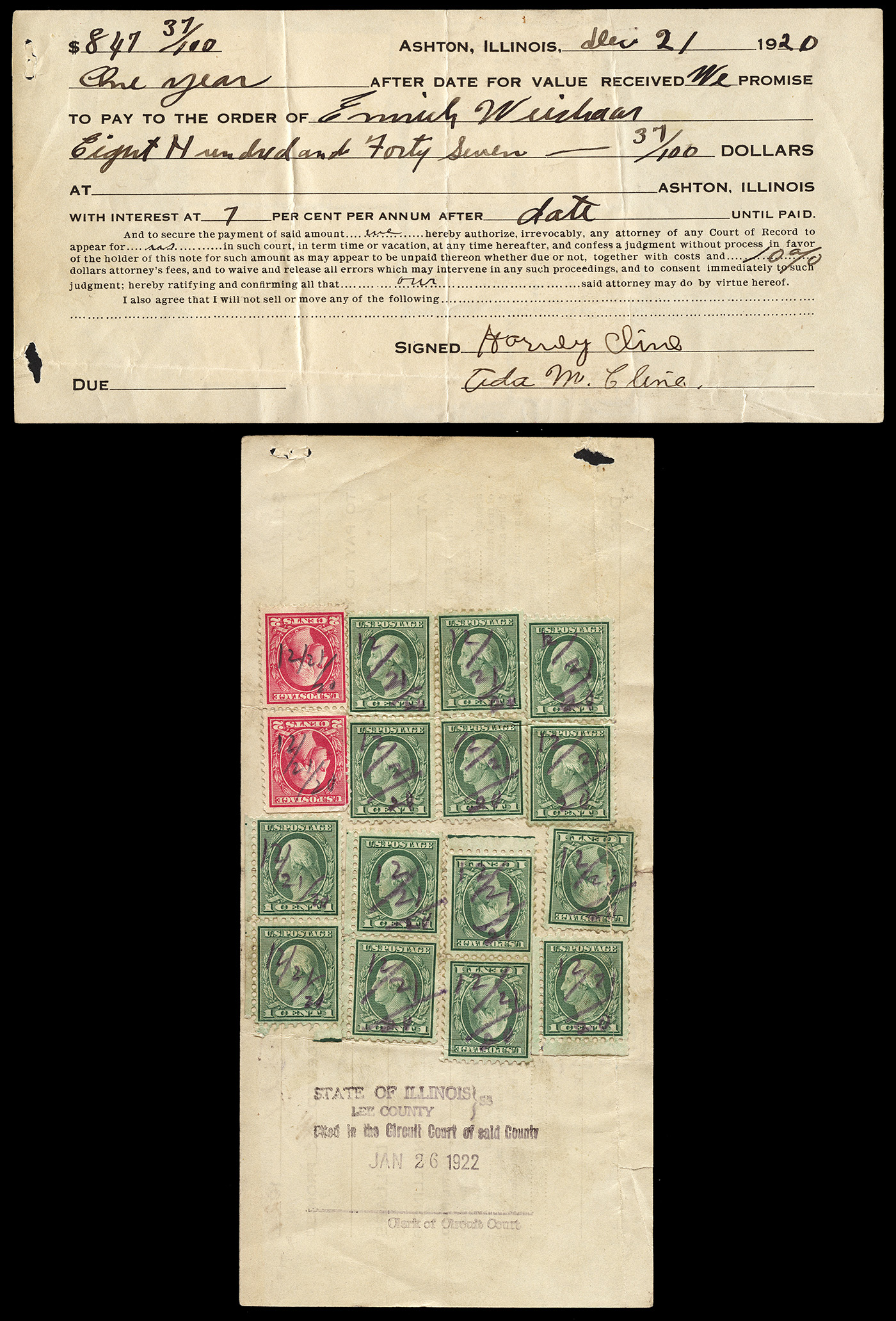
Sixteen Washington-Franklins used improperly to pay tax on a 1920 promissory note. 20th century improper uses are far more scarce than 19th century examples, especially with this number of stamps.
Not typically in a revenue-collector's arsenal, but I wanted to pick up an example of one of the postage stamps on USIR watermarked paper. Scott #272a. It has a clumsily repaired corner at top left, but has a bold R watermark, and the price was right.
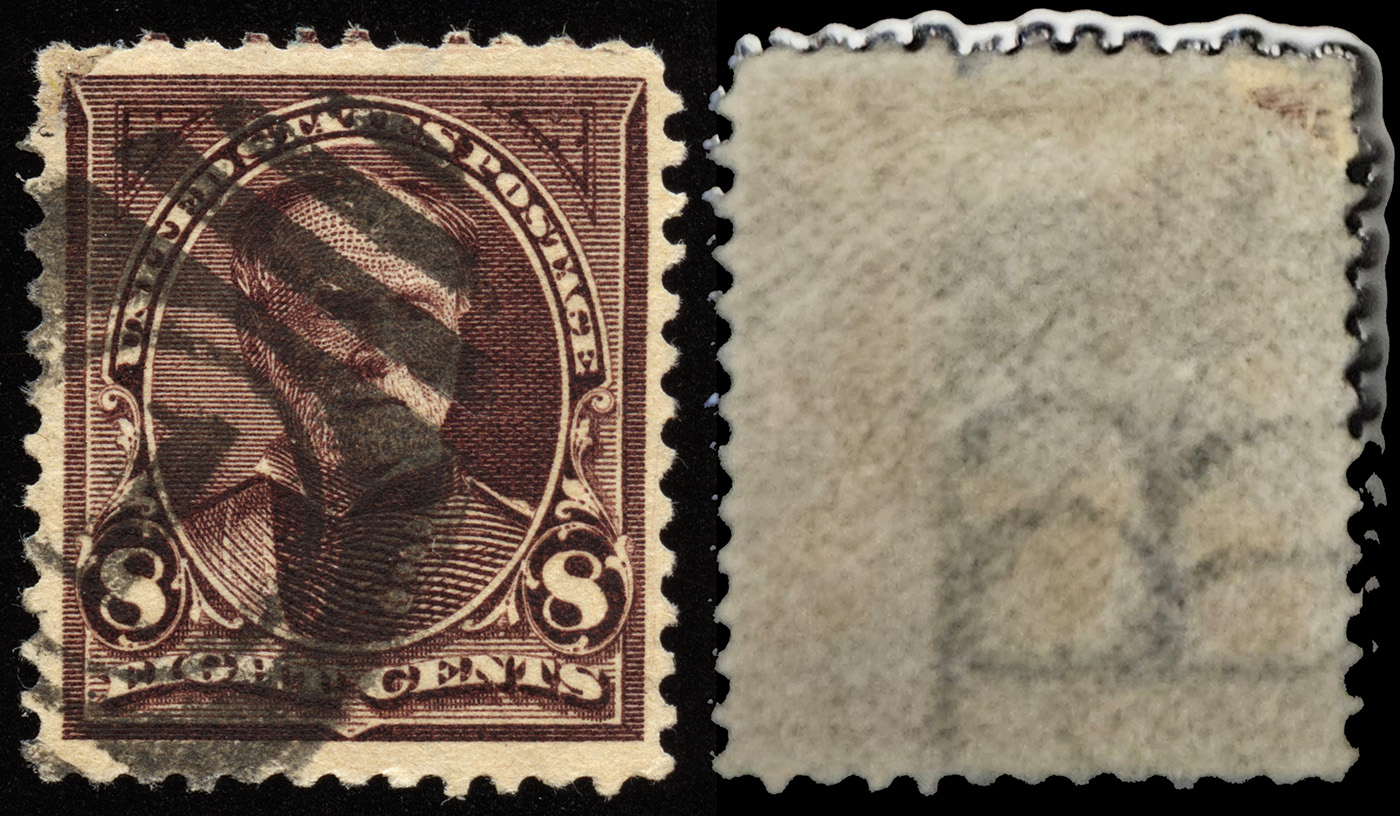
The remaining pieces are all from the collection of the late Jim Drummond, who was also a forum member here. We had corresponded semi-regularly, and he contributed a number of images to my bisect and double impression censuses, as well as discussions about private sewing machine perforations (a term he hated).
I knew that Eric Jackson had purchased the estate, so I asked him for an opportunity to take the material with me the night before the show and spend time researching and choosing which items to purchase. My biggest problem was deciding which pieces to exclude, as money was finite.
There were numerous items with single-digit populations, and several that are unique. Many have been off the market since the Joyce sale in 1991, long before I ever started collecting revenue stamps... and likely to disappear from the market for another who knows how many decades.
By the time the show ended, more than half of the items that I had decided to pass on had been sold, so no opportunity for remorse second-chances. There are a couple of pieces still available on his website, but they are sefely beyond my budget for the time being.
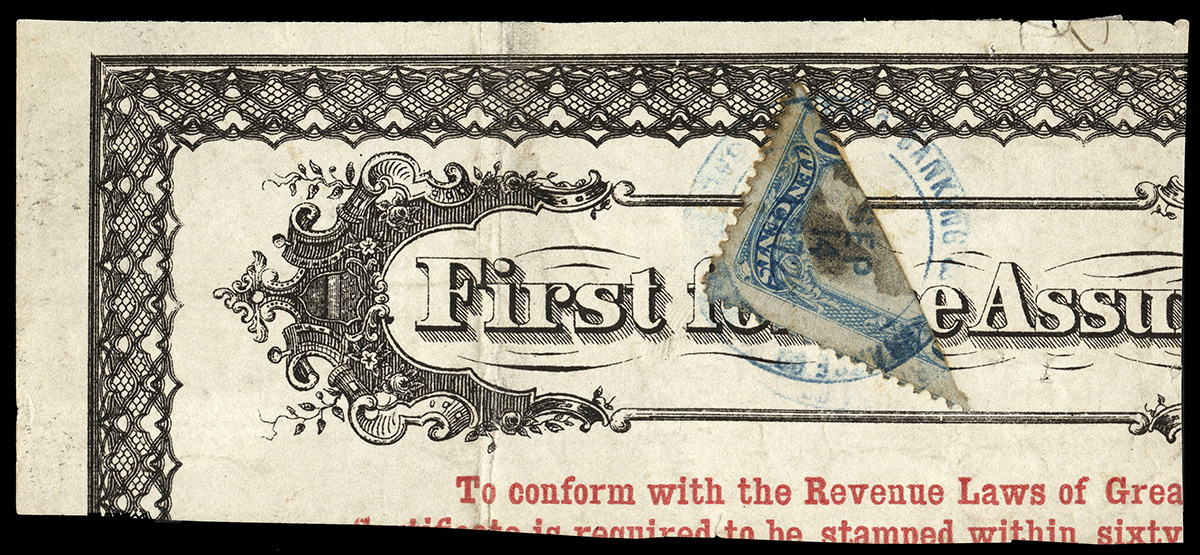
First up is the only example I have ever seen of Scott R109c, the 10c second issue, bisected, tied via handstamp cancel. Ex-Joyce.
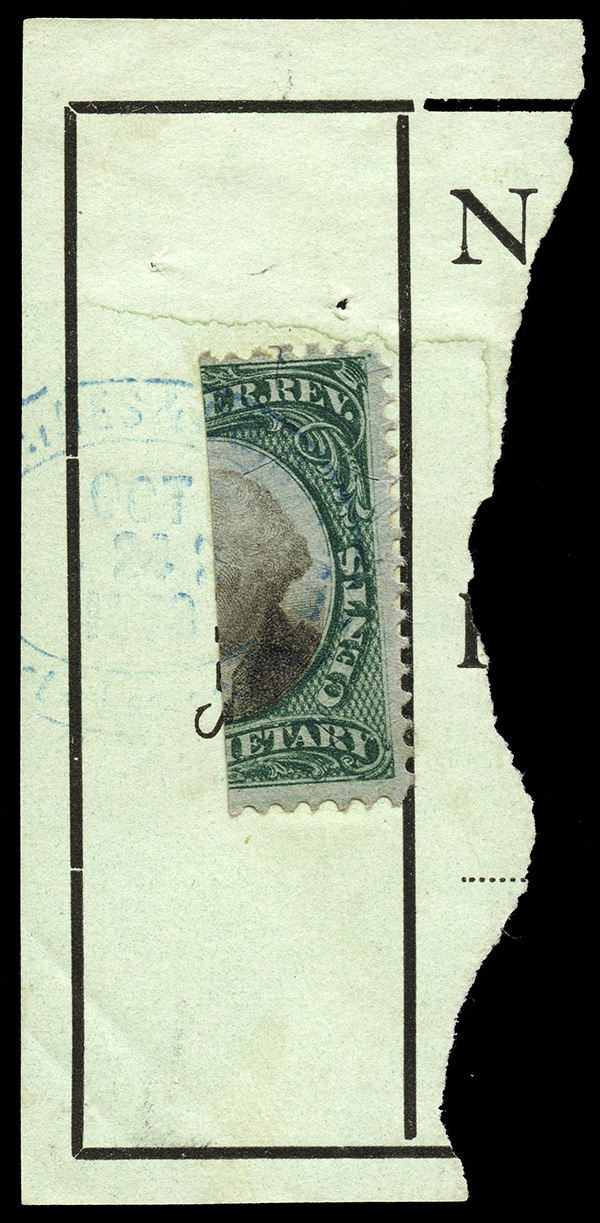
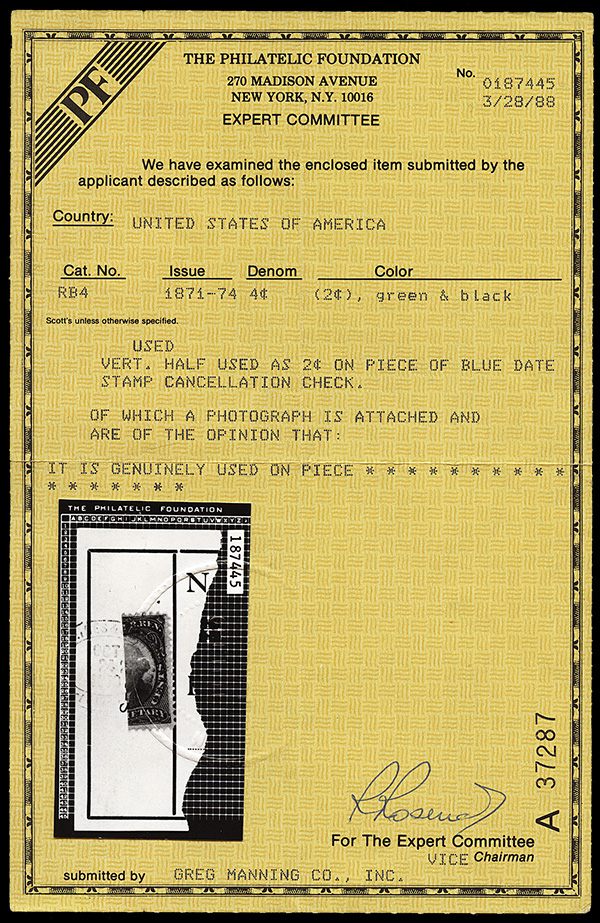
This is the Scott listing example of #RB4d, the 4c Proprietary on violet paper, bisected on document fragment. I already had an example used on medicine wrapper that I purchased from Richard Friedberg back in 2017, but this one further fits my improper use collection, as it not only is bisected, but also a proprietary being used as a documentary. 1988 Philatelic Foundation certificate.
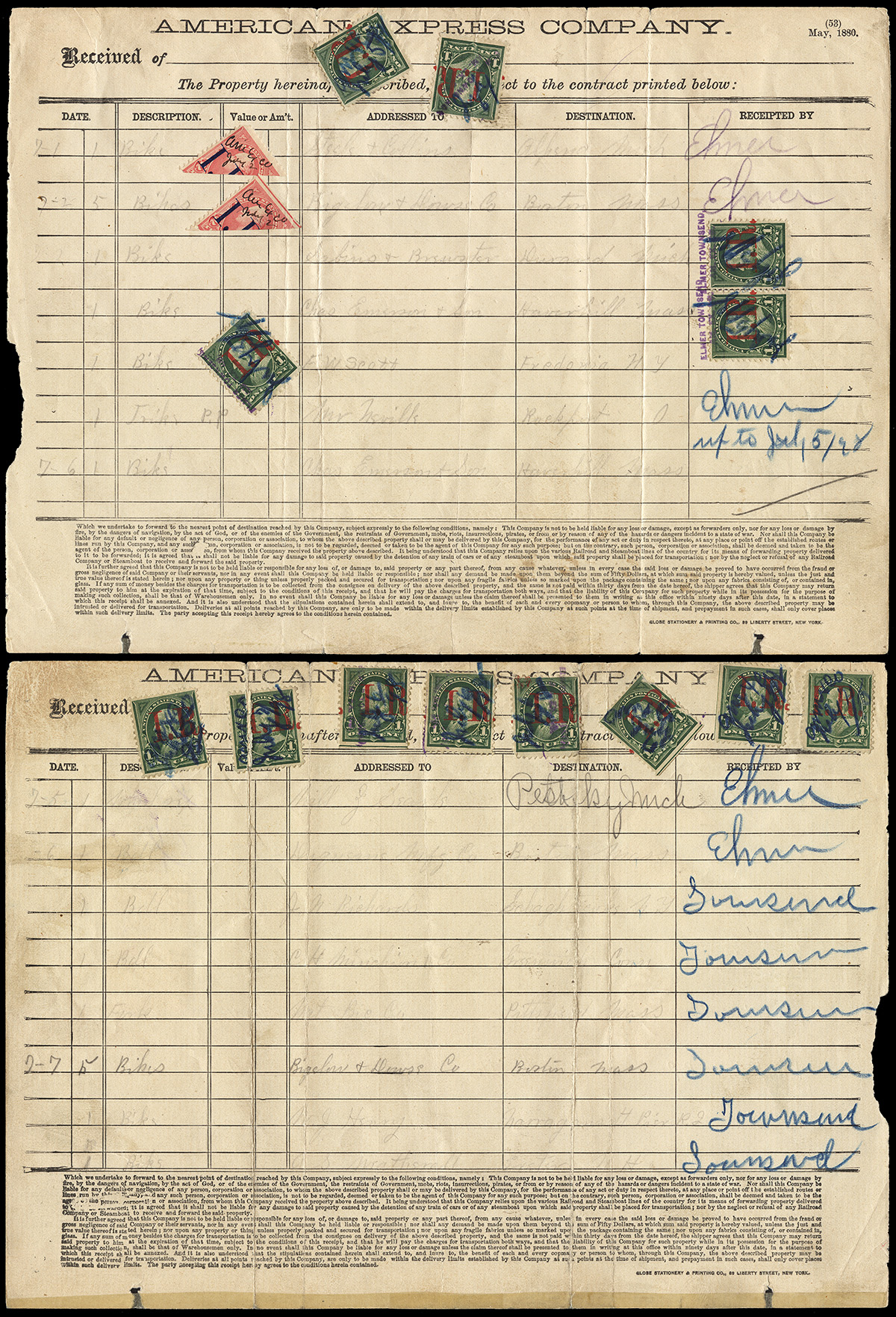
Currently unlisted in Scott, two examples of Scott R155 diagonally bisected and initialed and dated, as log entries on a July 1898 American Express receipt book page.
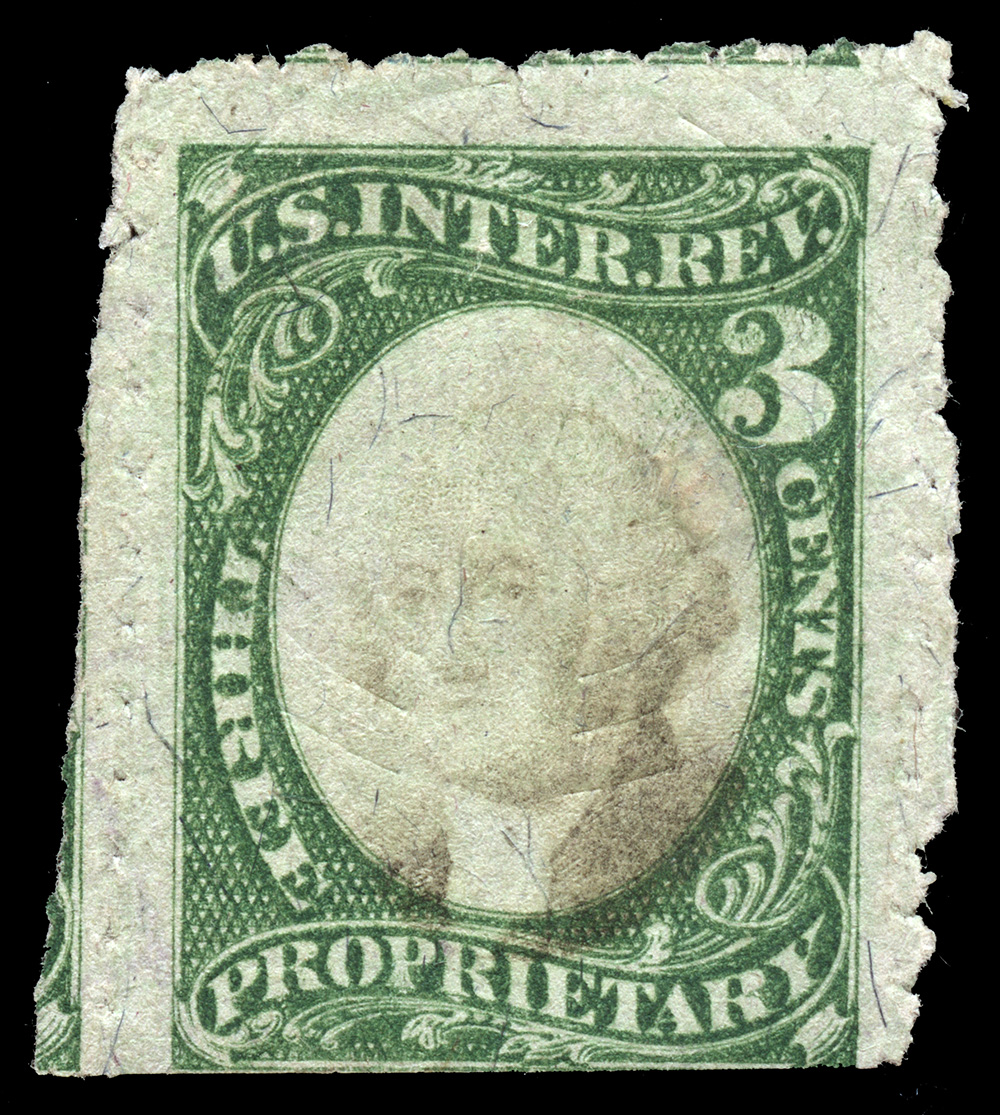
One of my favorite stamp types, Scott #RB3c (private sewing machine perforations), with 3 very large margins.
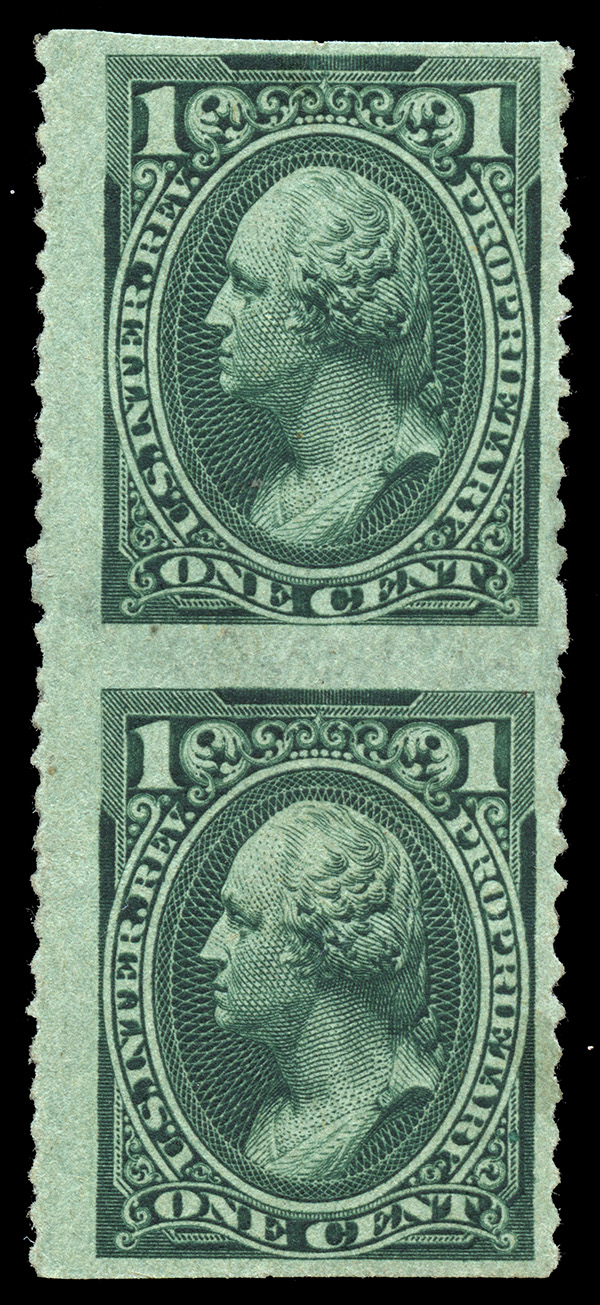
Another item that only comes on the market infrequently, a vertical pair of RB11 imperforate between, mint with original gum.
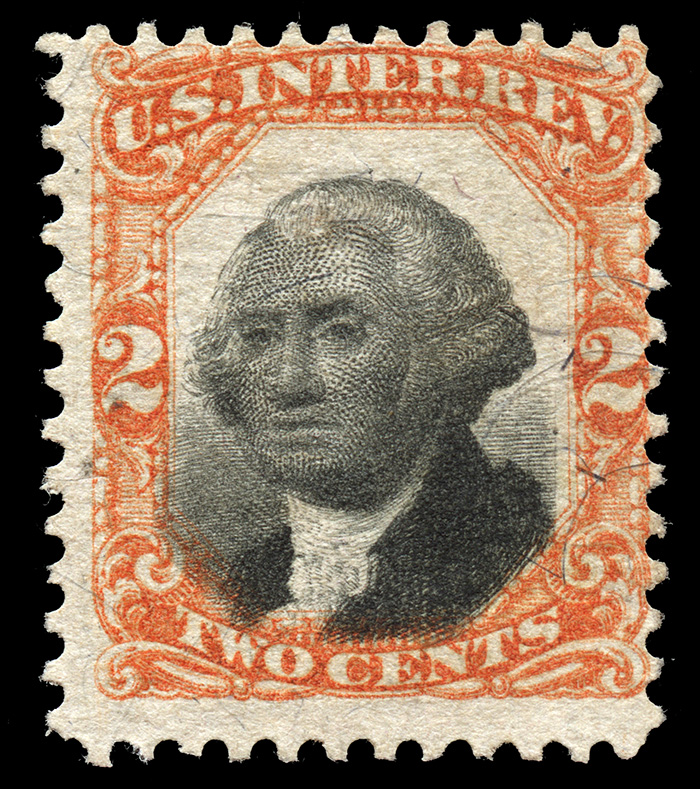
Scott #R135f, double impression of center. Ex-Joyce. I have some correspondence amongst several collectors and platers, including the late Karl Lachemacher and late Dick Celler, coming to the conclusion that this is actually not a double impression, but rather a major double transfer, as the black dots above the portrait and in the left margin are persistent and precise.
Scott #R115d, perforated 8-9. This is the nicer of only 2 known examples, and is a double transfer (plate position #66). 1979 Philatelic Foundation certificate.
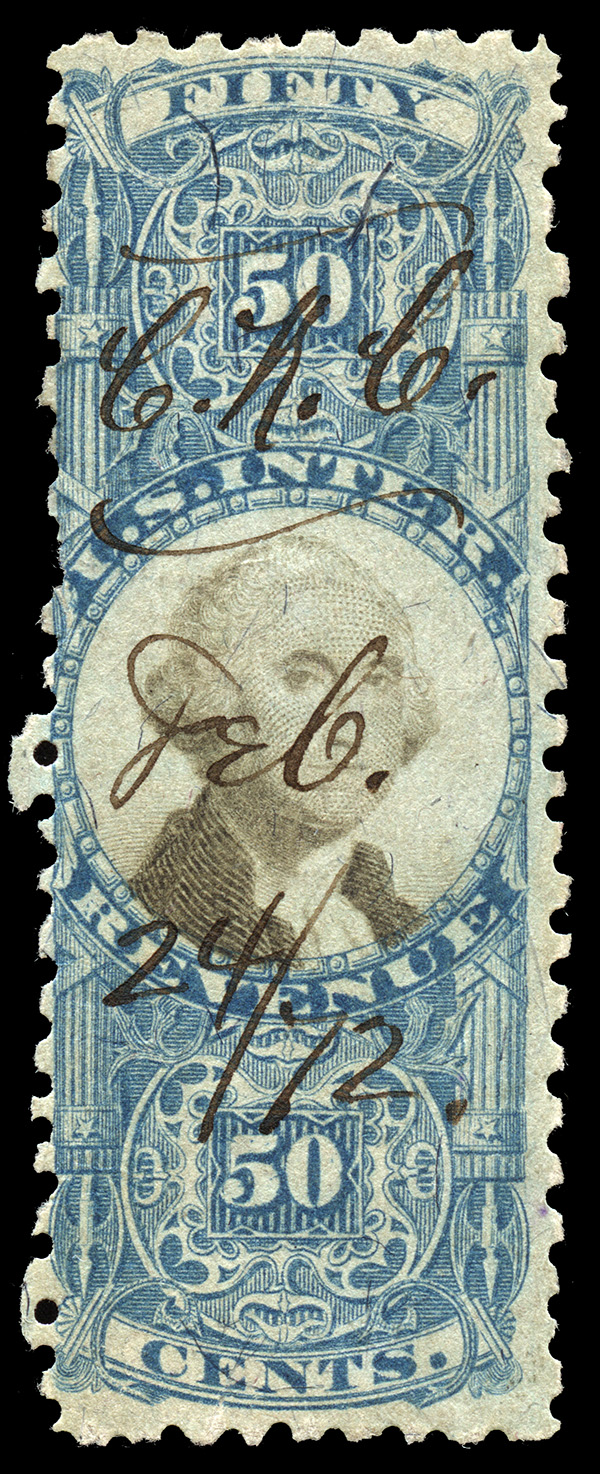
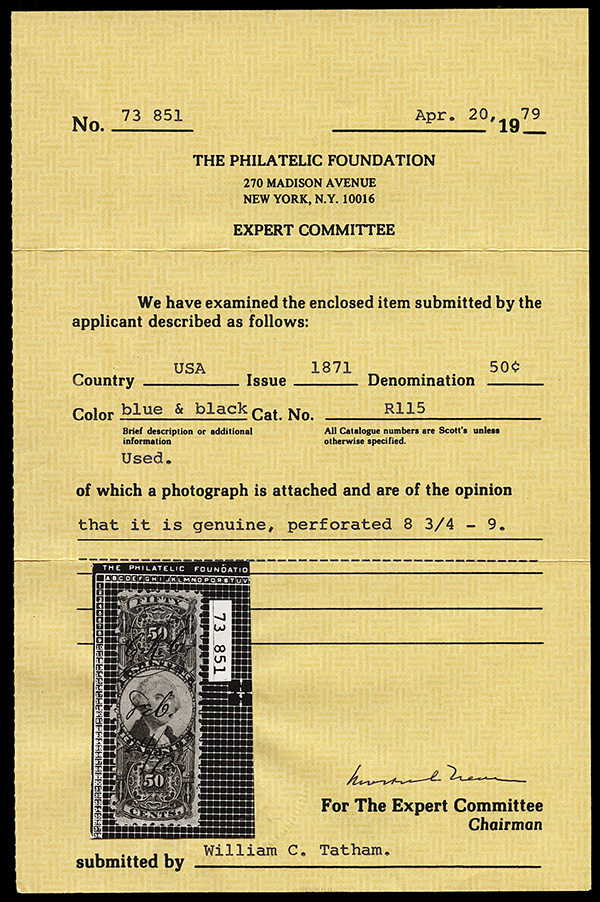
And now the last 2 pieces were ones I really, REALLY wanted.
Scott #R120a, private sewing machine perforations. Population is muddy, but based upon auction records, I come up with a total of 2 or 3 examples known. I wanted an example to round out my sewing machine perf collection. Ex-Joyce.
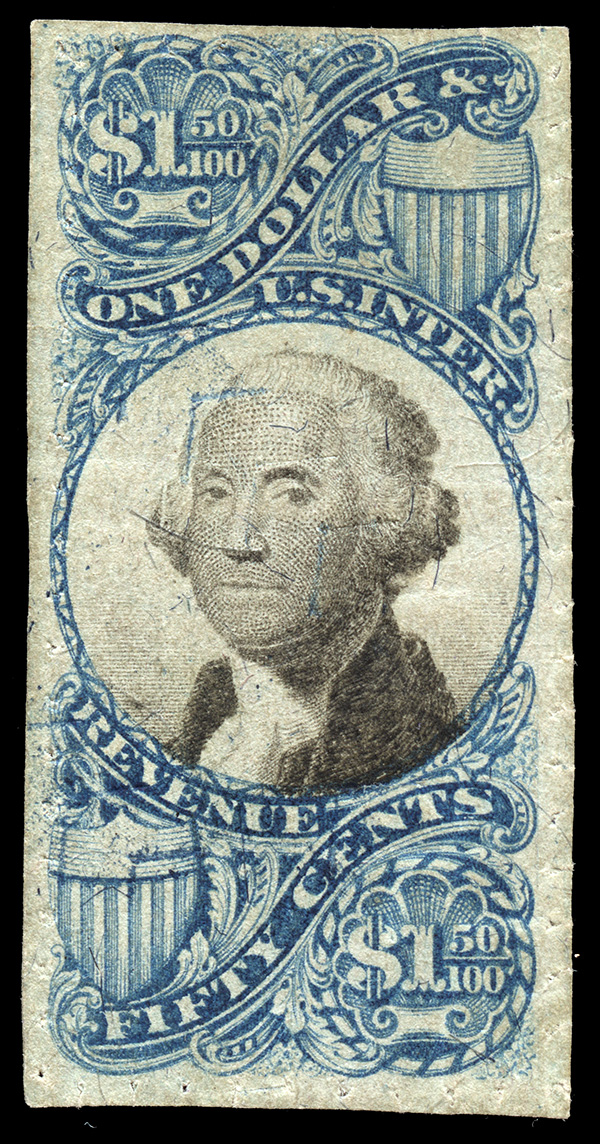
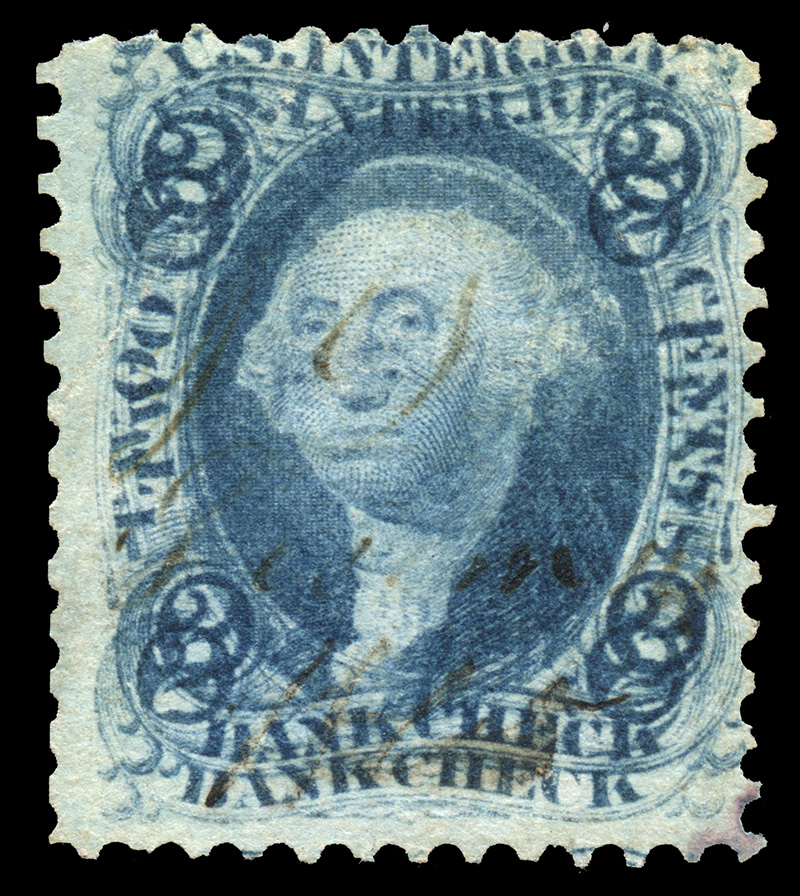
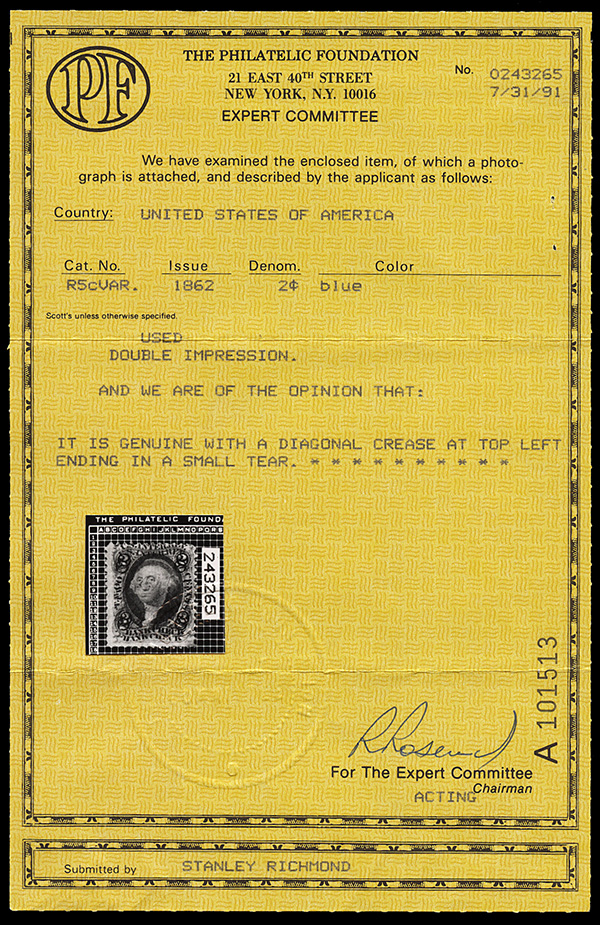
Jim had a half dozen examples of 1st issue double impressions, two of which are unique, the sole known examples. I couldn't afford both, so I had to decide on one. While the #R84e double impression ($2.50 purple Inland Exchange) made for a nice large-format presentation, the doubling wasn't as dramatic as other 1st issue double impressions... whereas the #R5e (blue 2-cent Bank Check) is in my opinion the most dramatic of all of the recorded 1st issue double impressions. Not only are both strikes strong, but the distance bewteen the two strikes is the largest of any I have ever seen. The visual presentation is stunning IMO. The only known example, Ex-Joyce. 1991 Philatelic Foundation certificate.
So yes, it was a very expensive weekend. However, in retrospect, I'm glad I purchased what I did... had I not, I would have been kicking myself a year or two from now (or perhaps a day or two, given how fast many of the items sold).





 Posted 12/03/2024 4:03 pm