This post was inspired by the delightful post by
revenuecollector recently.
Indypex 2025 Recap: In Which I Encounter A Tome Of Monumental Weight And Proportionhttps://goscf.com/t/90234I enjoyed it so much I thought I'd try to make a story out of a recent purchase.
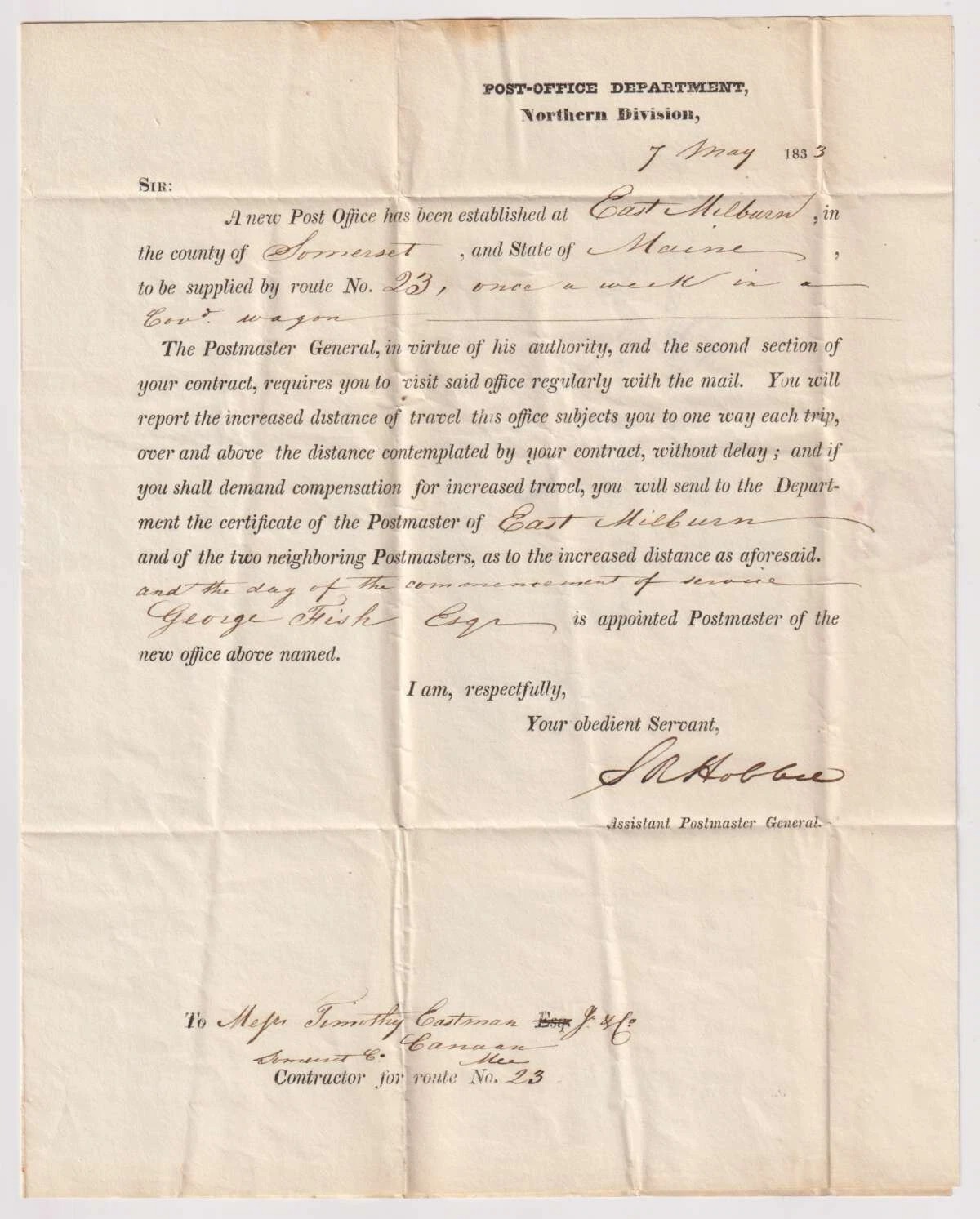
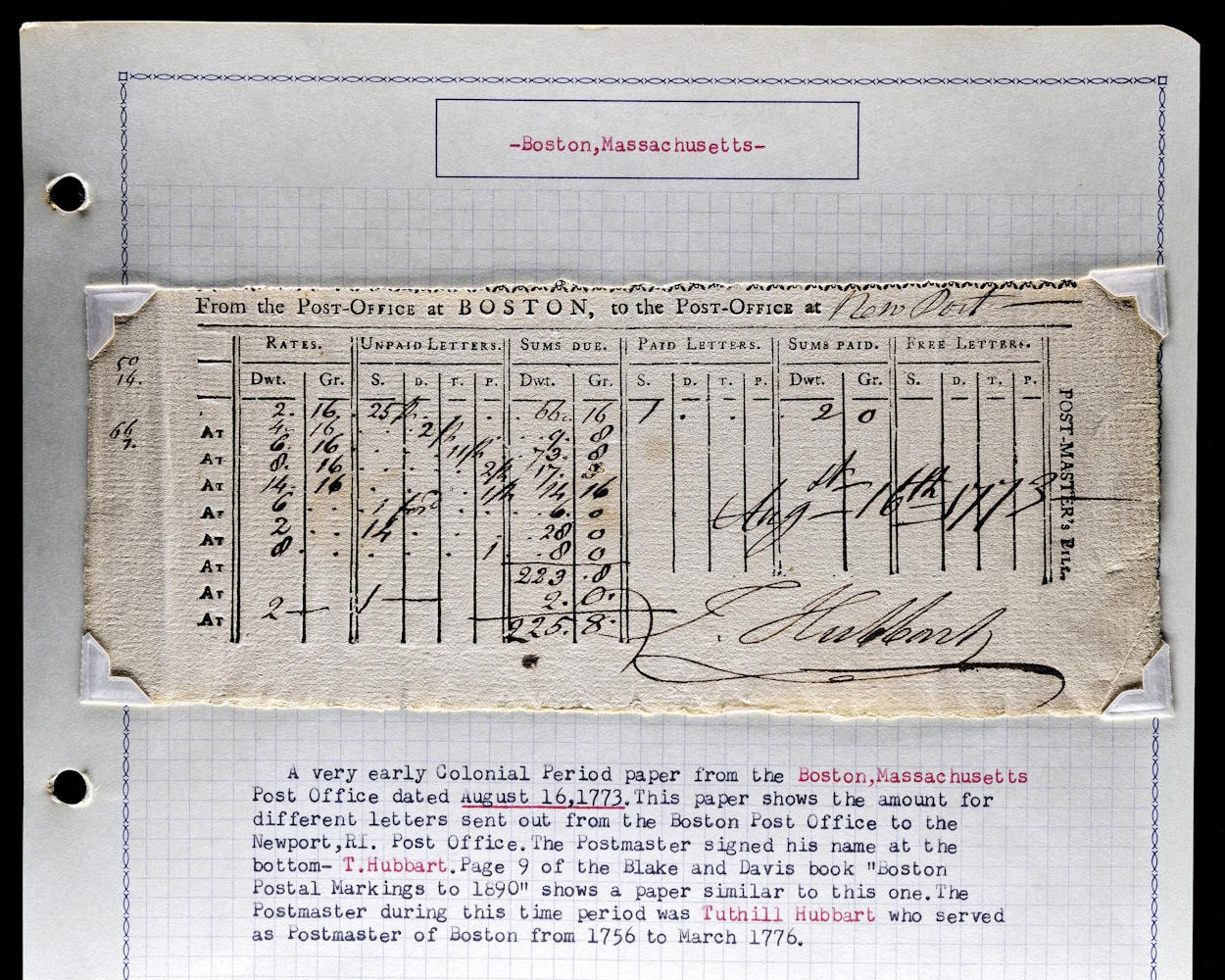
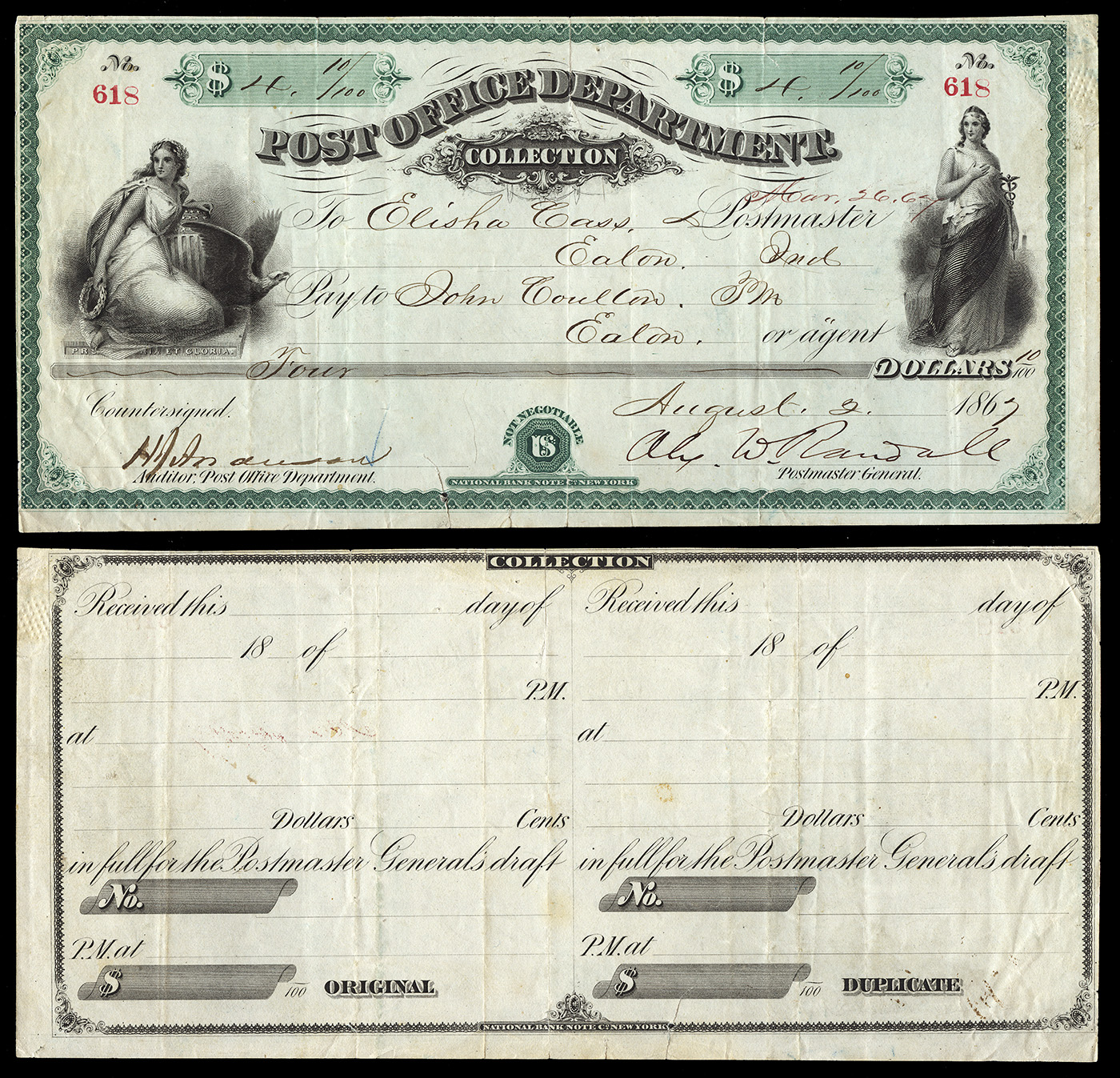
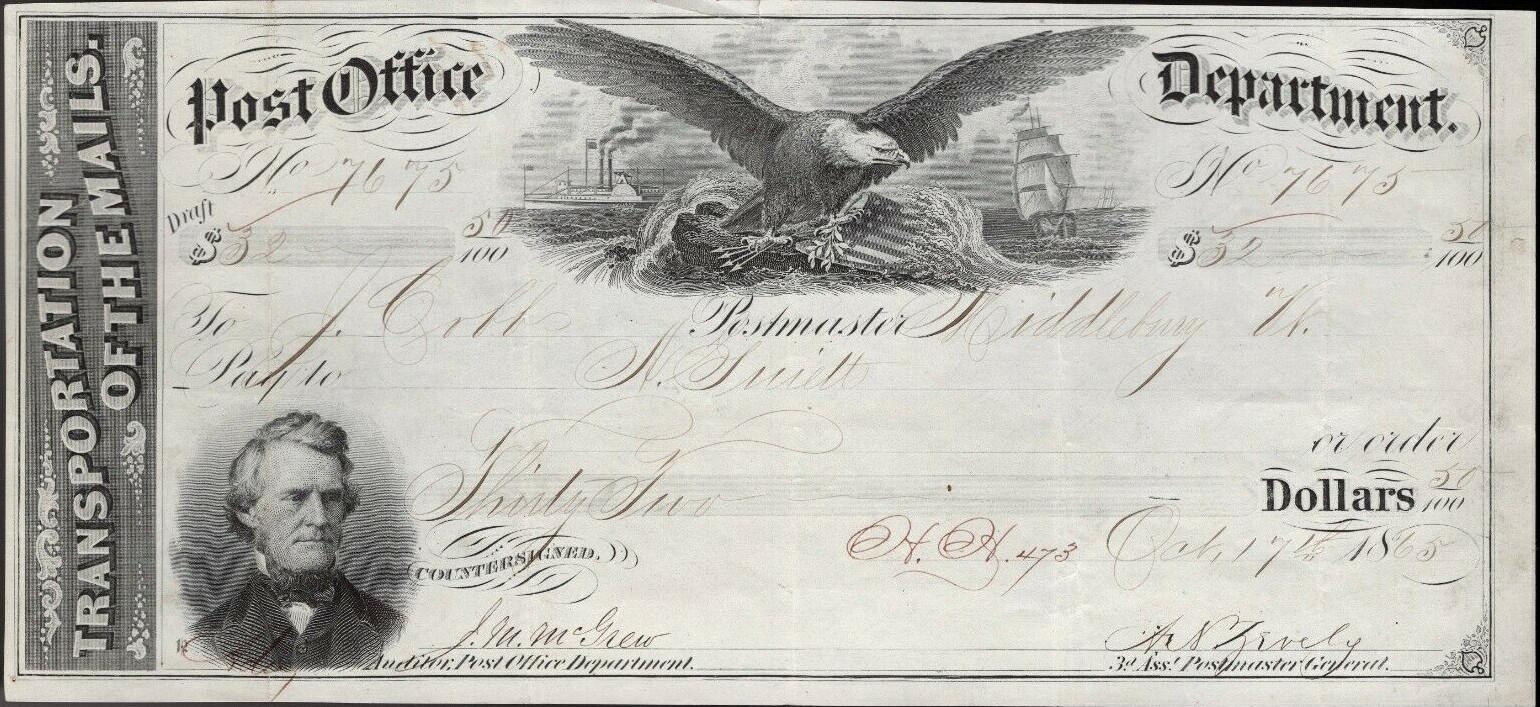
For about 20 years, I have collected and accumulated a wide variety of the older Post Office Department forms used during the 19th (and occasionally the 20th) century. It should be no surprise that the Post Office Department tried to simplify the workload of the Clerks at the Headquarters by creating standard forms that would be adequate for almost any situation that might arise.
This post illustrates just a few of these forms.
I recently had occasion to reach out to a dealer who I knew often had these materials, but I had not been in touch recently. It turns out he did have an estate he was helping sell material for, which included some of these POD forms.
He ended up finding an even dozen of these forms, and graciously scanned them and sent me the images. To my surprise, all were from the 1840s and 1850s, and in spite of already having 100s of these older forms, eleven were new to me, so I gladly bought them to add to my collection.
These forms addressed a wide variety of functions performed by the postmaster, and are not in any particular order, other than forms used for similar functions will be grouped together,
Item 1This form is a wrapper that was used to enclose the Postmaster Commission for the newly appointed postmaster, Rufus Bucklin, at the post office of Wallingford, VT. The front panel...
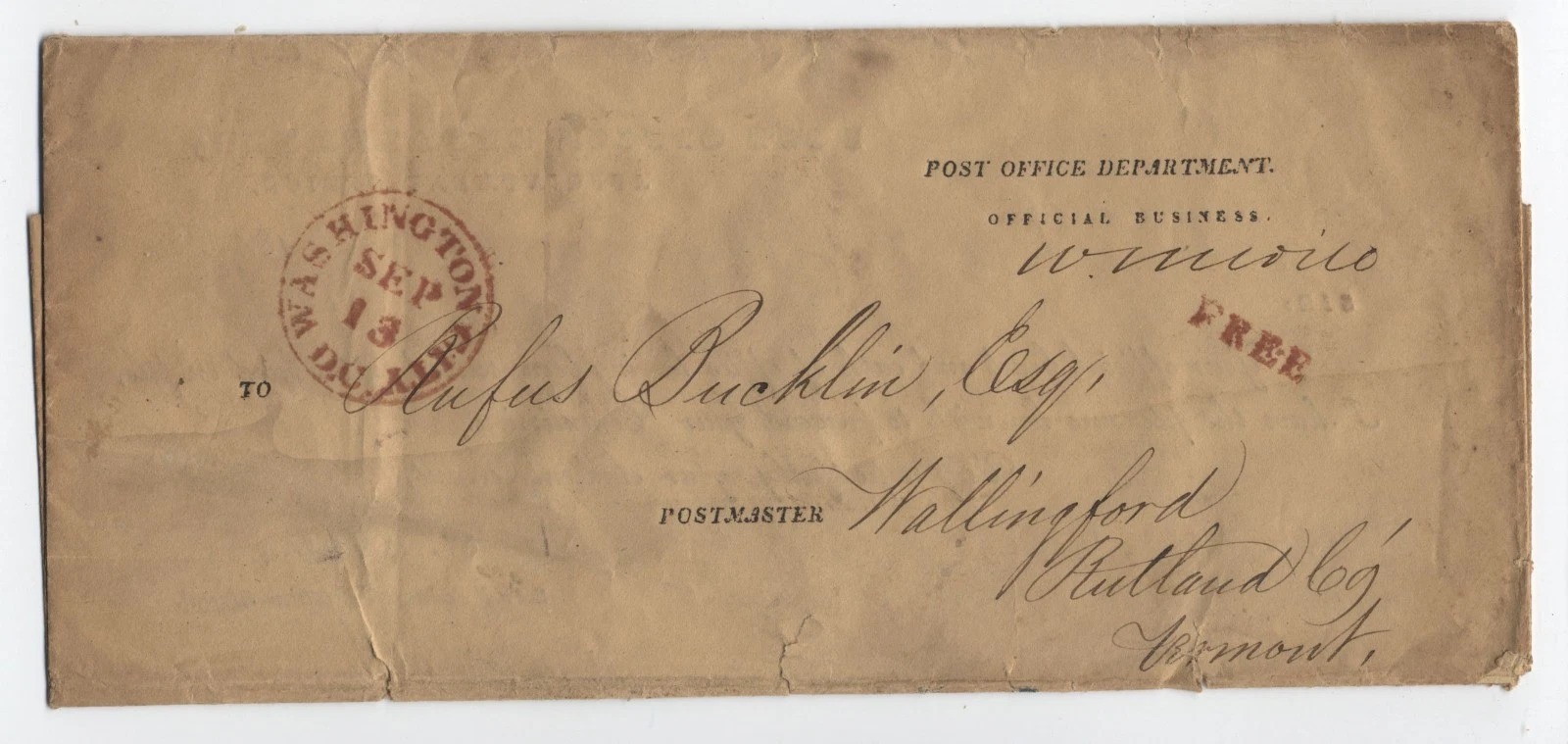
The internal letter...

This form is smaller than most, measuring 12" x 9.5". Most of these forms were printed on 16" x 10.5" paper stock, then folder to 8.0" x 10.5. Many were printed on each side. You often see these cut to separate the address panel from the form, typically done by dealers who want to make two sales, one with the front panel and the sender's "FREE" frank, and the second as n example of the form. This is annoying, as it often removed information about where the form was originally sent.
For those unfamiliar with Postmaster Commissions, here is an example of one executed by Cave Johnson, Postmaster General at the time that the commission for Bucklin was mailed. However, the commission is not the one for Bucklin, simply one similar from my collection.
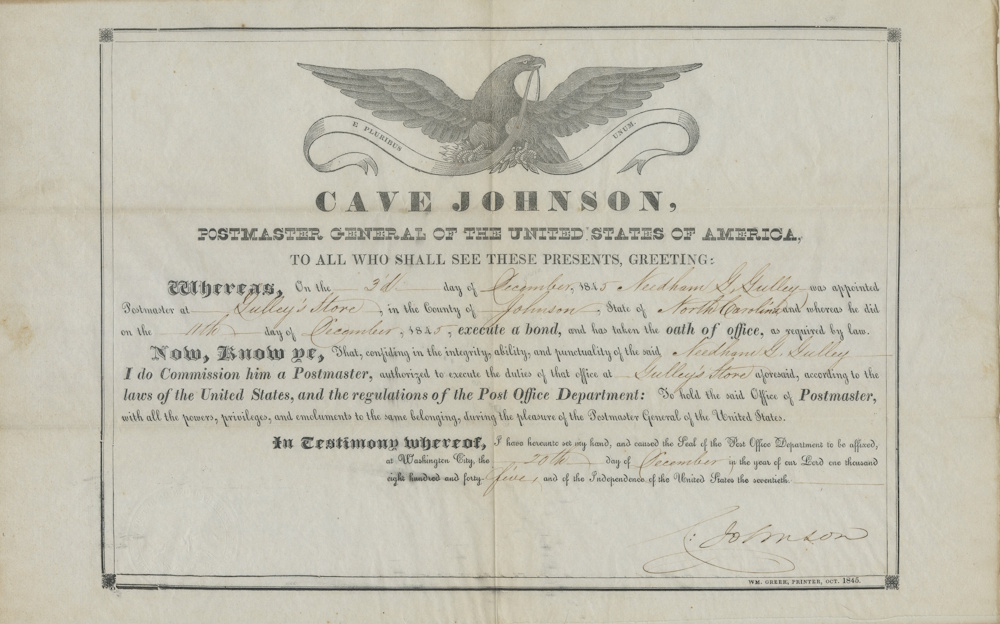
The next two items are similar, but complimentary with each other.
Item 2.This is an circular to the postmaster at Mound, MO, with instructions concerning his payment to the Mail Contractor who serves his post office. During this period, postmasters completed their Post Office Quarterly Report at the end of each quarter, and sent a duplicate copy to the Post Office Department Headquarters. This report calculated their commission (or salary), and if there was a surplus, they were required to give it to the Mail Contractor, who then collected this surplus from every post office on his route, and these funds were used to pay the Mail Contractor. It is dated 1846.
Page 1 - Instructions
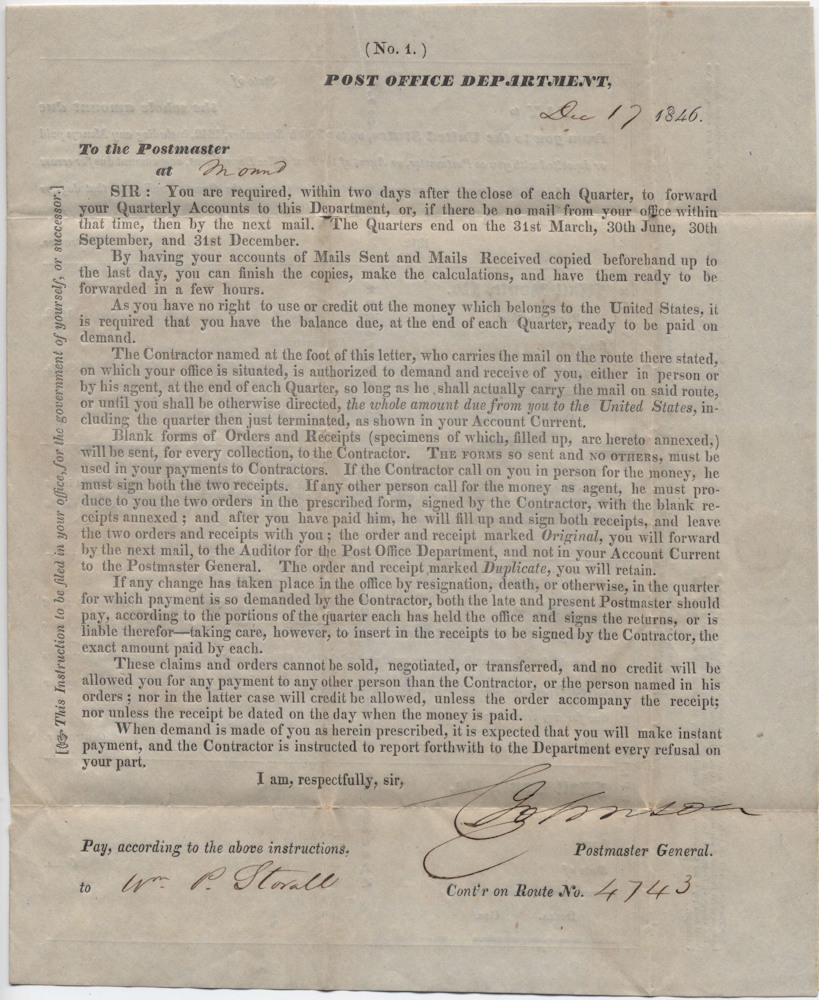
Page 2 - Example of the receipt for payment to the Mail Contractor.

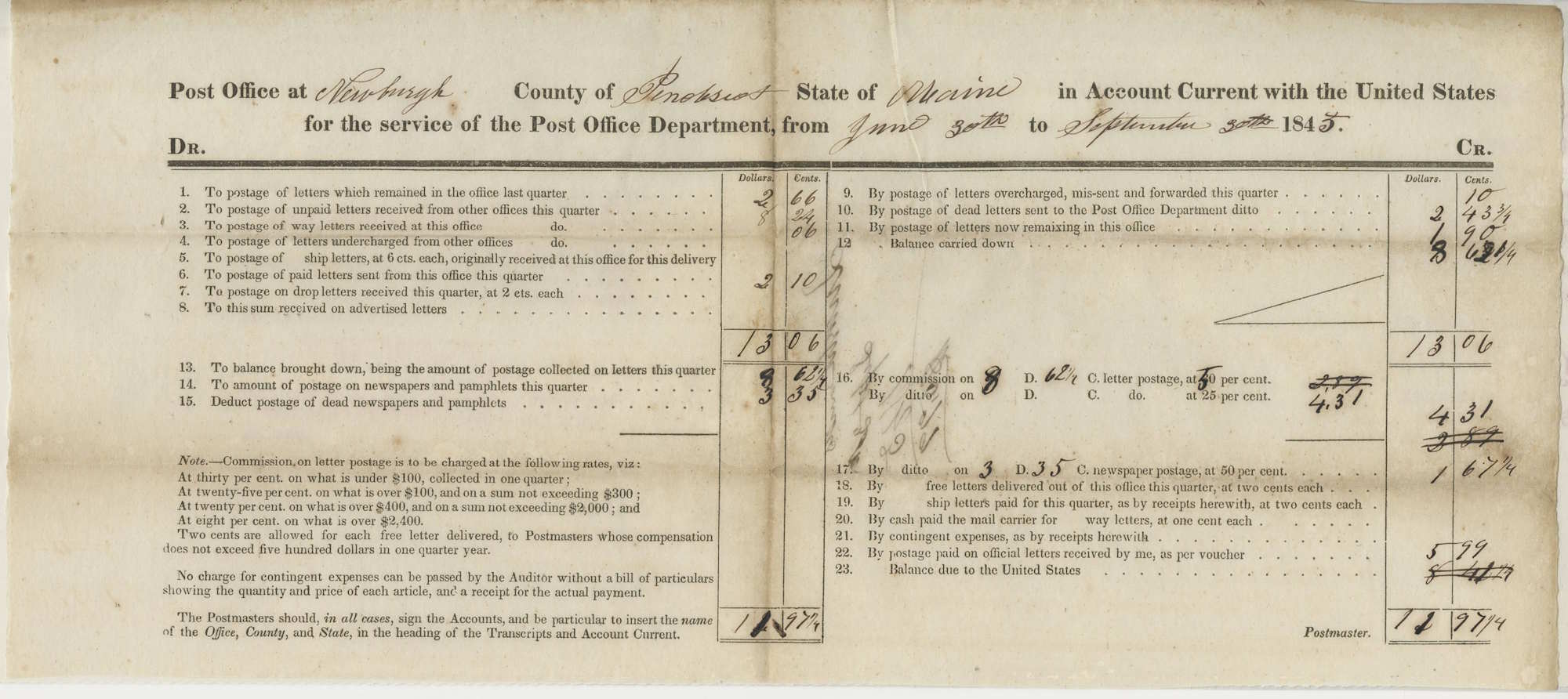
The following is an example of a Post Office Quarterly Report for those unfamiliar with how the looked. Again, this is from my collection, not the purchase, but may help to explain the process.
And the receipt for the payment to the Mail Contractor...
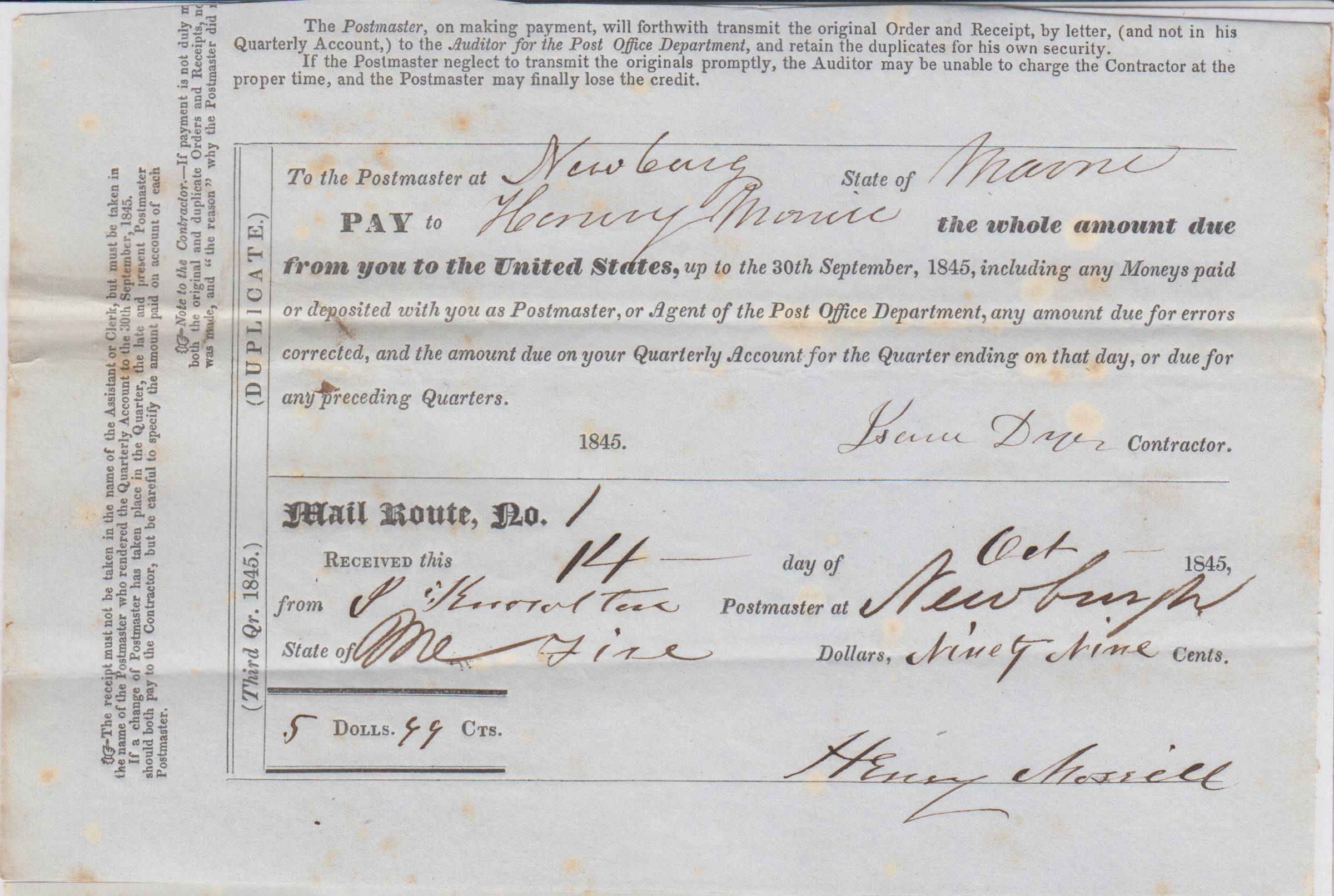
The receipt is for $5.99. If you examine the PO Quarterly report above, line 23, which shows that the "balance due to the United States" is $5.99.
Item 3.This circular has the instructions for the Mail Contractor regarding the collection of surplus funds from the Postmaster. It is dated 1845.
Page 1. - Instructions
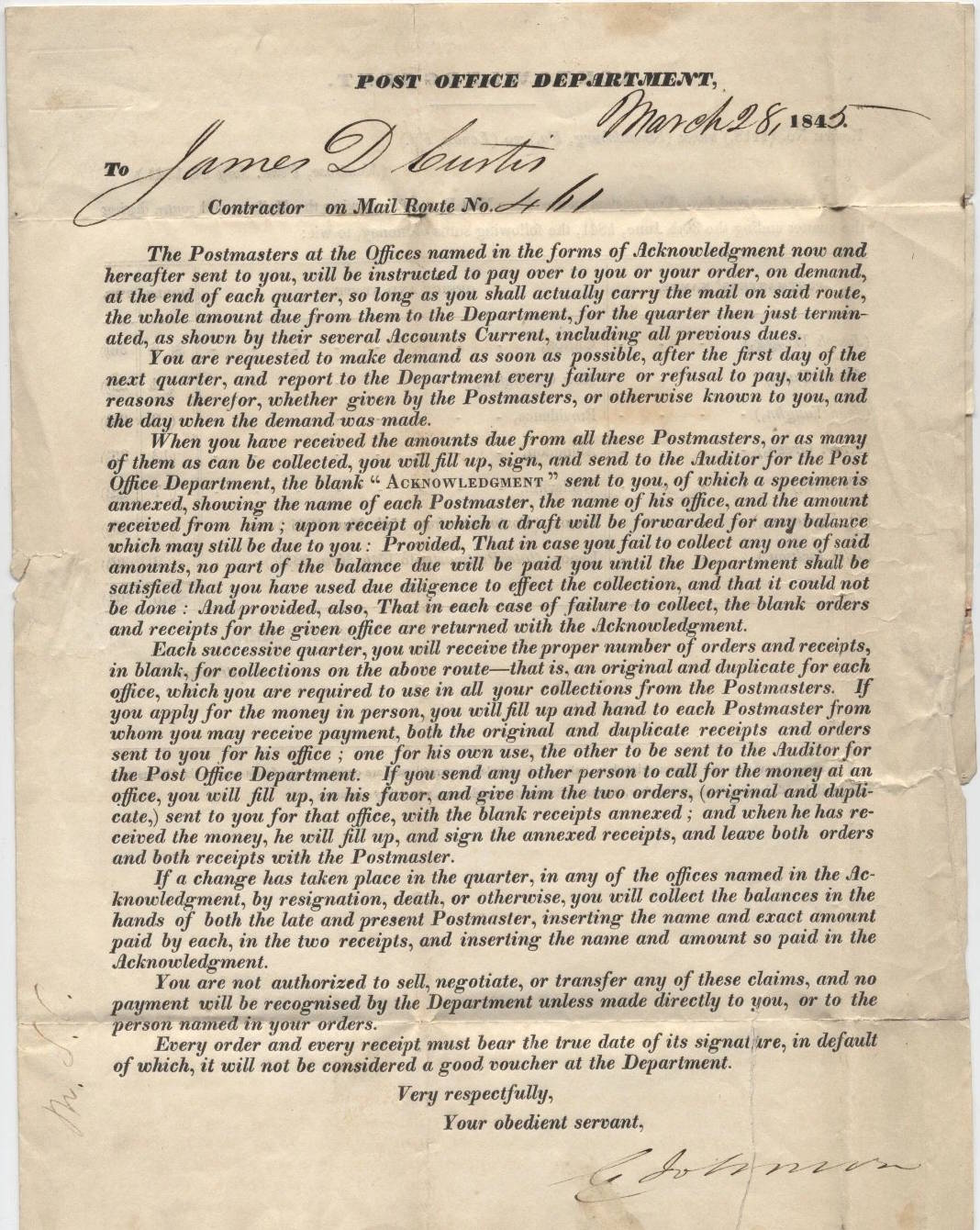
Page 2 - Instructions for Mail Contractor to prepare summary of funds collected on his route.
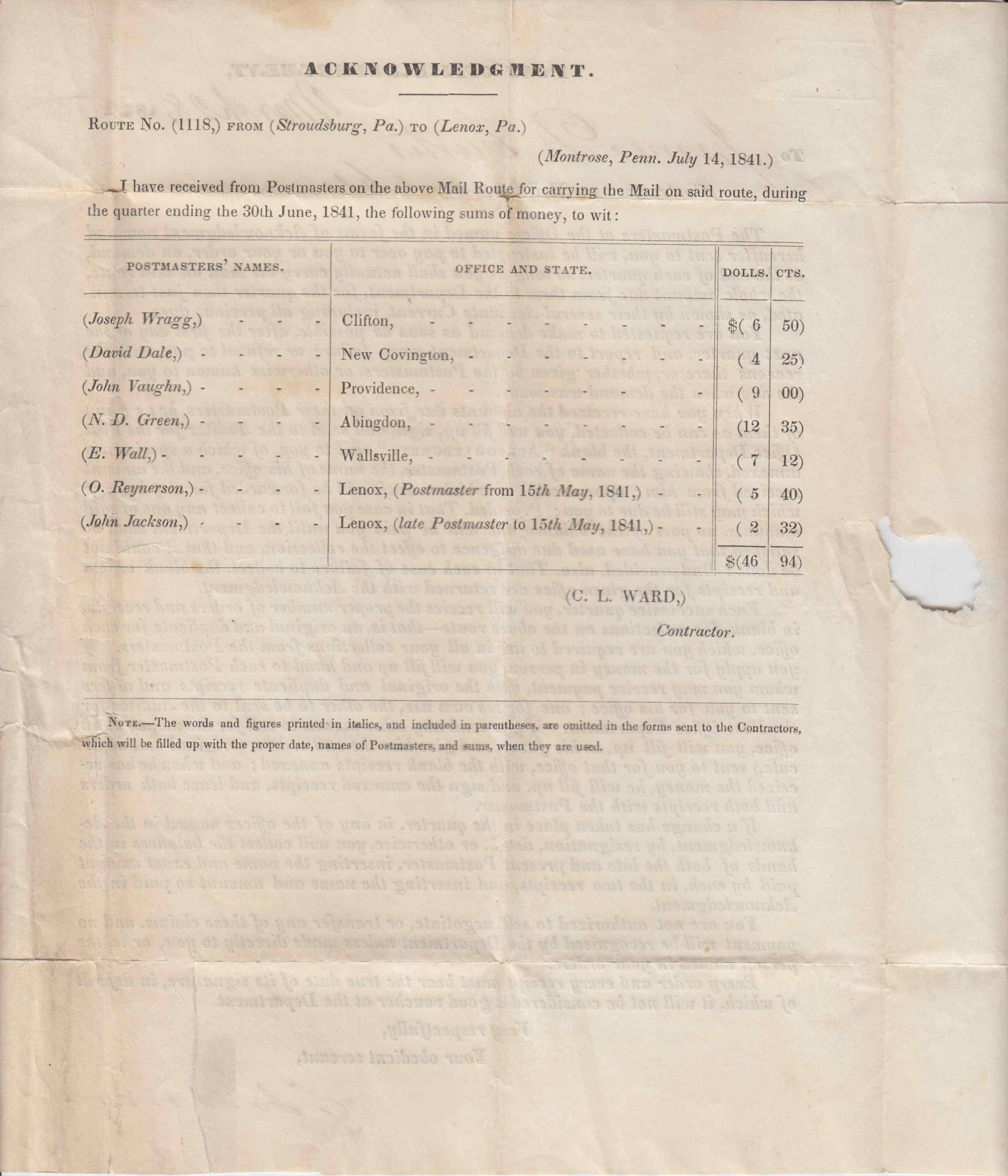 Item 4.
The next item is a response from the Auditor for the Post Office (from the Treasury Department), informing the postmaster at Belleville, NJ, that there was an error in his recent quarterly report for Sept 30, 1845, and he owes to the POD an additional $53.99.
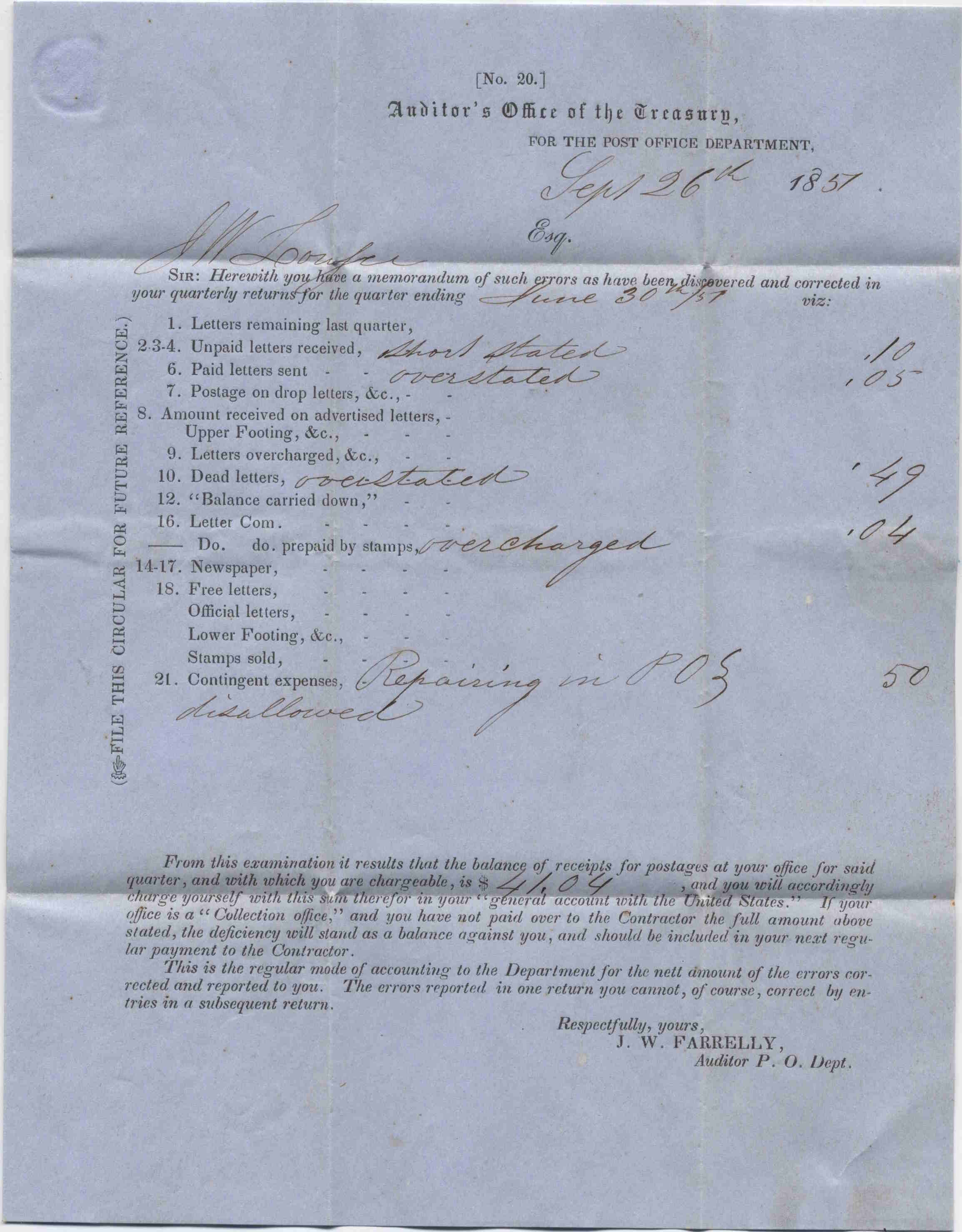
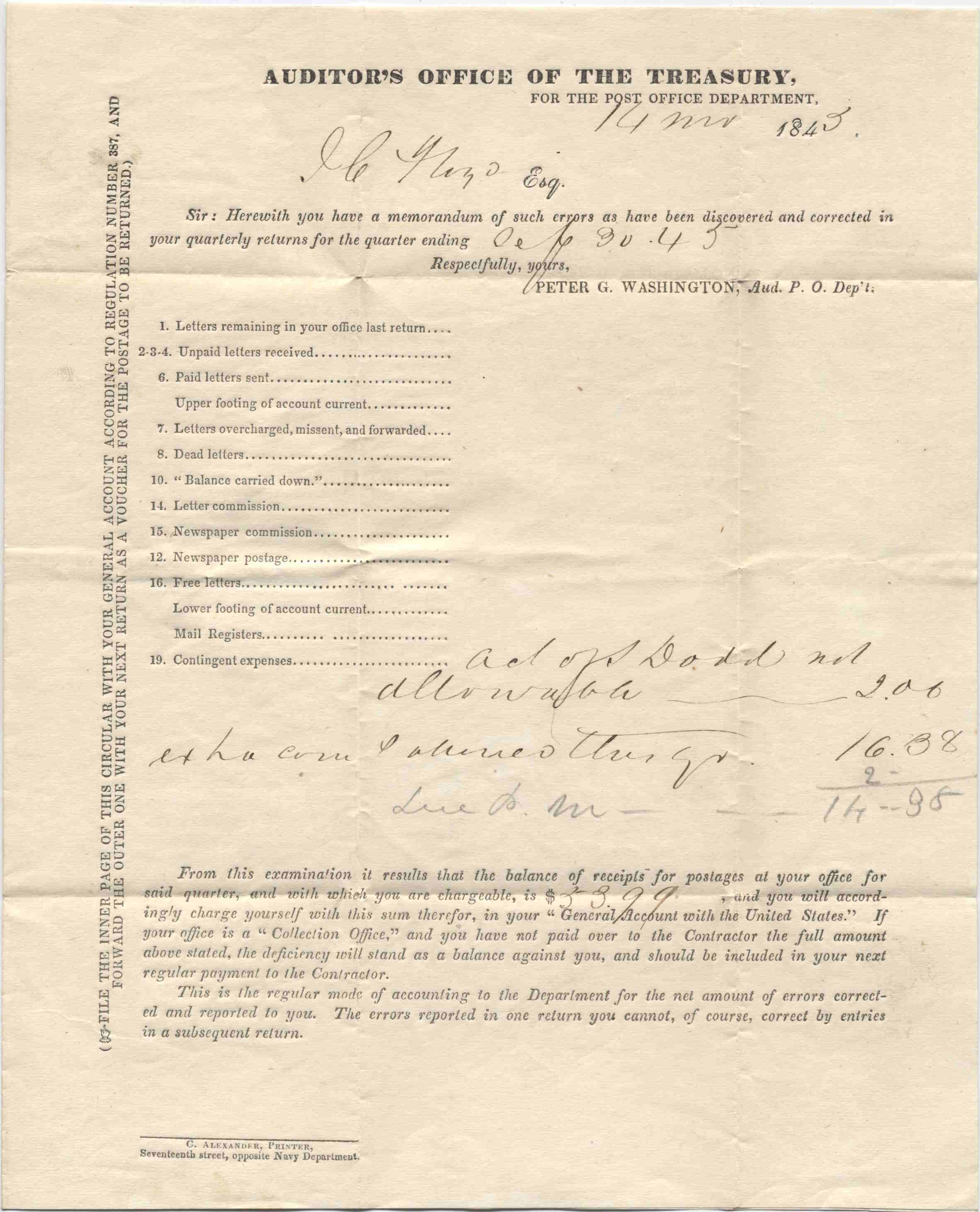 Item 5.
A similar audit form, identified as form "[20.]", for the postmaster at Alton, NH, for June 30, 1851, noting that he owed the POD an additional $41.04. The Post Office Department began numbering their forms about 1850, no doubt to keep track of what forms they had and to provide a simple reference to the forms in instructions.
 Item 6.
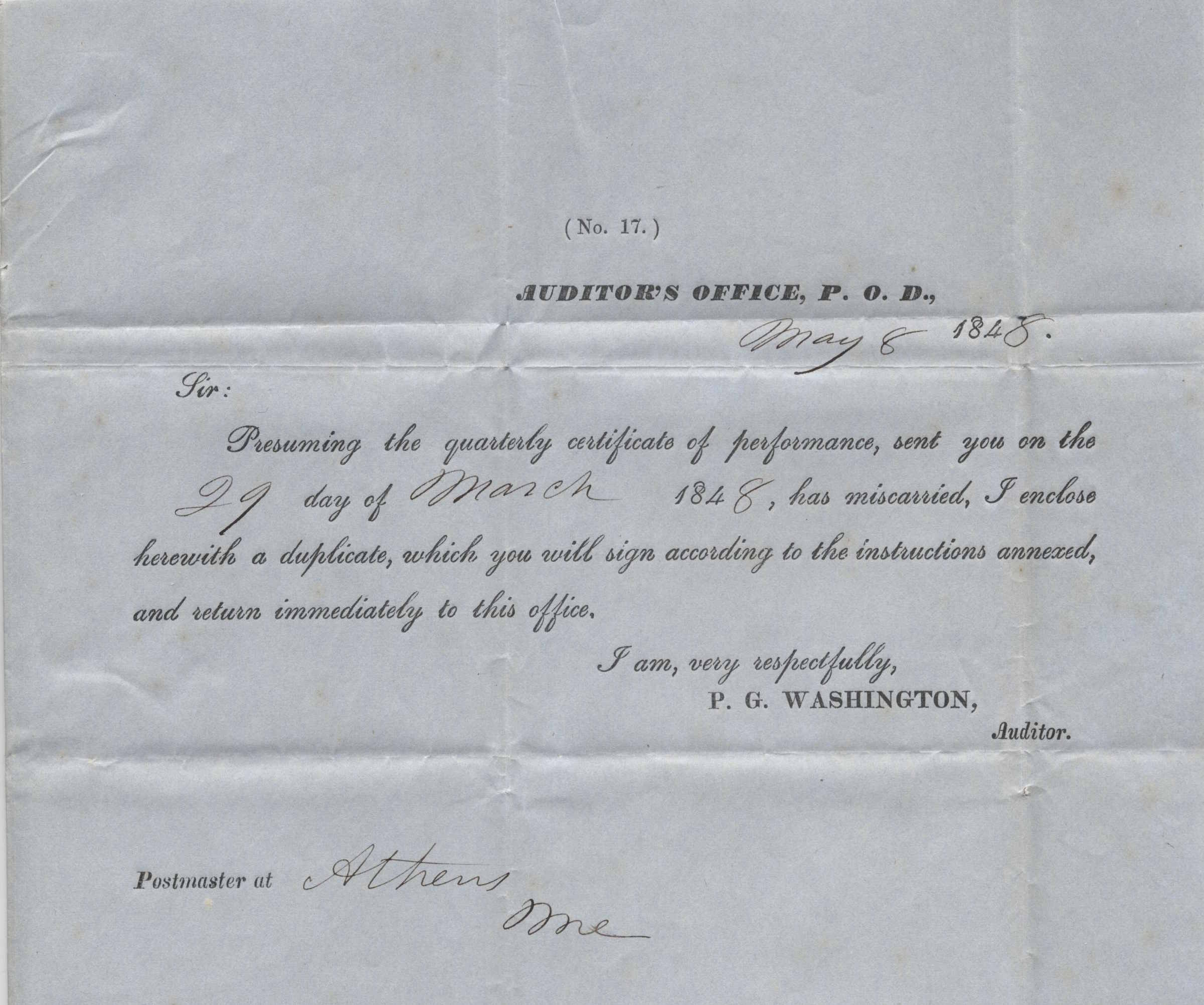
This next item is new to me, and I have not had an opportunity to research it properly. It is identified as form "(17.)", dated May 8, 1848, and instructs the postmaster at Athens, ME, to prepare a duplicate "Certificate of Performance" and return it to the POD.
I believe this refers to the form he is required to prepare that records when the Mail Contractor arrived and departed his post office, but I have not seen a form titled "Certificate of Service" in my collecting of these forms. I cropped some blank space from the bottom of this form, the original size was 8.0" x 10.5".
 Item 7.
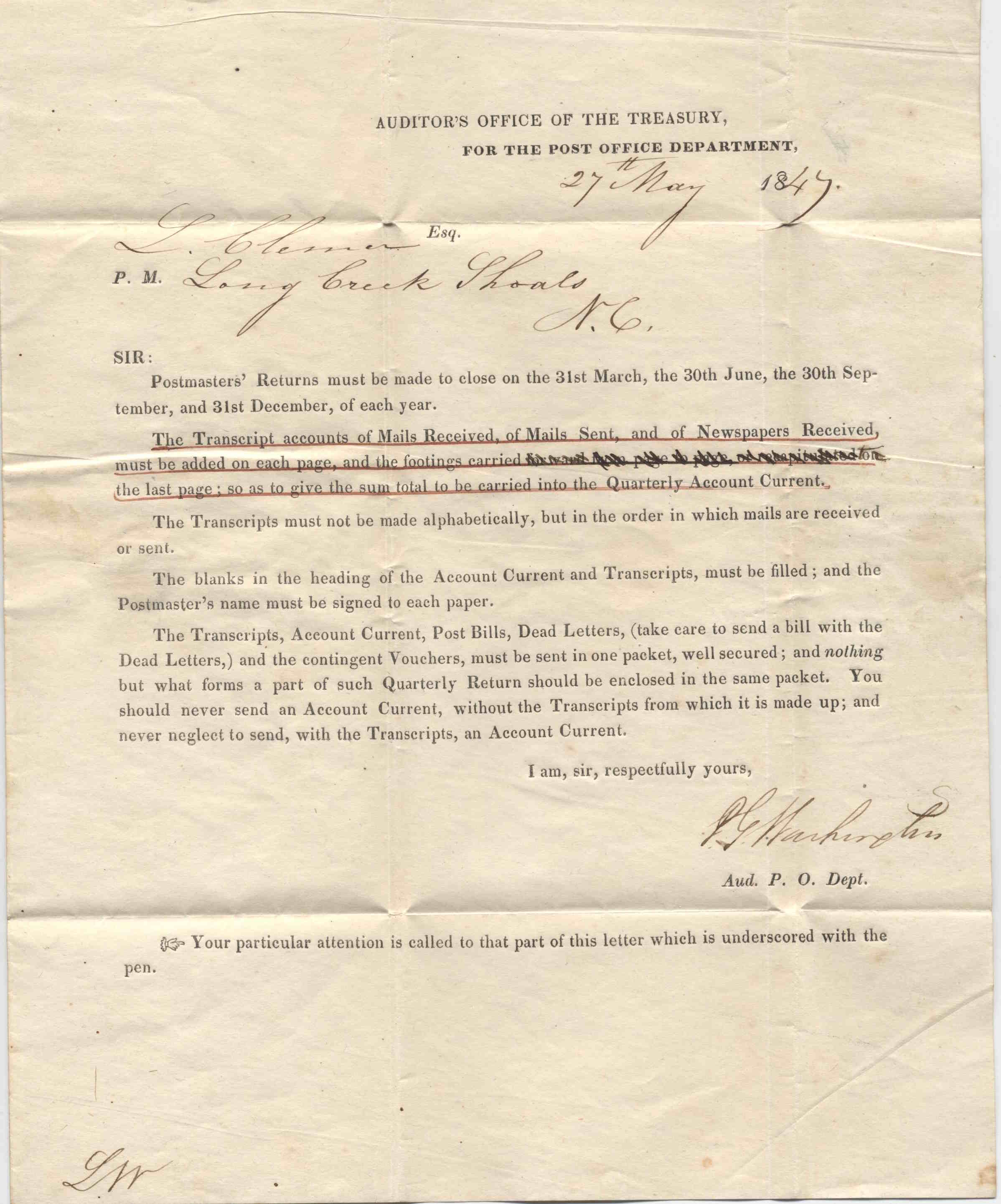
This is a standard, multi-purpose form, which would be sent when a postmaster was deficient in the materials he was to provide each quarter together with his PO Quarterly Report.. The instruction relevant to the current admonition was underlined as seen here. This form was sent to the postmaster at Long Creek Shoals, NC, in 1847.
 Item 8.
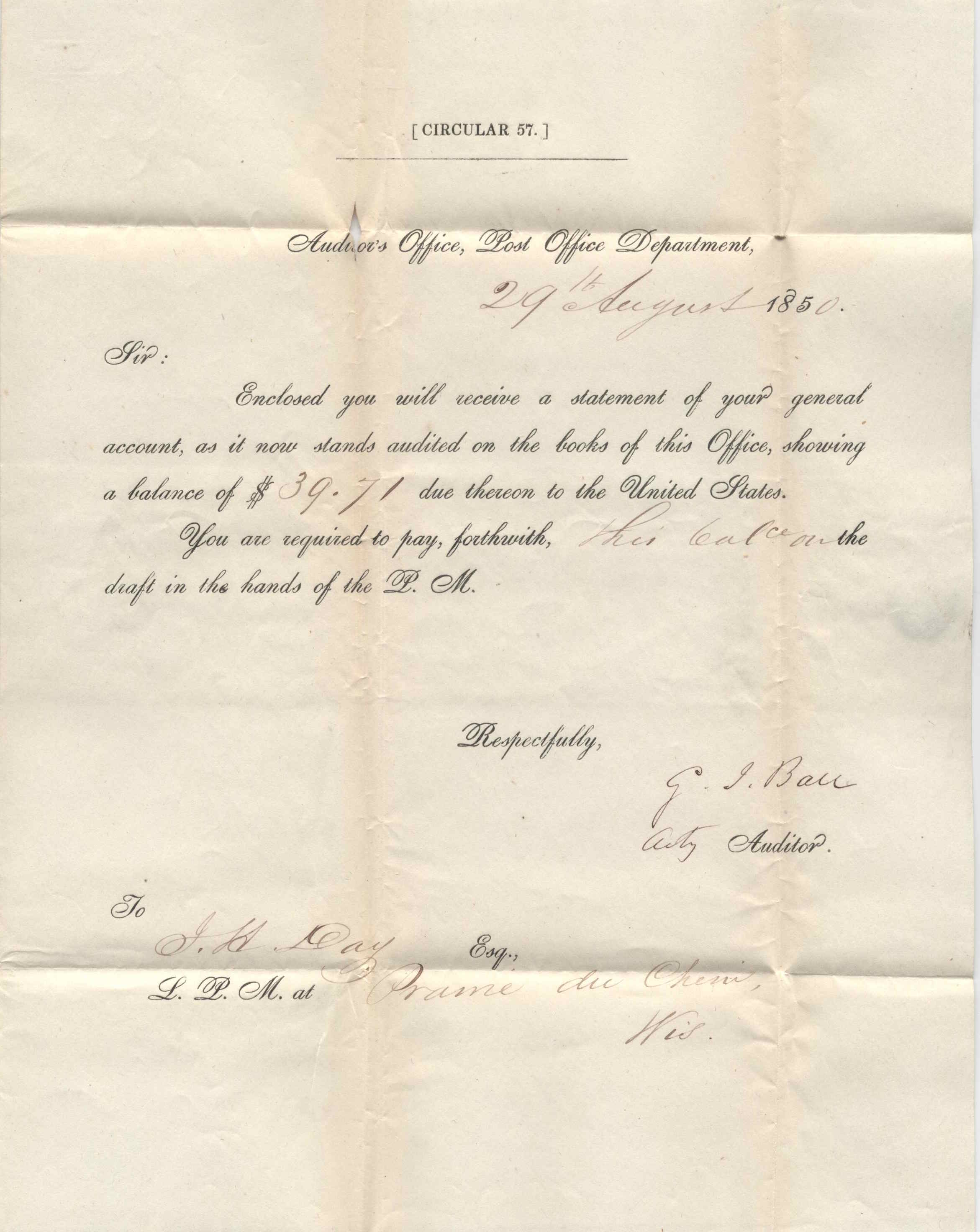
This Auditor form, titled
"[Circular 57.]", was sent to the postmaster at Prairie du Chien, Wisconsin on 28 August 1850, to inform him that he has not promptly paid all funds due to the the Department, and he is to remit $39.71 immediately.
 Item 9.
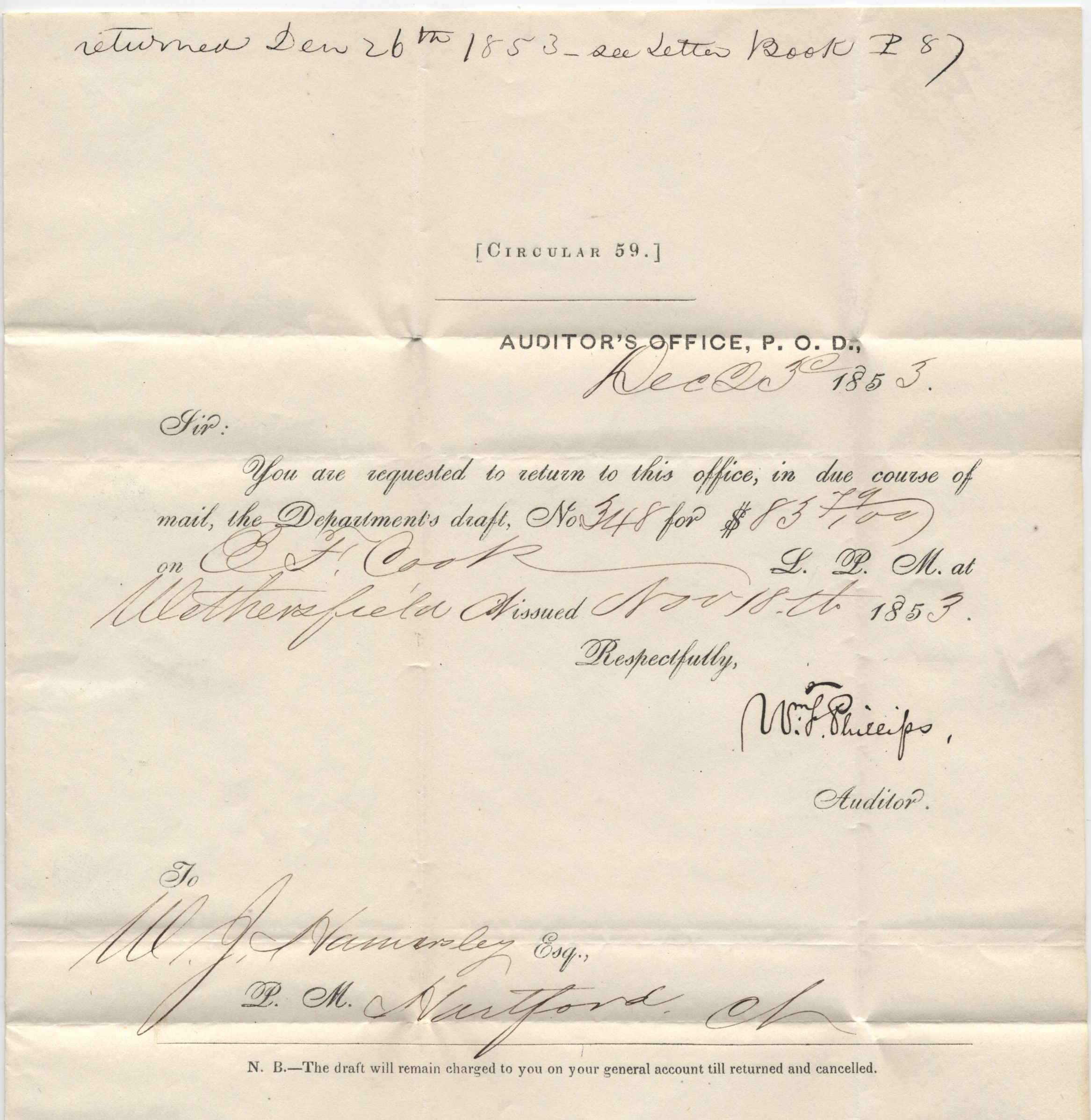
Another Auditor form, this one headed as "
[CIRCULAR 59.]", sent from the Auditor's Office, this one to request that the postmaster is to return a post office draft No. 348 for $83.70 to the Department.
 Item 10.
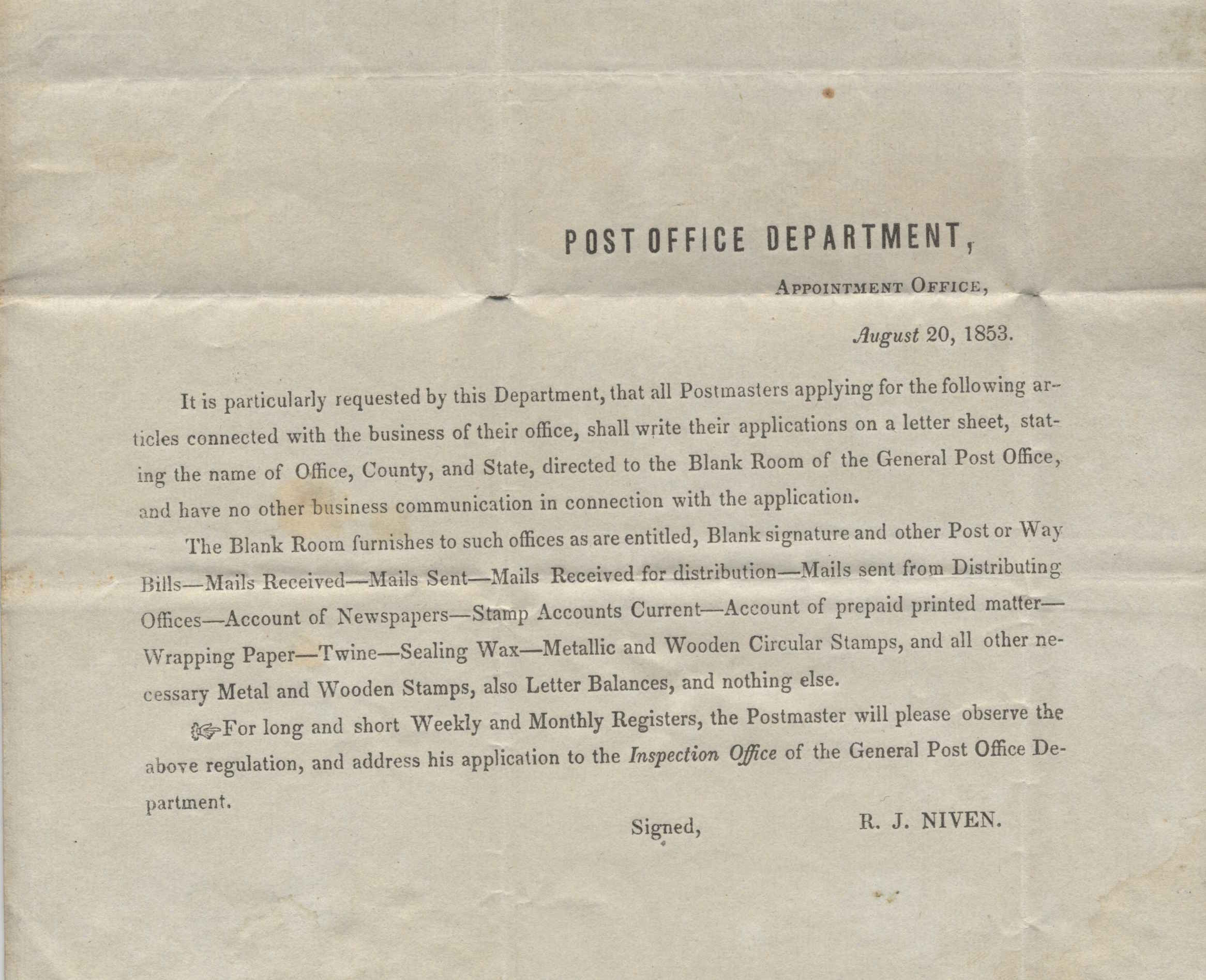
A Circular dated Aug 20, 1853, informing postmasters as to where they are to order their "blanks" ("Blanks" is the term the POD used to refer to the part-printed forms needed to operate the post office and submit reports.)
 Item 11.
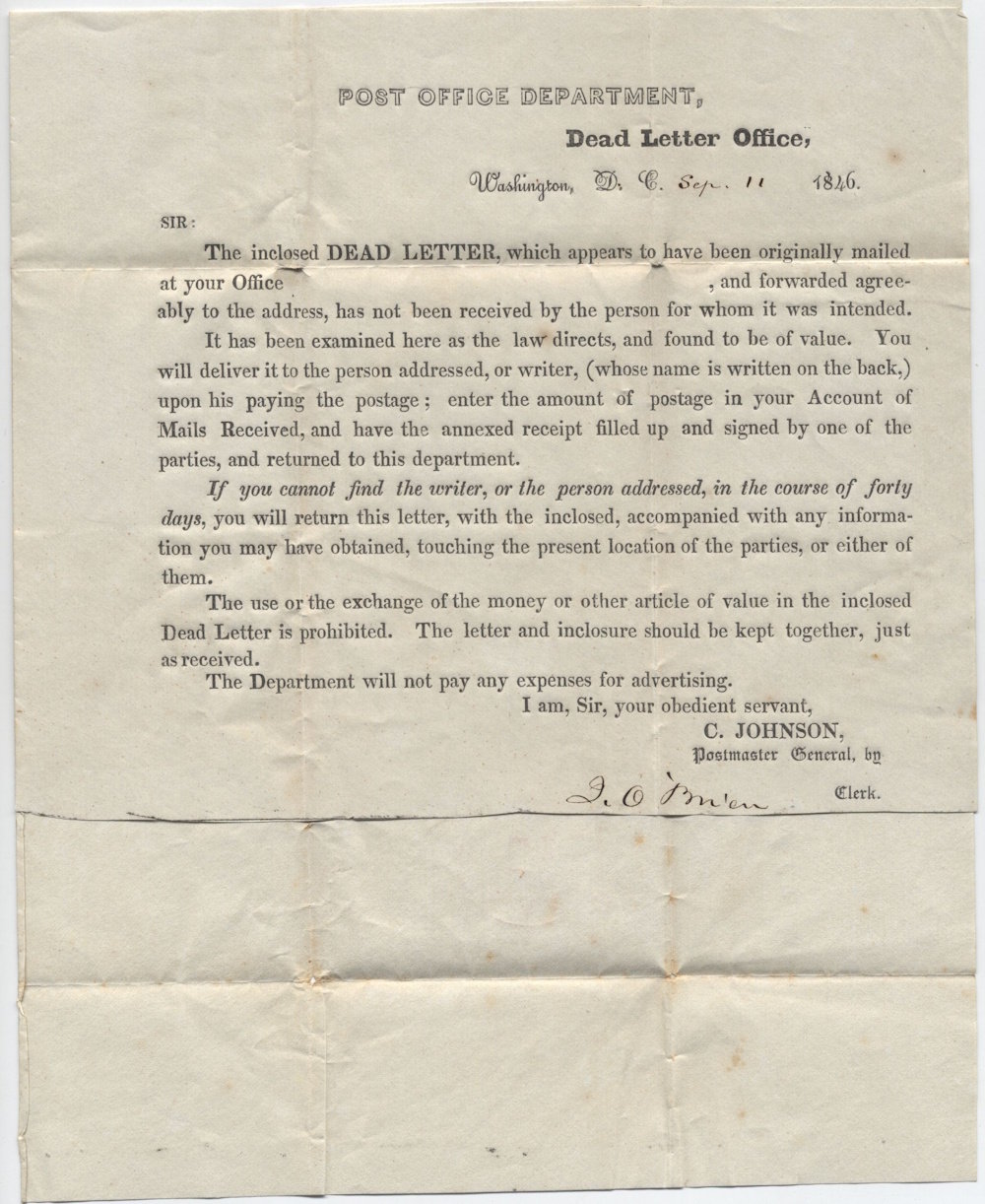
A form letter to the Postmaster at Williamstown, Michigan, Sept 11, 1846, from the Dead Letter Office, transmitting an undeliverable letter, and asking the postmaster to locate the sender and collect the fee.
That ends the current group. If you find these types of forms interesting, let me know and I'll add more to this thread as I acquire them.
MikeL





 Posted 09/22/2025 7:47 pm