| Author |
 Replies: 96 / Views: 6,934 Replies: 96 / Views: 6,934 |
|
|
|
Pillar Of The Community
Israel
4904 Posts |
|
|
Pillar Of The Community
Israel
4904 Posts |
|
|
Lascaux (French: Grotte de Lascaux) is a complex of caves near Montignac in the Dordogne region of southwestern France. Its walls and ceilings are covered with over 600 paintings, mainly depicting large animals typical of the Upper Paleolithic fauna. Created by successive generations around 17,000 years ago, the artwork represents one of the most remarkable examples of prehistoric cave art. In 1979, Lascaux was inscribed as part of the UNESCO World Heritage Site "Prehistoric Sites and Decorated Caves of the Vézère Valley". There are many stamps, postmarks and philatelic items feature Lascaux paintings. Here is a small selection of them. France, designed and engraved by Claude Durrens, issued in 1968 - stamp, Maxicard, FDC and commemorative postmark. 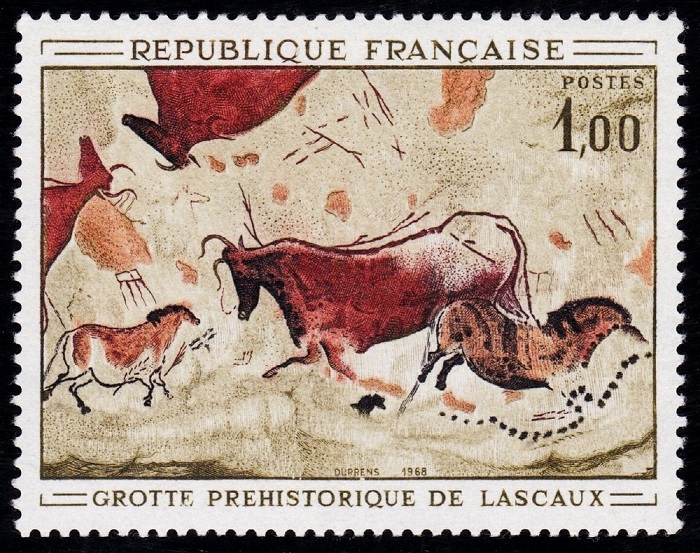 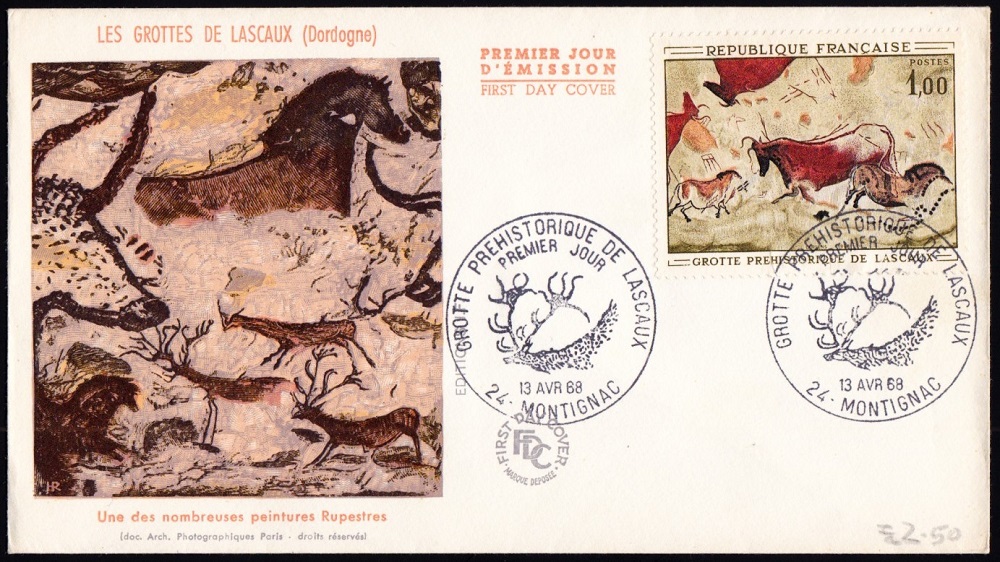 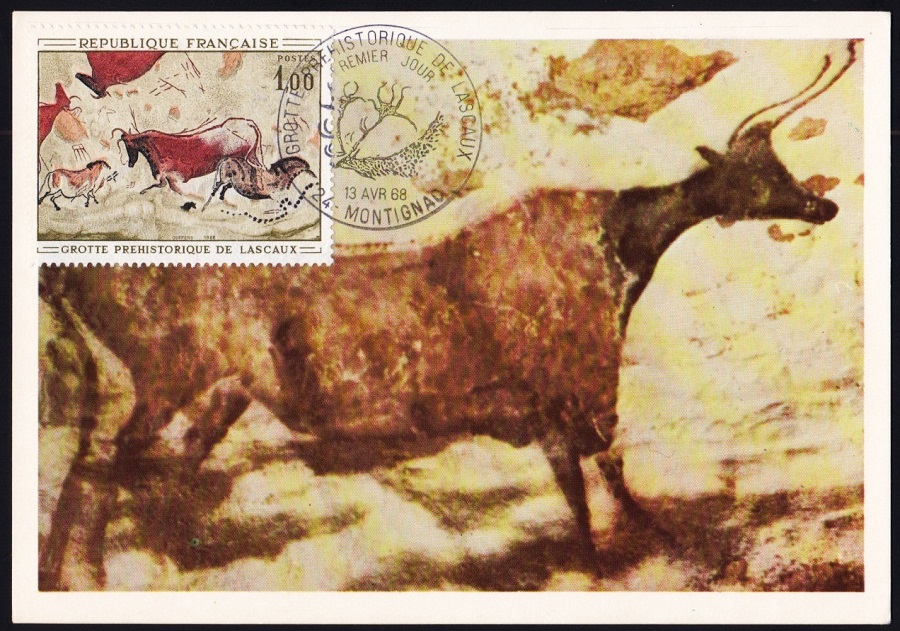 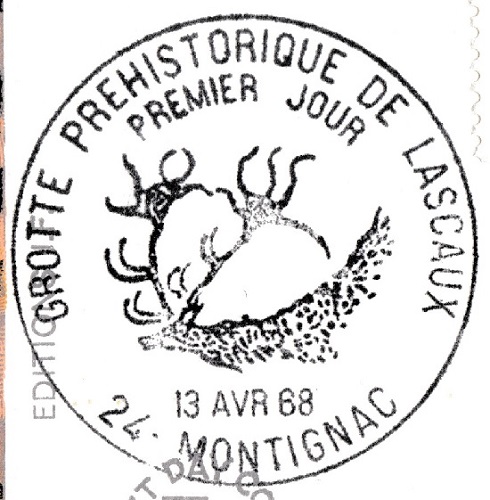 Commemorative postmark, France, 1994. 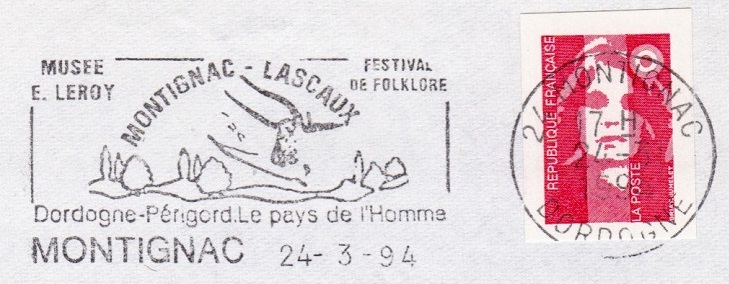 Monaco, designed and engraved by Claude Durrens, issued in 1970. 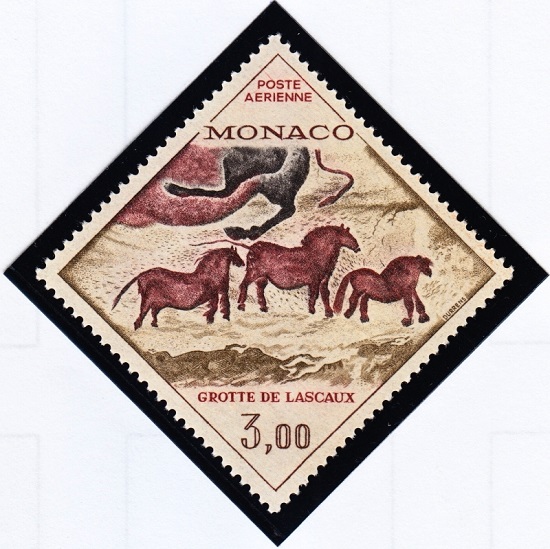 Togo, 2013. 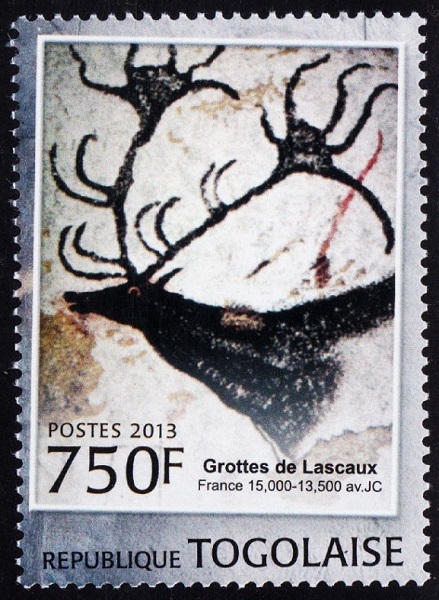 |
Send note to Staff 
|
|
|
Pillar Of The Community
Israel
4904 Posts |
|
|
Chilean rock art, found across the northern and central regions of the country, includes thousands of engravings and paintings depicting animals, human figures, and ritual scenes. Created by early Andean cultures, these works date back several millennia and reflect both daily life and spiritual beliefs. Important sites such as Taira, El Médano, Valle del Encanto, and El Buitre preserve remarkable examples of this artistic tradition, offering valuable insight into the cultural history of prehistoric Chile. Cave and stone paintings, Chile, 1995. - Engraved mask from the summit of El Buitre (Limarí Department). - Llamas from the gorge of the upper Río Loa in the section called Taira, near Calama (Antofagasta Department). - Whale hunting using Balsa boats, Rock painting from the El Médano gorge, near Taltal (Antofagasta Department). - Engraved masks from the Valle del Encanto (near Ovalle) in the southern Río Limarí region. 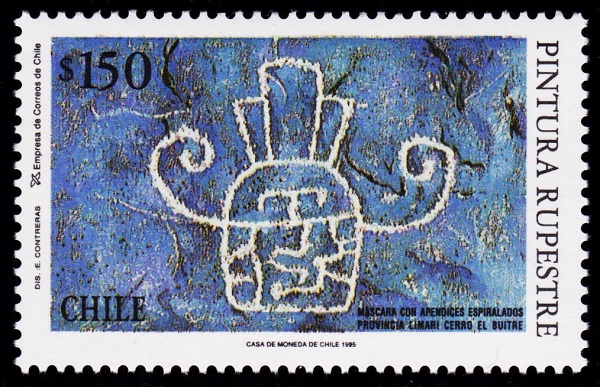 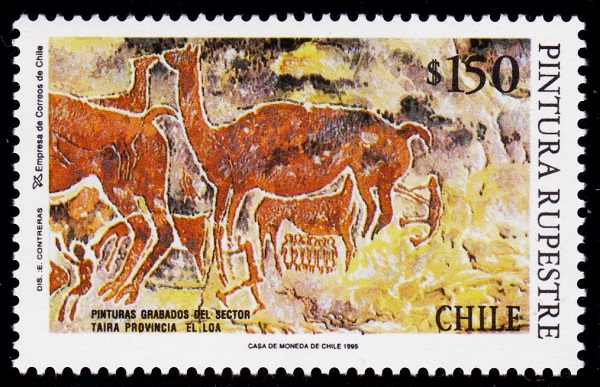 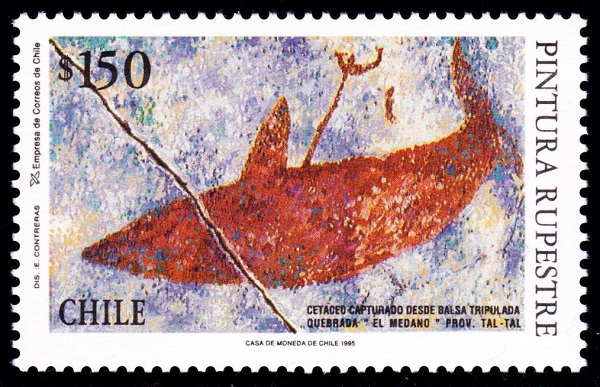 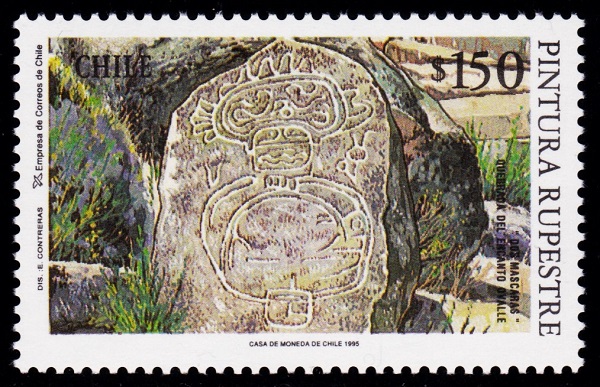 |
|
Send note to Staff
|
|
|
Pillar Of The Community
Israel
4904 Posts |
|
|
The "Rock Art of the Iberian Mediterranean Basin UNESCO World Heritage Sites", are a group of over 700 sites of prehistoric Rock art in the eastern part of Spain. They contain rock art dating to the Upper Paleolithic or Mesolithic periods of the Stone Age. The art consists of small painted figures of humans and animals, which are the most advanced and widespread surviving from this period. 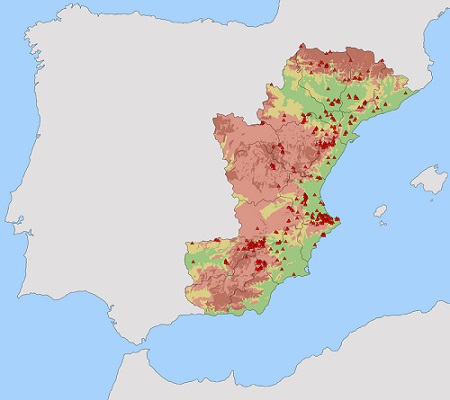 One of the famous caves in this UNESCO sites is the "Cave of the horses" (Cueva de los Caballos) located in Valltorta gorge, Castellon Province, eastern Spain. It is famous for its hunting scene painting which appears on different stamps. Spain, 1967. 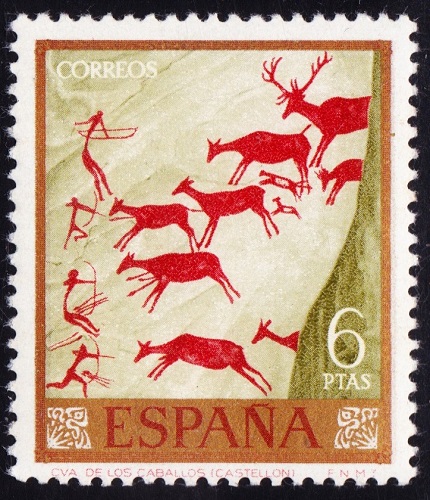 The 13th international congress of historical sciences, USSR, 1970. 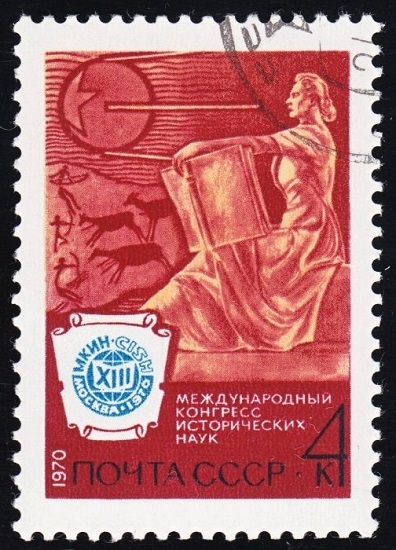 Ukraine issued in 2017 a nice SS about Paleolithic period. The hunting scene appears on the upper right corner. 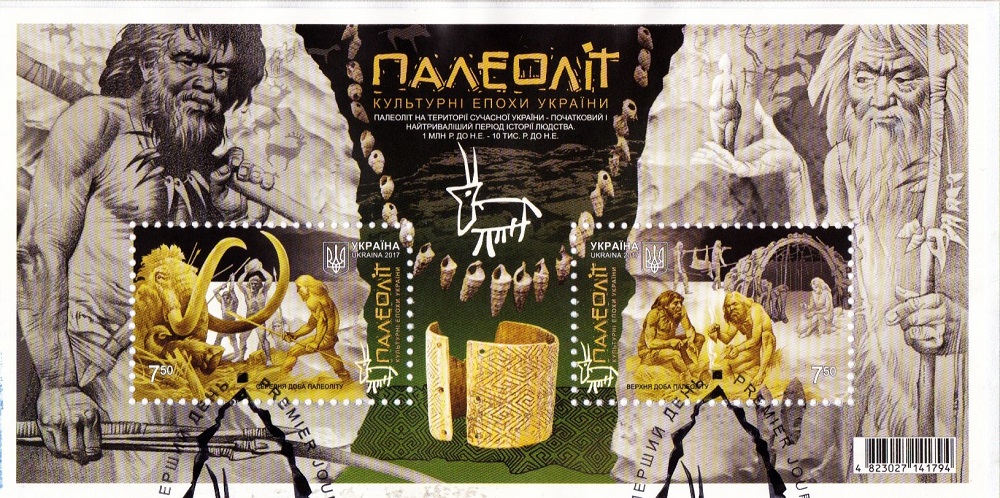 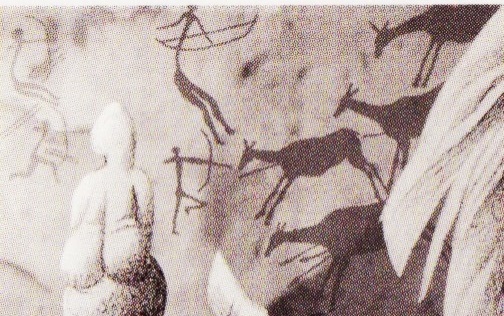 Two mistakes on a SS issued by Togo in 2013. The Los Caballos hunting scene is described as from Altamira cave and the design id horizontally inverted. 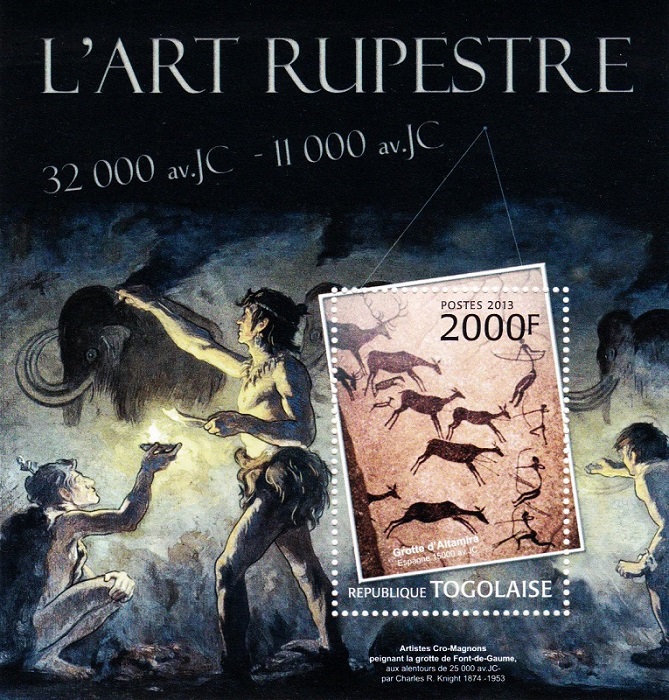 |
|
Send note to Staff
|
| Edited by LaoPhil - 10/08/2025 1:42 pm |
|
|
Pillar Of The Community
Israel
4904 Posts |
|
|
Pillar Of The Community
Israel
4904 Posts |
|
|
Pillar Of The Community
Israel
4904 Posts |
|
|
The Nazca Lines are a series of ancient geoglyphs, large designs or motifs created on the ground by shaping the landscape, located in the Nazca Desert of southern Peru. They were made by the Nazca culture between 400 and 650 AD and include hundreds of figures, from simple lines to large stylized depictions of animals such as hummingbirds, spiders, fish, whales, lizards, and monkeys. While their exact purpose remains debated, most scholars believe they held religious or ceremonial significance. In 1995, the Nazca Lines were inscribed as a UNESCO World Heritage Site. Maria Reiche (1903–1998), German mathematician and archaeologist, dedicated her life to studying and protecting the site, helping secure its recognition and preservation. Here are items issued by Peru in 1987 and 1999, commemorating Reiche, all feature the Nazca Lines. 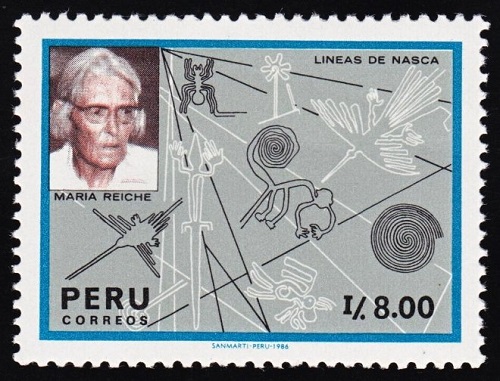 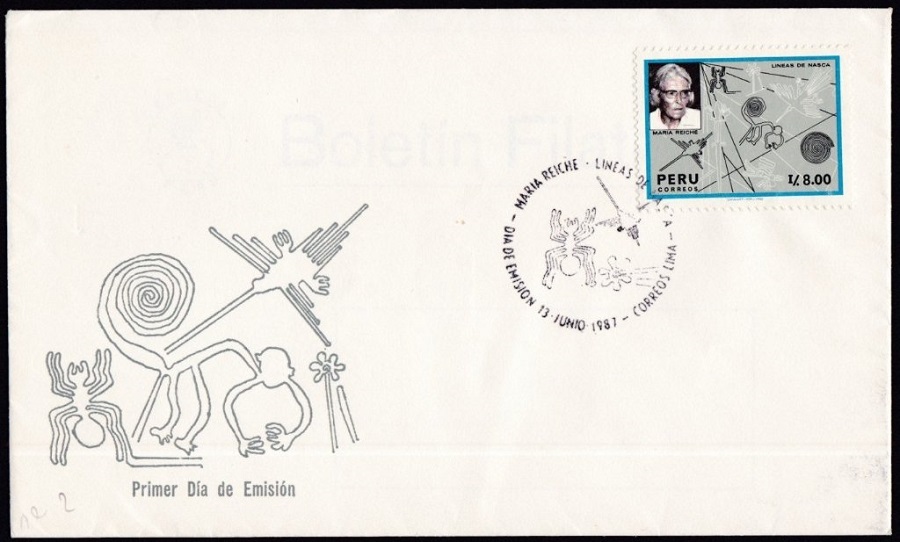 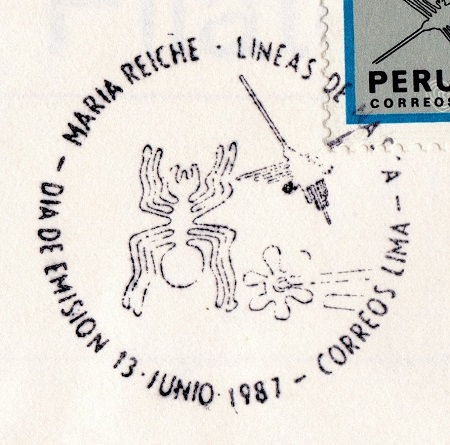 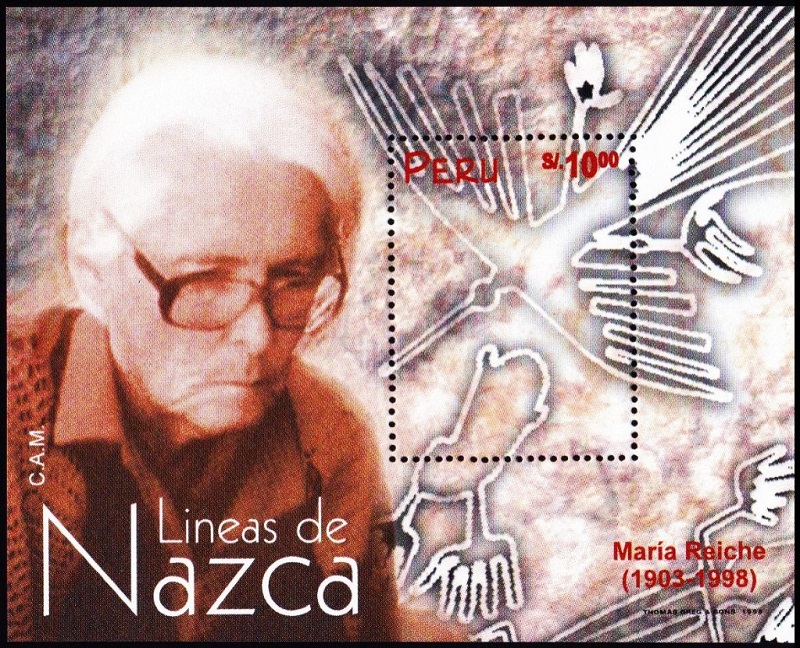 Condor Nazca Lines on the background of the stamp issued by Japan in 1999 to commemorate centenary of Japanese immigration to Peru.  Nazca Lines, Peru, stamp of Mozambique, 2010. 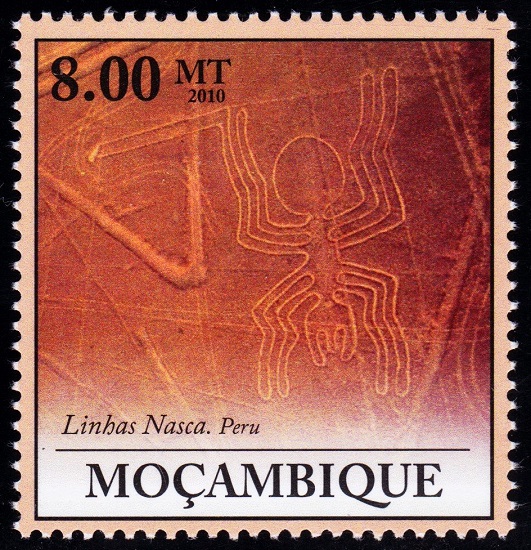 |
|
Send note to Staff
|
| Edited by LaoPhil - 10/10/2025 01:53 am |
|
|
Pillar Of The Community
Israel
4904 Posts |
|
|
Pillar Of The Community
Israel
4904 Posts |
|
|
Pillar Of The Community
Israel
4904 Posts |
|
|
Rock Paintings, issued by Malawi, 1972 - Figures, Chencherere Hill - Lizard and Cat, Chencherere Hill - Schematics, Diwa Hill - Sun through Rain, Mikolongwe Hill 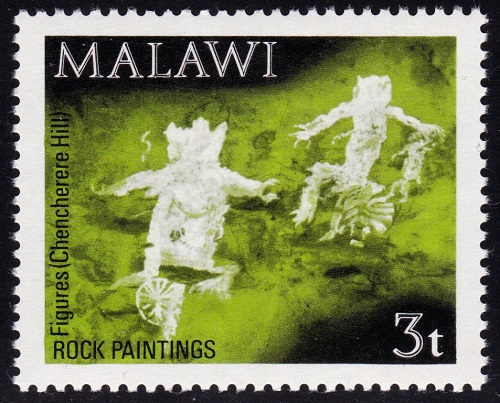 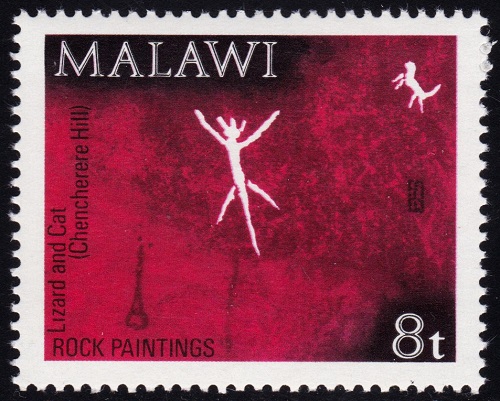 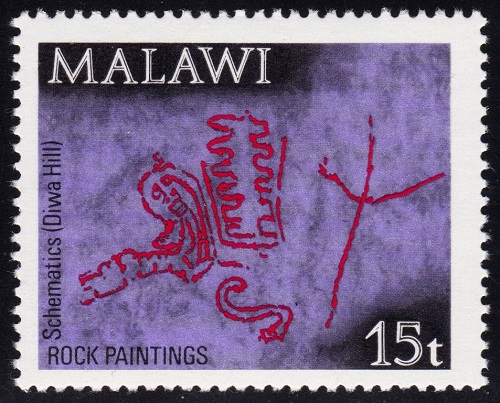 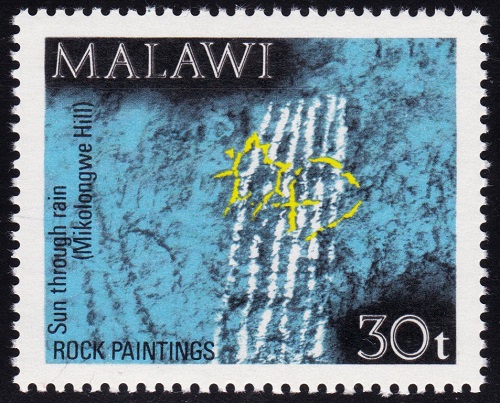 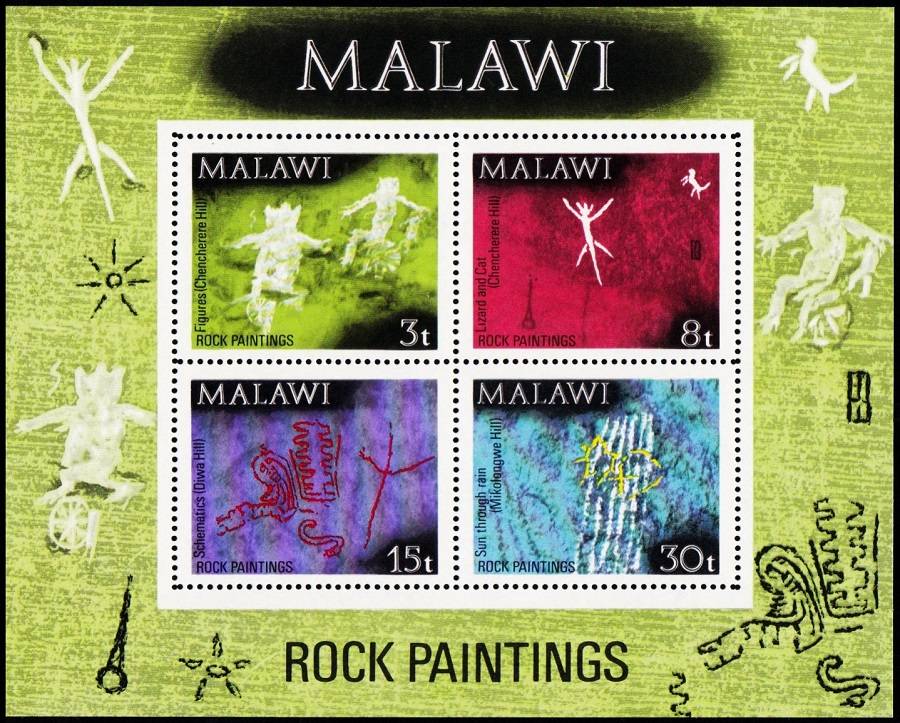 |
|
Send note to Staff
|
|
|
Pillar Of The Community
Israel
4904 Posts |
|
|
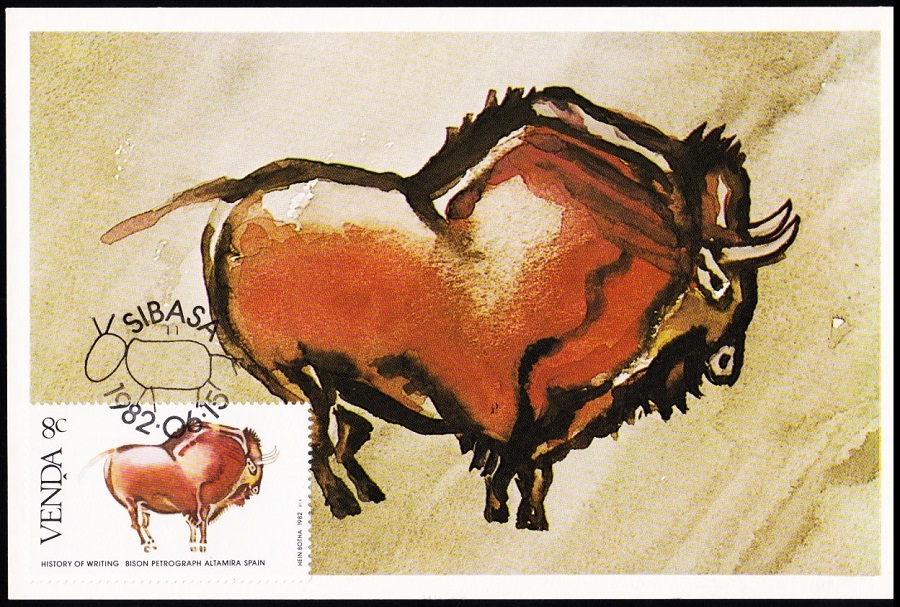
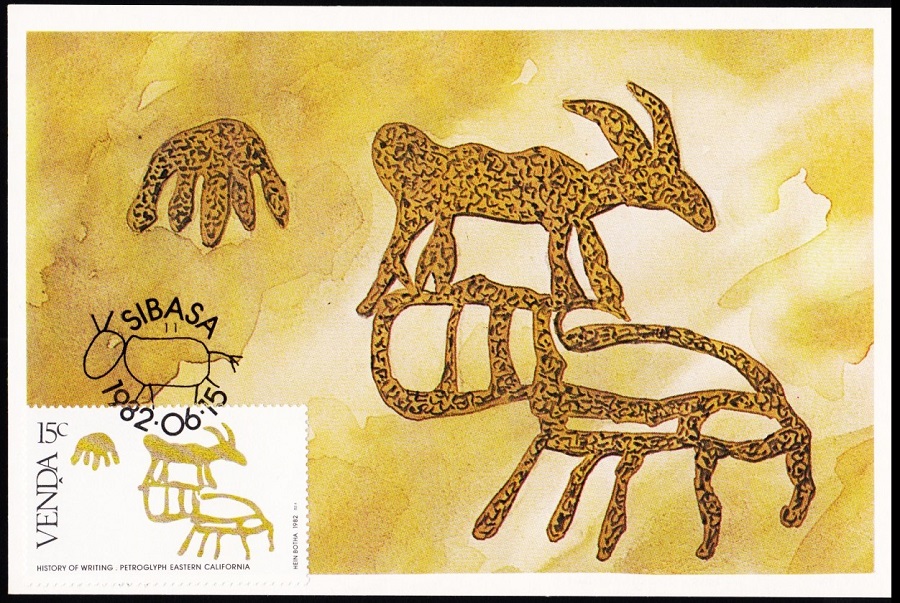
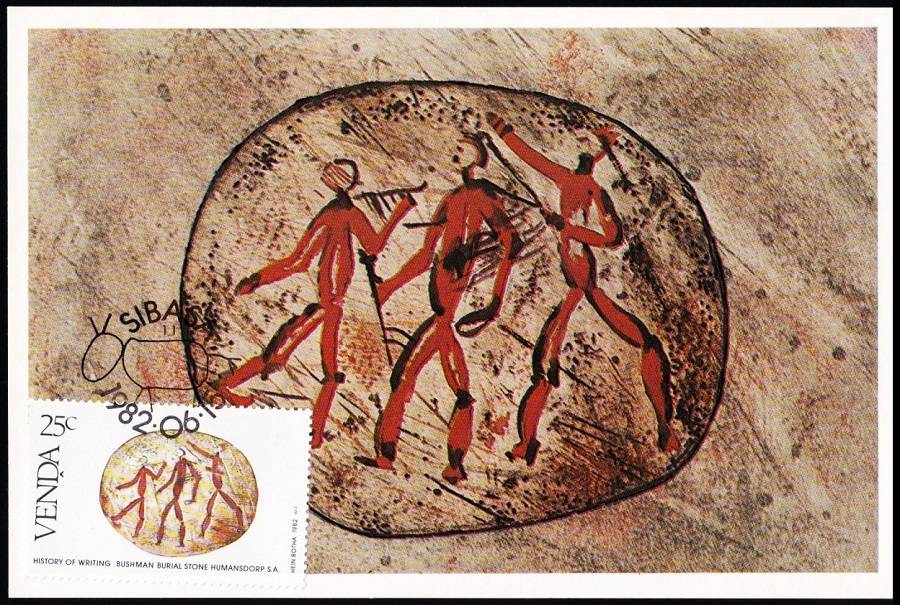
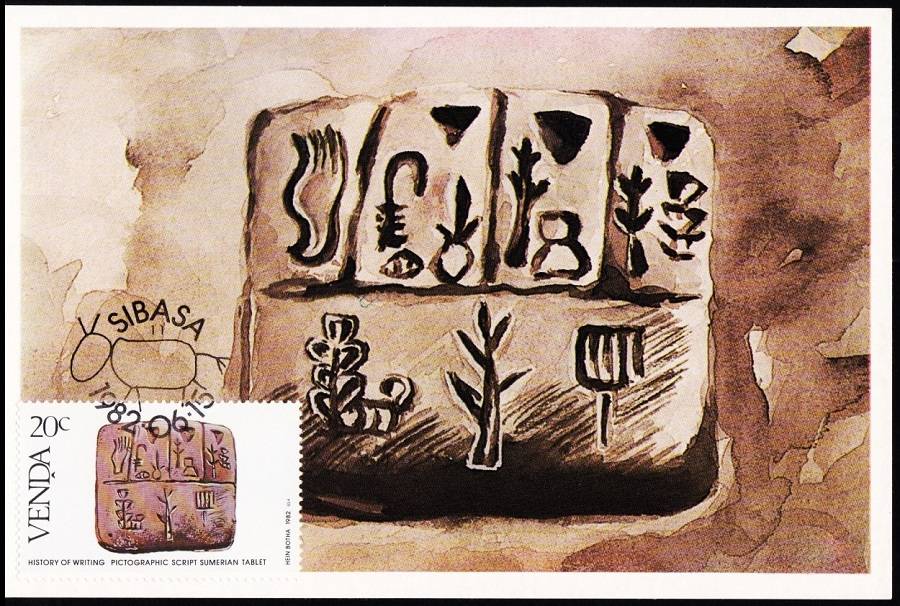
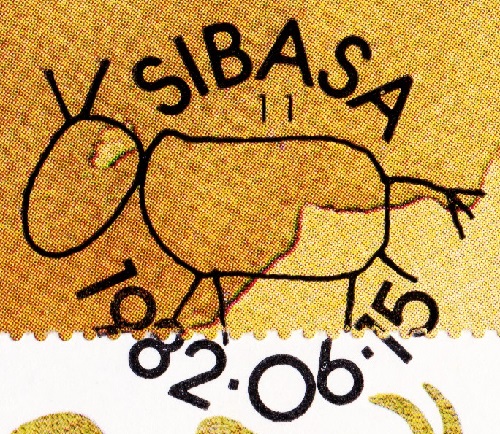
A long series about "The history of writing" was issued for used in Venda. The series contains seven different sets, each has four stamps. The first set was issued in 1982 and show prehistoric paintings and engravings. - Bison, Altamira cave, Spain - Petroglyph, California - Bushman burial stone, Humansdorp, South Africa 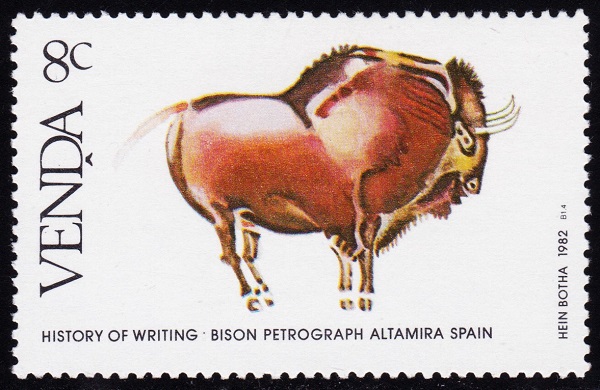 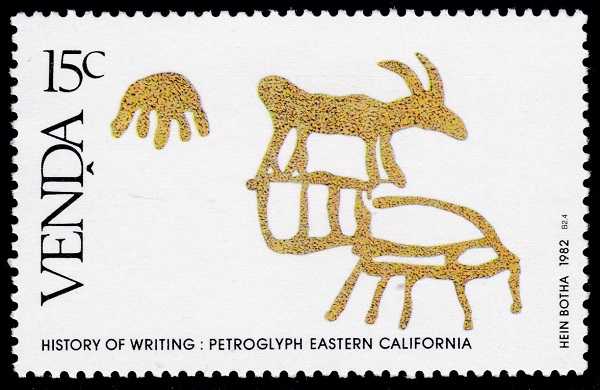 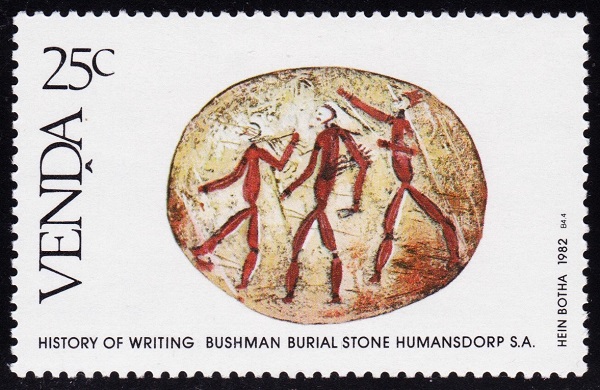 Fourth stamp in the set feature Sumerian tablet which is not regarded as prehistoric. 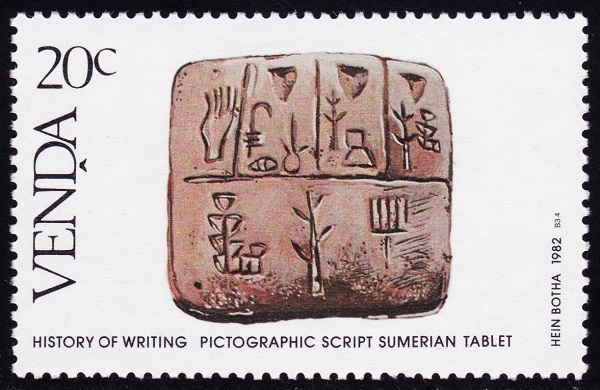 |
|
Send note to Staff
|
|
|
Pillar Of The Community
Israel
4904 Posts |
|
|
Pillar Of The Community
Israel
4904 Posts |
|
|
Pillar Of The Community
Israel
4904 Posts |
|
|
The Eyzies-de-Tayac caves, near the town of Les Eyzies-de-Tayac in southwestern France, are a series of prehistoric rock dwellings containing some of Europe's most important Paleolithic archaeological sites. Dating from the Middle and Upper Paleolithic periods (200,000–10,000 years ago), they are especially noted for their wall paintings. The caves were inscribed as a UNESCO World Heritage Site in 1979. Postmark from Les Eyzies-de-Tayac shows cave painting of Bison, France, 1986 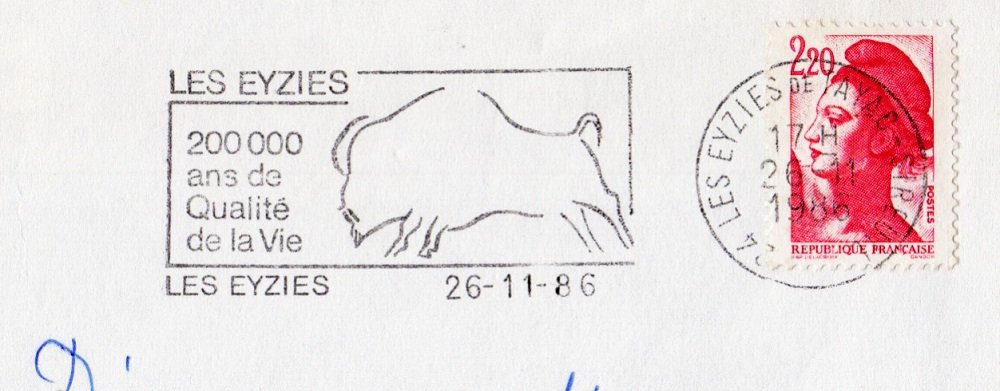 One of the most famous caves in the area is Font-de-Gaume, known for its rich prehistoric wall art. It contains around 230 engraved and painted figures, including bison, mammoths, reindeer, and a woolly rhinoceros. Its best-known image is a scene of a male reindeer licking a female's forehead, depicted on a stamp designed by Durrens issued by France in 1981 and Central African Republic, 2016. 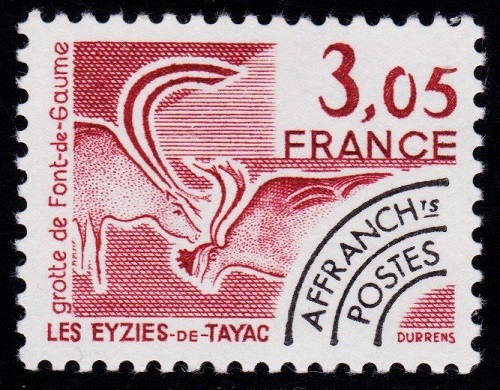 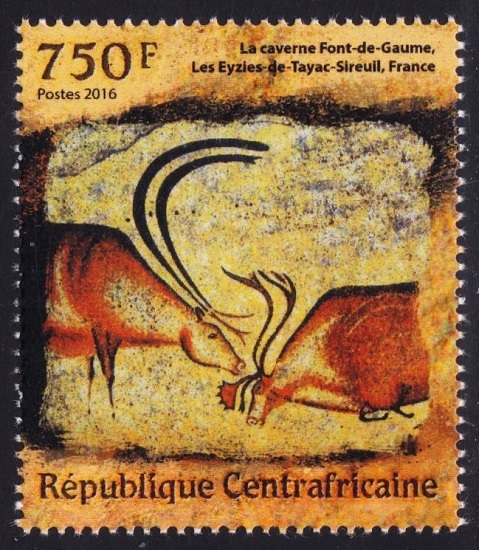 Bison painting from Font-de-Gaume, Togo, 2013. 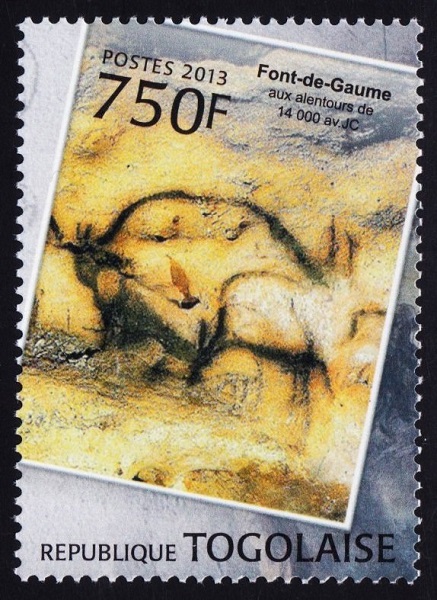 |
|
Send note to Staff
|
|
|
Pillar Of The Community
Israel
4904 Posts |
|
|
Replies: 96 / Views: 6,934 |
|




 Posted 10/07/2025 12:22 am