Third Assistant Postmaster General W. Irving Glover and Michael Eidsness, Jr., Glover's Superintendent of the Division of Stamps, met with Louis A. Hill, the Director of the Bureau of Engraving and Printing (BEP) on July 7, 1922 to watch the stamps of the new 10-cent Motorcycle Special Delivery stamp (Sc. E12) being produced at the BEP. It was replacing the 10-cent Bicycle Special Delivery stamp that had been in use since 1902. The Post Office Department was changing the design of all postage stamps and this stamp was the first to reflect the change.
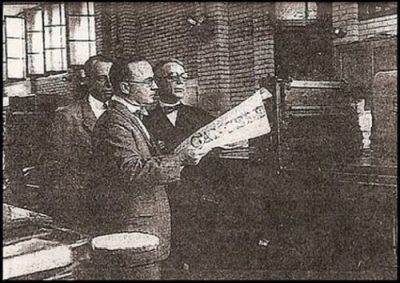
Eidsness, Glover, and Hill (left to right) inspecting the first sheet off the press. The rubber stamp "Canceled" on the photo means that the negative was destroyed by the BEP.
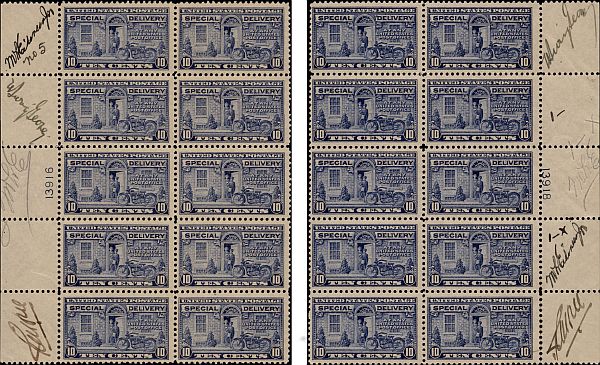
Wanting to make the first printing something special, the three of them signed their names on the selvage of the 24 panes of the first six sheets of the new stamp. These panes were put on sale at the Philatelic Stamp Agency on the First Day of sale on July 12, 1922. While not new, this practice became common practice for the new issues in the years to come.
Shown below are signed plate number blocks from sheets 13916 and 13918. Note that Eidsness signed twice. Once with faint initials and again with a more readable name.
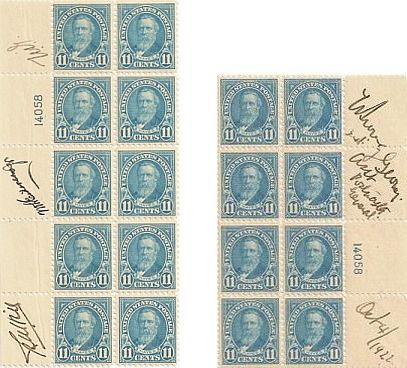
The three officials repeated the process three months later for the next release, the 11-cent Rutherford B. Hayes (Sc. 563), the first stamp of the new Fourth Bureau Issue series of ordinary stamps. 32 panes were signed and placed on sale at the Philatelic Stamp Agency on the First Day of sale October 4, 1922.
 Does someone have the same for the next new issue, the 5-cent Theodore Roosevelt (Sc. 557)?





 Posted 12/13/2025 4:21 pm


