| Author |
 Replies: 36 / Views: 4,891 Replies: 36 / Views: 4,891 |
|
Pillar Of The Community
United States
1043 Posts |
|
|
Kelleher upcoming auction lot 3127. I'm baffled here. 2 certificates come with this lot, one identifying as 19b, and one as a 20. Which is it? Perhaps I am not up to date with scott listings or they have changed? Appreciate help 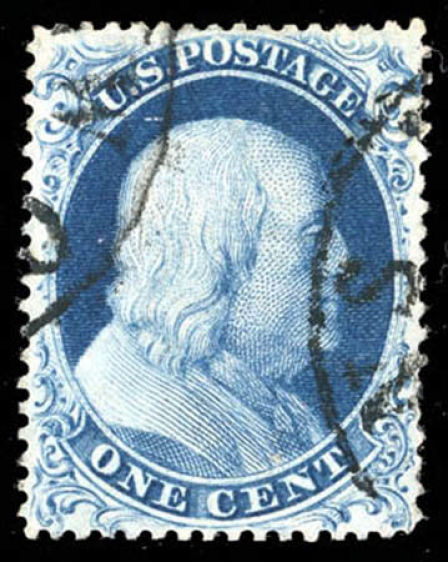 |
|
Send note to Staff
|
|
|
|
|
Pillar Of The Community
United States
568 Posts |
|
|
Now I know what I will dream about tonight. That is a well centered stamp!
|
Send note to Staff 
|
| Edited by rlmstamps2012 - 11/10/2016 9:01 pm |
|
|
Pillar Of The Community
United States
1043 Posts |
|
|
I agree it is well centered! and what caught my attention initially was I thought it was undergraded (imho) by PF. PF gave it a VF 80 grade-- I think its at least an 85, but even 90 centered stamp.
But then I looked at it and it didn't look like a typical scott 20, especially plumes at bottom, and I think, break at top (I think). I'm all messed up in the brain on this one. At first I thought scott 22, then scott 19b. But most recent PF cert has it as VF 80 scott 20. Its original cert had it as 19b.
At least I know experts at PF somehow messed this up somewhere along the way so at least I'm not only one. |
|
Send note to Staff
|
|
|
Pillar Of The Community
United States
3532 Posts |
|
|
Type Ic is the most difficult Type there is of the 1c stamp. Anyone who claims that they can easily tell a Ty Ic, by definition doesn't know what they are talking about. I say that with all due respect. It is so hard to precisely nail down, that about the only consistent way of doing it is to Plate it, and if it qualifies by plate position, and appears to be sufficiently complete, then declare it a Ic.
Just from reading the auction catalog description, and the Chronological order of the certs, I can tell you (almost) what happened here.
In 1997 it was examined, but probably never plated. Whoever looked at it decided that it looked close enough to a Type Ic to be called one, so they called it one.
Next, it got re-submitted prior to this sale. Someone who knew what they are doing (I can think of one in particular) happened to be at the PF and plated it this time, to 87L4. Pos 87L4 is not known as a Type Ic per Ashbrook/Neinken. Per my prior description, based upon that, I suspect the decision was made to declare it not a Ic based upon that.
Now it gets weird. Pos 87L4 is a Ty IIIA - Scott #22, and NOT a Ty II #20 which it was apparently certed at. This is an E relief from Plate 4. There was a very fine line at the top of the relief which is pretty much always fully broken, thus IIIA. I've heard of, but never examined in person - exactly one E relief stamp, declared to be complete at the top, and thus Ty II - #20. I would seriously question whether this is the same ... but maybe it is. If so, it would be a great plating rarity - esoteric - but great. Either that, or the PF just wrote down the wrong Scott number - 20 instead of 22. It would require a massive scan of the top line to decide. Your guess is as good as mine at this point.
I'm glad you posted about this as it is obviously not-obvious and quite interesting. |
|
Send note to Staff
|
|
|
Pillar Of The Community
United States
1043 Posts |
|
|
Great analysis txstamp! I Had this feeling that Plate position may have ultimately negated Scott 19b.
This stamp doesn't appear complete at top.
I cannot tell for sure if there is a break in line at top.
Opening bid is 900$, well above kelleher estimate of 150-200 for stamp.
If a stamp plate position has all characteristics of a 19b, why isn't this plate position certifiable as 19b.... because Ashbrook said so?
|
|
Send note to Staff
|
|
|
Pillar Of The Community
United States
1043 Posts |
|
|
Txstamp, I want to make sure I'm interpreting your explanation correctly ...
Position 87L4 generally gives rise to a type IIIa (Scott 22) most of time, but rarely the plate position can give rise to type II Scott 20 if very thin line complete at top? |
|
Send note to Staff
|
|
|
Pillar Of The Community
United States
3532 Posts |
|
|
I don't think that the top line could be declared complete since the perfs cut in. Therefore, it must be presumed to be a IIIA unless it is plated to a Ic position or is definitely established to really be a Ic by specialists working with the PF.
This stamp is very close to being able to be called a Ic. Someone is probably betting that it will become a Ic once again after more study. |
|
Send note to Staff
|
|
|
Pillar Of The Community
United States
3532 Posts |
|
|
To answer your question about E relief complete top lines-
The E relief was used on 40 positions on plate 4 including this one.
To my knowledge Ashbrook/Neinken never saw or documented an E relief stamp that did not have a broken top line. I have never seen one in person either. A well known 1c expert asserted to me a long time ago that at least 1 E relief stamp was known with an unbroken top line. I do not know the plate position. This does not apply to this stamp since you can't even see all of the top line to even tell. |
|
Send note to Staff
|
|
|
Pillar Of The Community
United States
1043 Posts |
|
|
Txstamp,
Should this stamp be a 19b? I just want your opinion. I guess another way of asking question... should position 87L4 be a Scott 19b or Scott 22? I do t see how PF could call this a Scott 20. I want to know what you think, not what PF or Ashbrook thinks.
Thanks ahead of time |
|
Send note to Staff
|
|
|
Pillar Of The Community
United States
3532 Posts |
|
|
Hi rgstamp - it's a close call - will require some very careful study.
I'm not able to research this today, but I'll spend a bit of time on it in the next couple days and let you know. |
|
Send note to Staff
|
|
|
Pillar Of The Community
United States
1360 Posts |
|
|
Rgstamp, it doesn't matter what anybody thinks about this. In Neinken, 87L4 is a type II, and Neinken is the bible. A lot of Type II and IIIa positions have plumes that appear very complete, but the only positions that yield a Ia, or Ic, are clearly defined in Neinken-- Ic being from a few E relief positions, and the rarer Ic positions are from the F10 relief positions (and I wish my Ic was an F10, but it's an E relief). No one would ever cert this stamp, from this position as a Ic.
Do not make the mistake of buying the stamp hoping that it's a Ic...it can't be.
Hope this helps, Ray |
|
Send note to Staff
|
|
|
Pillar Of The Community
United States
1043 Posts |
|
|
Ray,
Still confused ... txstamp says this is type IIIa. You say type II. ?? Which is it?
In all due respect to the great fathers of philately, I didn't think these old guys studied every single plate position and were 100 percent correct, as many current students of this issue keep expressing that many positions are not entirely studied and thus not exactly sure what "type" the position gives rise to.
I guess this becomes the which comes first chicken or egg debate. If the appearance matches fully a type 1c, why doesn't this plate position 87L4 give rise to it? What's more important, plate position giving rise to a subtype (per Neinken opinion- maybe he was wrong or never studied position extensively) or appearance matching subtype. The appearance of this particular stamp Erelief stamp seems to match type 1c perfectly?
I don't plan to bid on stamp, I just wanted to know Scott number for sure. |
|
Send note to Staff
|
|
|
Pillar Of The Community
United States
1360 Posts |
|
|
The big problem is you can't see the bottom of the plumes. On ebay there has been a type IIIa for several months that is for sale for $750 PF cert, and I'm not sure I agree with that opinion at all. The cert says that identifying features are not visible so it must be called a type IIIA. I would think that if it is one of the F10 reliefs, and I can't tell because the bottom of the stamp isn't visible it could be plated as a Ia or Ic. Maybe Philatelic Foundation wouldn't allow that but I would think that that stamp would be better off with a Doporto cert ID'ing the plate position, and if recognized in Neinken as a Ic or Ia position, that would suffice. Here is the item #: 311383736825. In this case, although I realized that the entire hobby recognizes the PF as the overall leading Authority I'm not sure that with the 1c 1851/1857 Franklin that they are. My opinion here, entirely. Doporto is IMO, as important with this issue. As to whether it's a II or IIIa, my mistake. I just checked Neinken, and that position is not listed as a changeling type, so it should be called IIIa. I'm just glad to hear that you aren't planning to buy it hoping that it is something that it isn't... :). Nice topic and discussion, thanks! Ray |
|
Send note to Staff
|
|
|
Pillar Of The Community
United States
1820 Posts |
|
|
rgstamp, ray is correct in stating that the bottom plumes, scrolls and balls must be visible to distinguish a Plate 4 Type 1c from IIIa. In the case of 87L4, the identification of this position as a Type IIIa is borne out by a search of Siegel auctions, where we find two stamps identified as position 87L4 (one perforated and one imperf) that clearly show an incomplete plume at lower left (Sale 1077 Lot 61 and Sale 959 Lot 2079). In the photo attached to your original post it also looks like the lower left plume is not complete. |
|
Send note to Staff
|
|
|
Pillar Of The Community
United States
1043 Posts |
|
|
Thanks Ray.
It's definitely an interesting stamp! And if you ask me it should be graded at least an 85, maybe 90 (assuming it is sound).
Another issue is liability from PF standpoint. Imagine buying this stamp for 5000$ 8 years ago with a cert as 19b, then, resubmitting to PF to get a recent cert and grade in the last year, to find out it's a 300$ stamp instead. Oh my! Who is responsible ? Seems like a nightmare scenario for PF.... and then to boot they undergrade it at an "80" And put wrong Scott number on cert. This is whip cream on s.it. Nightmare/headache/embarrassment for PF if you ask me. |
|
Send note to Staff
|
|
|
Pillar Of The Community
United States
1043 Posts |
|
|
Dudley ,
Thanks for guidance. I looked at other examples on Siegel you found and now see that left plume not complete.
Scott 22! No question! |
|
Send note to Staff
|
|
|
Replies: 36 / Views: 4,891 |
|



 Posted 11/10/2016 8:33 pm


