| Author |
 Replies: 36 / Views: 4,892 Replies: 36 / Views: 4,892 |
|
|
|
Pillar Of The Community
United States
1820 Posts |
|
|
Rest in Peace
United States
205 Posts |
|
|
I bought this stamp around 1990 at a Nashville stamp show from a man named O.G. Teegarden (sp?)and sold it in 1995 with my first collection to raise a down-payment on my first home. I got this, a #67 that eventually graded 95, and another wonderful stamp - the man had a great eye for stamps! I sold it as a #19c, and I'm almost certain that APEX certified it as such because the dealer only used APEX and he got the cert. I've been on both sides of swing positions so can't complain if this one is now considered a #22. I'd like to buy it back if the bid was more in line with a #22 than a #19c. |
Send note to Staff 
|
|
|
Pillar Of The Community
United States
1043 Posts |
|
|
Thanks Tipzi for sharing history of the stamp. Small world. Now that I am convinced it is a 22, I'm still dumbfounded why PF certified as a Scott 20. Since you owned the stamp, can you comment on its grade of "80".??? Seems undergraded as it was initially beauty of the stamp that got my attention, then it turned into "everything's wrong with the cert" debacle. It's almost like the stamp needs to be resubmitted for new cert, and an explanation needs to be given on cert as to its history (including mistaken identity, etc). |
|
Send note to Staff
|
|
|
Pillar Of The Community
United States
1360 Posts |
|
|
OMG!
Why am I not surprised that Mr. Tipzi owned this one? And hope that he will stick around and post more often...he is one of the most knowledgeable, and fairly anonymous US classics collectors out there, and has some of the best eyes out there...see you for Atlanta in January?
Ray |
|
Send note to Staff
|
|
|
Pillar Of The Community
United States
2555 Posts |
|
|
It is worth noting that Ashbrook did not think the Type 1c should be listed in the Scott catalogue. This is just one of the reasons why I could live five lifetimes and be satisfied if I never had a Scott #19b in my collection, at least if I had to pay a premium for it... |
|
Send note to Staff
|
|
|
Pillar Of The Community
United States
2555 Posts |
|
|
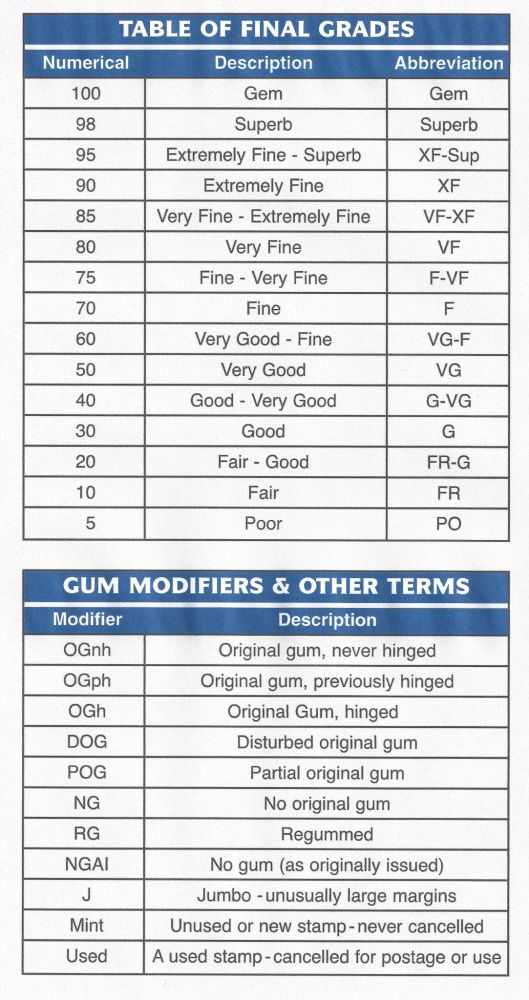
I despise grading but will add my 2c. The stamp has extremely tight margins and touches the design on all sides except the top. I think 80 seems fair. Grading is subjective and not worth a lot of debate. |
|
Send note to Staff
|
|
|
Pillar Of The Community
United States
1043 Posts |
|
|
Next question... what stops the new buyer of this stamp from placing it on ebay as a Scott 19b with valid certificate from PF 1997. Is there a way to check the stamp/cert on PF website to see that stamp/cert had been changed. |
|
Send note to Staff
|
|
|
Valued Member
United States
254 Posts |
|
|
Rest in Peace
United States
205 Posts |
|
|
rg, if the only two available certificates are as a #19b (old)and as a #20 (newer), then the only one that is even close to accurate is the old one because this stamp can't be a #20 - it's an E relief. What might stop someone from throwing out the new certificate would be if it was correct in the first place!
As far as grading being subjective, yes, but this is obviously an exceptional stamp. The imperforate one cent stamps were not laid out with perforating in mind. In fact, they were laid out so close that the relief had to have design elements trimmed off to keep the stamps from just about touching each other. So the stamp connoisseur understands that any design type that shows the balls from the imperforate plates (plates 1 and 4) will have the perforations touching or cutting slightly in when the perf rows are spaced normally. The only exception is the wide-spaced bottom or top row (depending on which way the sheet was fed into the perforator), creating either tall F reliefs or A reliefs, which are rare and valuable.
Ray, thanks for the gloss! I've been very busy with stamps lately but just changed jobs three months ago. Working for the state now and doing about 50 hours a week while finally getting my master bathroom in order, so I've been scarce to say the least. I still want to get together with Dave and show him the 314V cover. Still pinching myself that I got that one! |
|
Send note to Staff
|
|
|
Pillar Of The Community

United States
1273 Posts |
|
|
Tipzi, I'll be very happy to meet you at the Brentwood Club meeting this month! Can't wait to see that Unique Private Perf. Cover! I'll have a couple of recent covers for you to take a look at too. Can you make the meeting? Ray, If he can be there, you might want come and take a look at the cover he's talking about--pretty spectacular piece.  |
|
Send note to Staff
|
|
|
Pillar Of The Community
United States
1820 Posts |
|
|
Quote:Next question... what stops the new buyer of this stamp from placing it on ebay as a Scott 19b with valid certificate from PF 1997. Is there a way to check the stamp/cert on PF website to see that stamp/cert had been changed. rgstamp, a search of Scott #19b at the PF website pulls up this very stamp as the first hit, and the cert history is available as part of the record. I note that the first PFC said "possibly from position 89R4." But the most recent cert definitely says "Scott 20, TYPE II, pos. 87L4." The fact that Type II is called out clearly seems to rule out "20" as a mistake for "22." Simply a wrong Catalog ID on the PF's part. |
|
Send note to Staff
|
| Edited by dudley - 11/13/2016 5:19 pm |
|
|
Pillar Of The Community
United States
1820 Posts |
|
|
Re grading: I kind of agree with sinclair that at the end of the day not much is gained by lengthy debates surrounding a few ticks on an imaginary scale. But for any numerical grading scheme such as that referenced by Aurora to have any value it must be consistent across all stamp issues. I categorically reject the "XF for issue" sliding-scale type of grading. Some stamps (such as the perforated One-Cent 1857's, except for Type V) simply do not come better than 80 (or 82 or 86.4 or whatever), I would submit. |
|
Send note to Staff
|
|
|
Pillar Of The Community
United States
1360 Posts |
|
|
Well, I gave a glowing review for Tipzi, and let me do the same now for Mr. Sinclair, and tell everyone how I got my Ic-- which I did one other time and it's worth repeating. I bid on the stamp, which was ID'd on ebay as a #22, but I thought it was a #21, Type III, because of the gap in the bottom frame line. Winston won the stamp and let me know it was a Ic, and I hadn't noticed the full plume on the left. It is 49L4, which is a Ic position. He had missed the fact that it was described with a perf flaw, and he decided he didn't want it, but offered to let me buy it-- I think, about $184 or $187, something ridiculous for this stamp, even with a small flaw. When he got the stamp he looked, and couldn't find the flaw. I offered to let him keep it, and just send my check back, but told me that since he had offered it to me, he would honor that..... What a heck of a nice thing to do, and so as he mentioned earlier that he wasn't interested in a Ic in his collection, he had one, and the cert did come back sound. So again, thanks much to Winston-- Ray 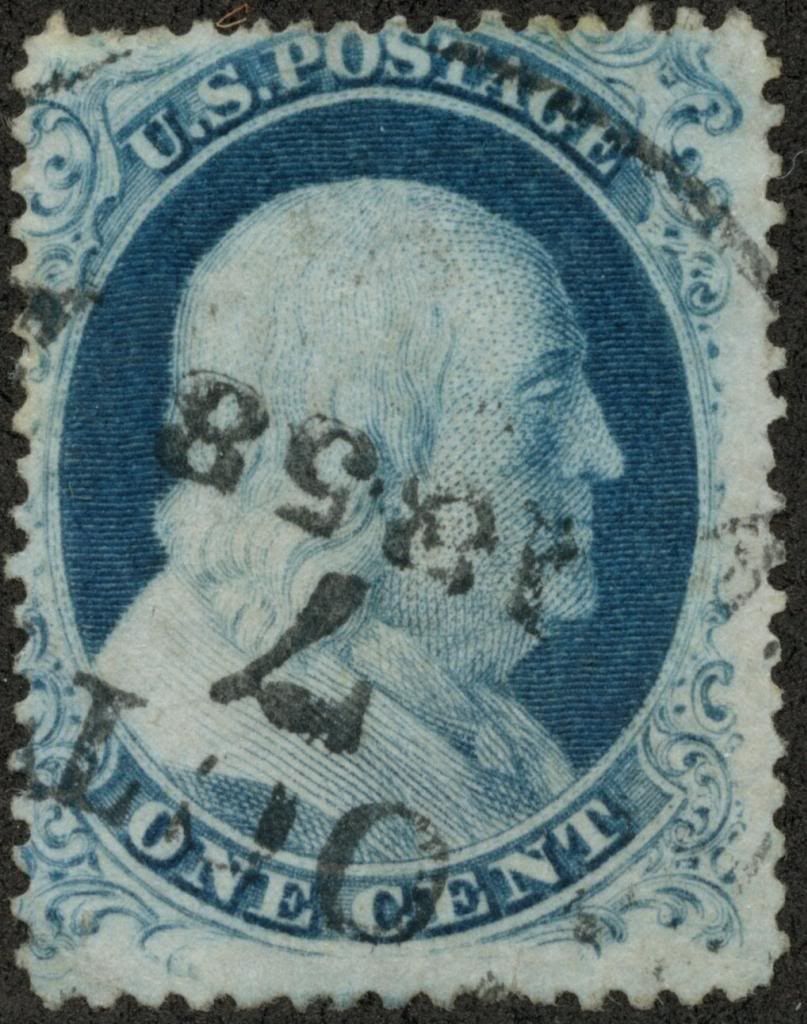 |
|
Send note to Staff
|
|
|
Pillar Of The Community
United States
3532 Posts |
|
|
I've been away for a few days - looks like you guys had a great discussion on this. I agree completely with your conclusion that this is #22 Ty IIIA, and the new cert basically just has a typo. I abstain on grading issues for now. grin.
One thing I wanted to clearly point out - the left and right plumes do not have to be complete for it to be a Ty Ic. For this reason, there are some Ic's centered slightly into the perfs at bottom, which can be certed as a Ic.
The plumes on this one are very close to being good enough from what one can see -- very close, but the balls are not visible - especially the left ball, which cannot be determined due to the perforations.
Ashbrook defined Ty Ic largely in terms of position 89R4.The drawing of 89R4 in the book. He states that if the design shows less than 89R4, then its not a Ic. Ostensibly, he means primarily at the bottom of the stamp. I remember many years ago, going through all of the E-relief positions, multiple times, and just getting a headache due to the fact that some E's would have more of the design in one spot than 89R4, but less in others. Its a mess.
87L4 is a good example of how close the line is drawn on being a Ic or not. Look at the bottom in the book of the 87L4 drawing and compare to the bottom of 89R4. Maybe the left ball is slightly less on 87L4, which disqualifies it.
Ashbrook didn't want Ic listed, and he was correct to suggest that it not get listed. I can appreciate the reason, however, that Ashbrook made up the Ic type, however. Ty I, and Ia have nice (mostly) complete bottom designs. These are prized stamps to some degree. Why? For those of us who like the nicely engraved 1c stamp, the bottom plumes and balls, are quite attractive on the full stamp design. Additionally, on the imperforate varieties, since Ty I and Ia are very scarce, one almost never sees the bottom plumes and balls on an imperforate 1c stamp. Then along come these E-reliefs, which often have pretty complete plumes, in particular. I can see how it was compelling to Ashbrook to try and classify them somehow.
One last point I want to make is that just because Ashbrook or Neinken or Chase say something is so, doesn't make it so. They made great contributions, but they also made mistakes, and didn't see every stamp ever printed. Always feel free to challenge things, if what you are reading vs seeing doesn't add up. For example, as I previously stated, there are rumours of an E-relief that really is a #20. Factually, there are Ty IIIA stamps from the body of plate 2 - I've seen several. Also, there is at least one position from the top row of Plate 4 that is often a Ty IIIA - bottom line broken. Other legitimate and PF certifiable oddities exist and may be found in the future to exist. Good discussion. |
|
Send note to Staff
|
|
|
Pillar Of The Community
United States
1820 Posts |
|
|
Great post, txstamp. Just one thing: As I pointed out above, the fact that the latest PFC for the stamp in question here specifically identifies it as a "Type II" indicates that there is more at play here than simply a typographical error of "20" for the correct "22." This is a bigger mistake than that on the part of the PF. |
|
Send note to Staff
|
|
|
Replies: 36 / Views: 4,892 |
|




 Posted 11/12/2016 4:03 pm