COINWATCHER,
Quote:
The dry printings were typically on horizontal wove thicker paper.
Not so. The dry printings were on the same vertical wove paper as the wet printings. Note that dry printings were phased in gradually over a period of about two years. According to Marler ("The Admiral Issue of Canada", 1982), the first Admiral stamp printed by the dry method was the 3c brown in early 1923. The printer completed the transition to dry printing in January 1926 with the 5c violet [Marler, p. 35].
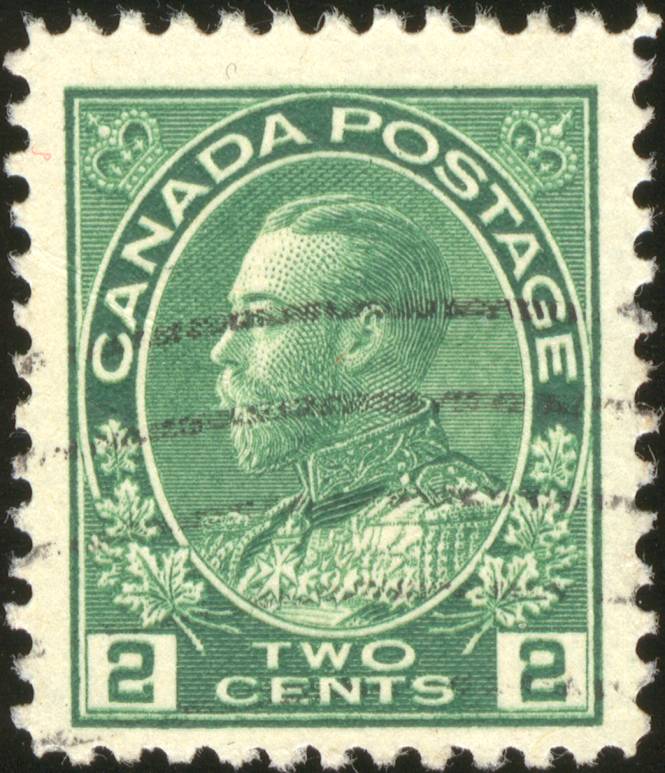
Regarding horizontal wove paper, it is well known that the early printings of the 1c green and 2c carmine booklet stamps were on horizontal wove paper (the so-called "squat" stamps). This variety came about, not because the paper was different, but because the early booklet plates were bent from side to side rather than from top to bottom like the sheet stamps. Among sheet stamps, the 10c blue exists on horizontal wove paper and is catalogued in Unitrade. The 2c green also exists on horizontal wove paper, and a block of 6 with lathework was sold by Eastern Auctions Ltd. in Oct. 2013. Both horizontal wove paper varieties are from wet printings. Hans Reiche has also reported finding the 2c carmine on horizontal wove paper. Marler discusses this on page 37, and there were detailed articles on these paper varieties in The Admiral's Log, the newsletter of the Admiral Study Group of BNAPS.
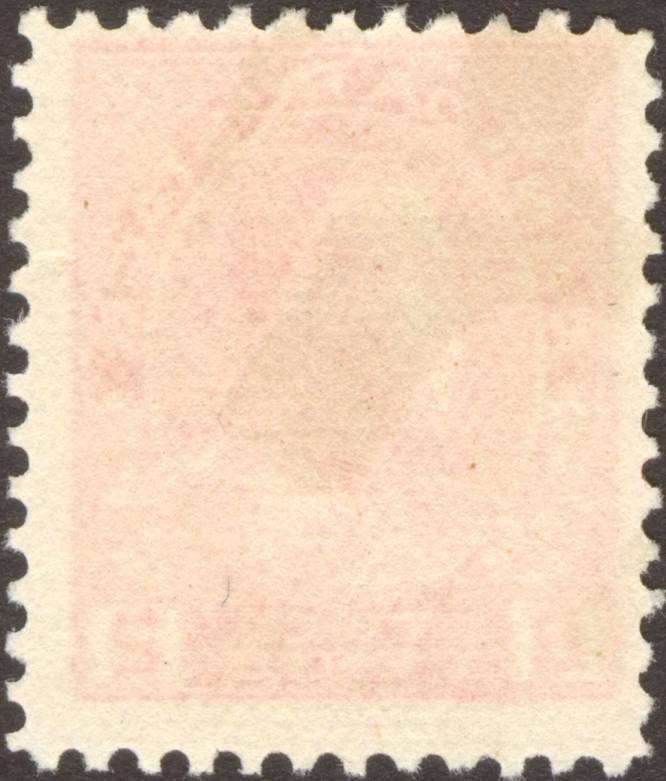
Regarding thin paper varieties, there are well known thin paper varieties on wet printings of the 2c green and the 5c violet. This paper variety is easy to spot because the paper exhibits a diamond lattice pattern when viewed from the back. Both varieties are discussed in Marler (see page 36) and they are both listed in Unitrade. Less well known are thin paper varieties on dry printings of the 2c green and the 7c red brown (although the latter is listed in Unitrade). Unfortunately, this paper variety is more difficult to recognize. The only distinguishing feature is that the paper is indeed thin and the image is quite apparent from the back.
woodstamp,
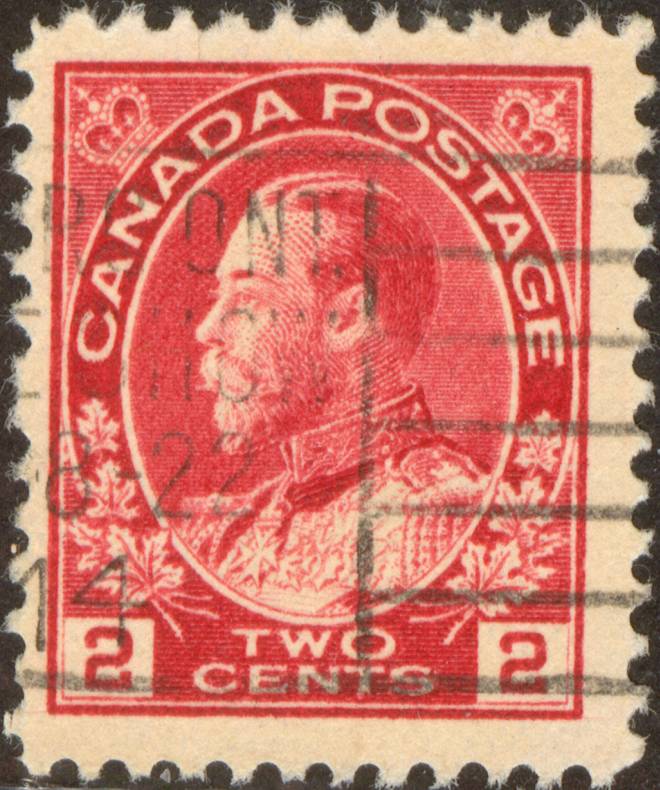
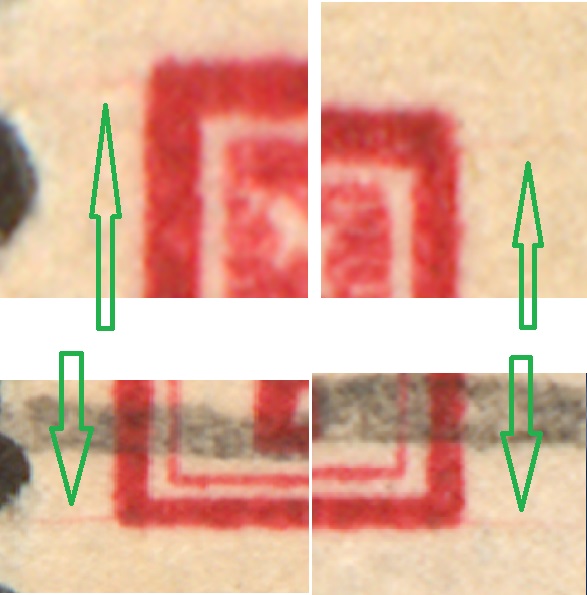
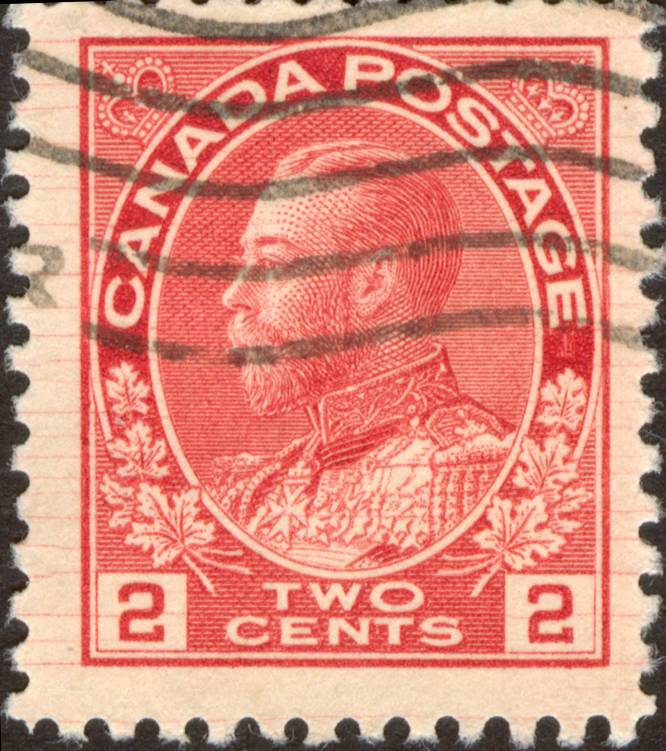
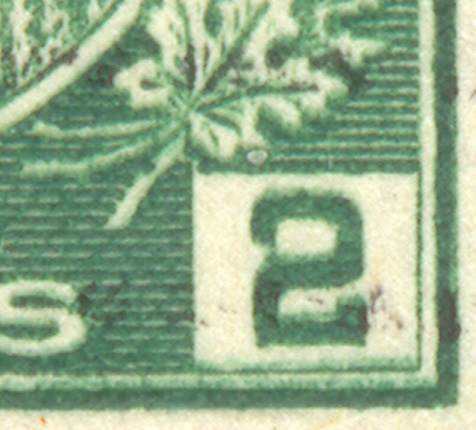
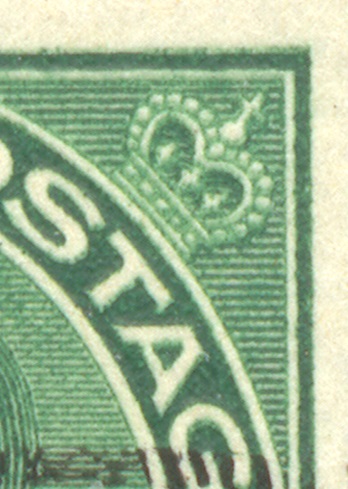
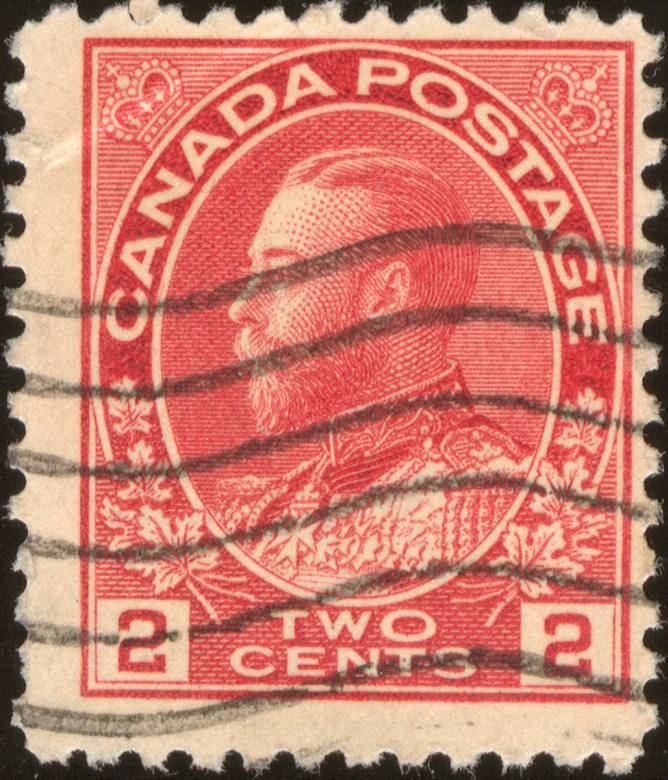
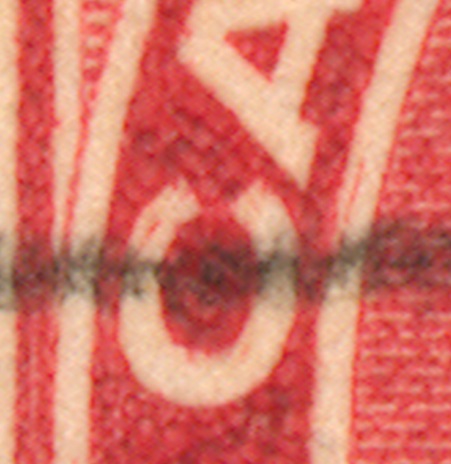
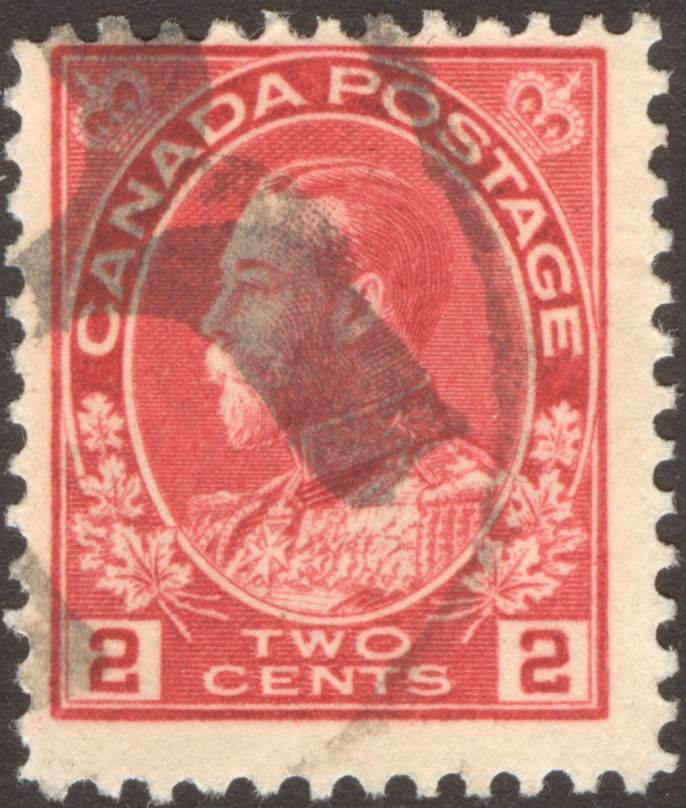
Regarding hairline cracks, many Admiral stamps exhibit hairline cracks in the corners such as your 2c carmine from the retouched die. Based on what is visible in the slogan cancel, your stamp probably came from a 1914 printing.
Hairline cracks resulted when the plates were hardened and then bent. Note that this was in fact the sequence followed by the printer - hardening first and then bending. For more information, see Marler's discussion on bending and hairline cracks on pages 33-34. For anyone seriously interested in the Admiral issue, Marler's 1982 book is required reading.
Now, several plates are noted for exhibiting more extensive hairline cracks. Plate 4 of the 2c carmine is the most famous and the variety is listed in Unitrade. Other plates showing hairline cracks that may intrude into the stamp design include the 1c green plates 7 (original die), 57 (retouched die) and the 2c carmine plates 51-52 [Marler, page 248].





 Posted 02/06/2014 10:03 pm