| Author |
 Replies: 13 / Views: 2,756 Replies: 13 / Views: 2,756 |
|
|
Valued Member
United States
117 Posts |
|
|
I would like your comments on the printing of this RO160. I see a doubling of the image of this stamp to the left-APS stated normal printing. 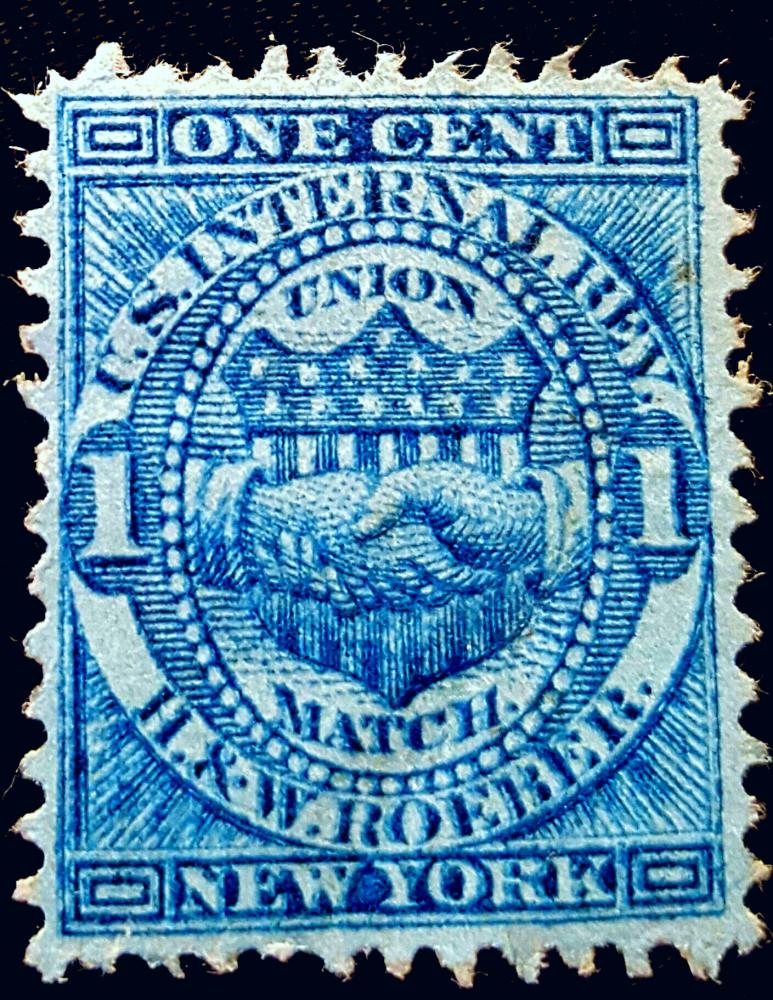 |
|
Send note to Staff
|
|
|
|
|
Bedrock Of The Community
United States
10866 Posts |
|
|
This would have to be seen in person to determine exactly what is going on here. It might be an all over double transfer or just an inking issue. Or possibly something else. When did the APS make it's determination? |
Send note to Staff 
|
|
|
Valued Member
United States
117 Posts |
|
|
Certificate date 2/22/2010, stated "United States, Scott No. RO160a, used genuine (not a double impression), creased. There are 3 blue small silk fibers. A very interesting variety, double inking of the entire stamp to the left is a double impression to me, it's not a double transfer. |
|
Send note to Staff
|
|
|
Bedrock Of The Community
United States
10866 Posts |
|
|
It depends. A double impression means that it went through the press twice, which I don't think is the case here. This type of print might also occur if the paper was too wet when the printing was done. As I said before, it needs to be viewed in person to really know what happened here. They saw it and I have not, so it is all just educated guesswork on my part. |
|
Send note to Staff
|
|
|
Valued Member
United States
117 Posts |
|
|
It seems to have the double impression similar or identical to the carmine rose 1917 revenue stamps, still you don't see many Private Die's with printing varieties of any kind-very interesting stamp. |
|
Send note to Staff
|
|
|
Bedrock Of The Community
United States
10866 Posts |
|
|
The 1917 stamps were offset printed; this is engraved. Love to see this stamp in person in a good sunlight. |
|
Send note to Staff
|
|
|
Valued Member
United States
117 Posts |
|
|
Your right, the only other cause I can come up with is while the press was placing pressure on the paper some force hit the left side of top of the press enough to move the paper to the right causing the remaining ink in the engraved lines to cause the doubling. Possibly, all the stamps were ok or maybe only part of the sheet was useable. |
|
Send note to Staff
|
|
|
Bedrock Of The Community
United States
10866 Posts |
|
|
From this image it still looks to me like the paper was too damp when the stamps were printed. |
|
Send note to Staff
|
|
|
Valued Member
United States
117 Posts |
|
|
If that was the case you would expect to have the doubling on both sides not just to the left. |
|
Send note to Staff
|
|
|
Bedrock Of The Community
United States
10866 Posts |
|
|
Not necessarily. A lot depends on unknown factors such as the grain of the paper, precise placement of the paper, the direction it was inked, the wear of the plate (a big issue), and the printing itself. This was printed by Butler & Carpenter of Joseph Carpenter and was printed in very large quantities, so all of these factors would be part of the equation. One of the big problems I see is that the extra lines are not all of the same strength or sharpness with in any particular letter or phrase. It's an interesting stamp. |
|
Send note to Staff
|
|
|
Valued Member
United States
117 Posts |
|
|
Here is a better picture of the stamp-notice the distinct doubling of the bottom part of the "C" in MATCH. 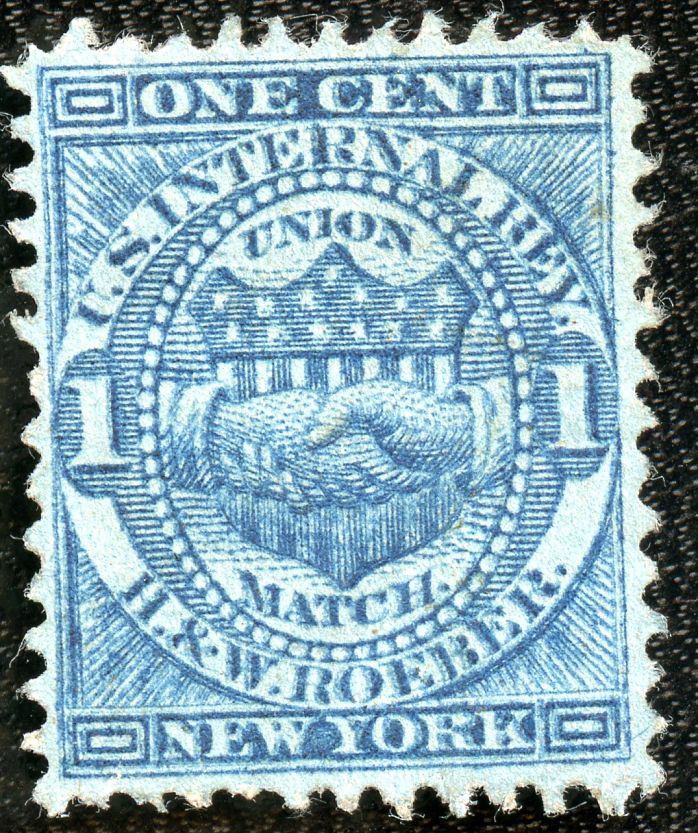 |
|
Send note to Staff
|
|
|
Valued Member
United States
117 Posts |
|
|
I stumbled on some more information on this stamp. Mr. Richard Riley mentioned that a double transfer was noted on RO160a but he has not seen a copy to provide a description. This was from the October, 1979 "THE AMERICAN REVENUER". A later article from Mr. Riley was noted in the October 1981, "THE AMERICAN REVENUER", page 163 stating a collector sent him a picture of this double transfer and it matches the transfer on my stamp. The picture that was submitted to Mr. Riley is not known to be a picture of a conformation copy or a picture of this stamp. I believe Mr. Riley classified the transfer as a class 1. The APS, expert committee stated this is a genuine RO160a and there was no comments noted of the fibers on the back for evaluation of the stamp being on experimental silk paper and the stamp having a double transfer. |
|
Send note to Staff
|
|
|
Valued Member
United States
50 Posts |
|
|
There is a lot going on with that stamp. It seems odd that the APS just stated it's real and nothing more. However, as I understand it, if you want more you need to request more. Do you have a copy of the original request? |
|
Send note to Staff
|
|
|
Valued Member
United States
117 Posts |
|
|
Yes, on the certificate I asked if this was a double impression and they stated this was a normal printing not a double impression. If you look at the bottom part of the "C" the best doubling will be noted. I hope another copy of this variety will show up for conformation. |
|
Send note to Staff
|
|
| |
Replies: 13 / Views: 2,756 |
|




 Posted 02/17/2016 3:10 pm


