| Author |
 Replies: 15 / Views: 2,825 Replies: 15 / Views: 2,825 |
|
|
Valued Member
Cyprus
8 Posts |
|
|
![]() Hi Guys Thanks for the info on the last post, I have another one for you to review and let me know about? I think its dated between 1908-1910 based on the post mark on the postcard it is attached to. Thanks, Much Appreciated 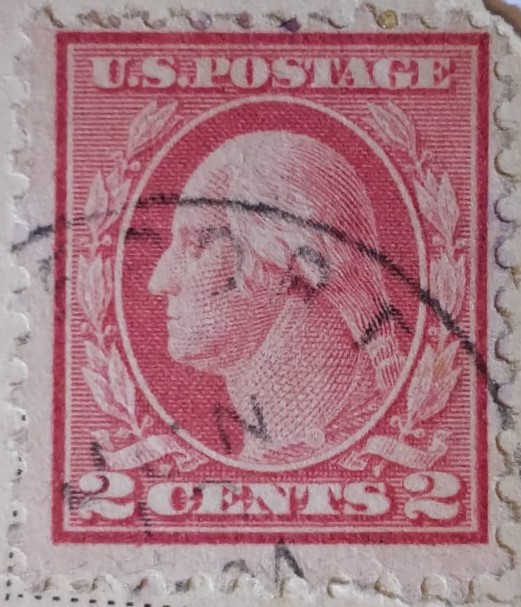 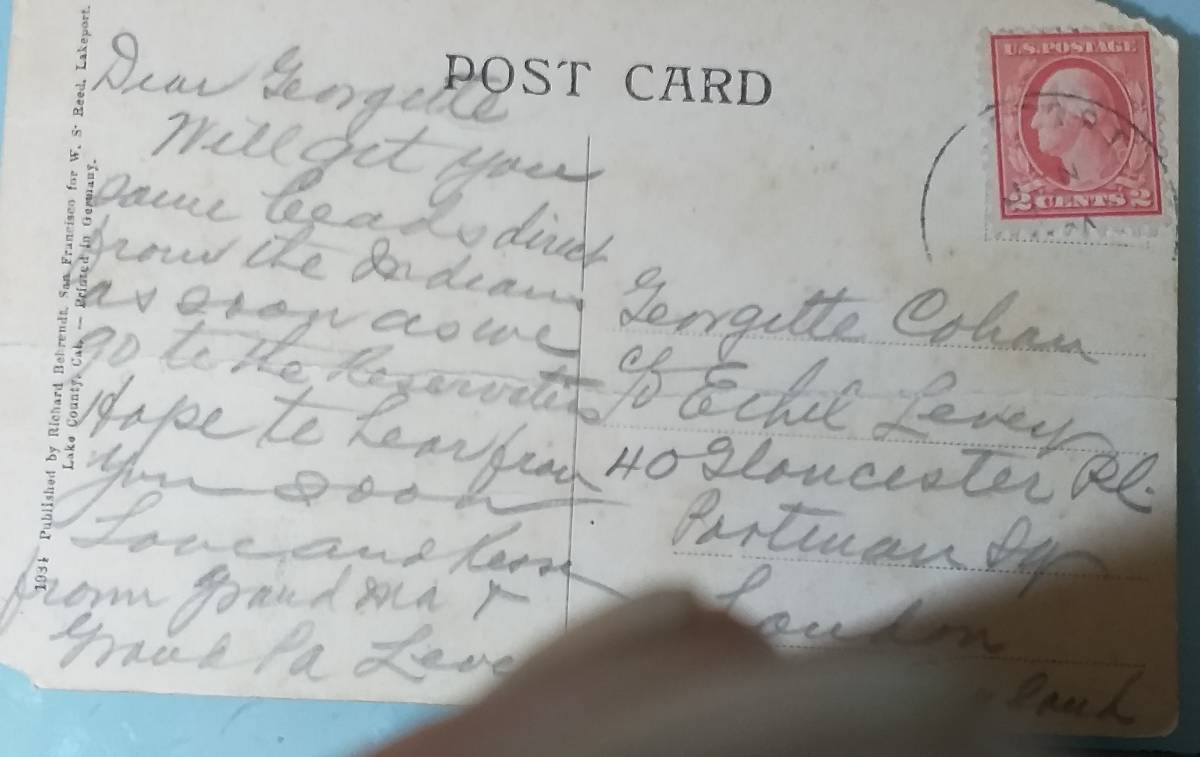 |
|
Send note to Staff
|
| Edited by Andychr - 04/11/2019 10:24 am |
|
|
|
|
Valued Member
United States
87 Posts |
|
|
This one is nearly impossible to tell from a picture. There are many factors that would determine the exact issue:
Flat plate or Rotary press printing: design dimensions are different
Perforations: issued with 12, 11, 10 and 11x10
Watermark: issued unwatermarked, single line USPS and double line
These combinations make for a dozen or more possibilities.
edit: if the postmark is 1910, it should reduce the possibilities to SC 332 or 375 determined by watermark |
Send note to Staff 
|
| Edited by Moschophoros - 04/11/2019 06:34 am |
|
|
Pillar Of The Community

United States
1273 Posts |
|
|
Go to this site to help you learn how to identify Washington/Franklin issues. Hint: look for perf. 10x10 issues regarding this particular stamp. if you don't have one, you will need acquire a perforation gauge to measure perfs. on stamps.  http://www.stampsmarter.com/1847usa...ntifier.html http://www.stampsmarter.com/1847usa...ntifier.html |
|
Send note to Staff
|
| Edited by Al E. Gator - 04/11/2019 08:22 am |
|
|
Valued Member
United States
87 Posts |
|
|
Did the "TWO" change to "2" in 1911? Is it possible for this stamp to have a 1910 postmark? I was using the H.E. Harris ID flow chart and I think it combined the designs A139 and A140. Hadn't had my coffee yet... |
|
Send note to Staff
|
|
|
Moderator

United States
12330 Posts |
|
|
Pillar Of The Community
6363 Posts |
|
|
Andy,
Please provide a scan of the entire card. The more information you provide to us, the more we can provide for you - especially to clarify the date of use, which will be 1913 or later because ...
Your stamp is perf 10, so can only be 425 or 463. |
|
Send note to Staff
|
|
|
Valued Member
Cyprus
8 Posts |
|
|
hey guys theirs not apost mark on the postcard I assumed it that date due to the old post card sorry if I confused you thank you very much for your information I will start checking those years |
|
Send note to Staff
|
|
|
Pillar Of The Community
6363 Posts |
|
|
Pillar Of The Community
673 Posts |
|
|
Andychr,
Do you have a perf gauge? (And do you know how to use it)?
The first 2 steps in this ID are:
1. Denomination (2 Cents 2, don't confuse it with Two Cents)
2. Perforation - Use your perf gauge to determine that.
When we look at the 2 Cents 2 denomination (as indicated on the bottom of the stamp), we bring the possibilities down to 70.
But we also eliminate 62 other red shades of a two cent Washington.
Now let's look at perforation. With a gauge, you align the bottom of the perf hole with the rounded space that fits in it, until all the holes align.
In this case, I can see (from experience) that this is a perf 10. (Don't count the perfs, that won't tell you, it's a measure of the number of perfs in 2cm space).
With this stamp as a Perf 10, We can see that there are only 2 options:
425 and 463
These are all Type I (And the characteristics of this stamp also show that), so that helps to confirm we are on the right track.
To differentiate 425 and 463, there are 2 other characteristics that will help:
1) Watermark
2) Color
The watermark for an on-cover stamp is out.
Color on this variety though is also very tricky, particularly by uploaded image. (Variations in your camera, monitor displays, lighting... all impact what a stamp "looks like" on screen.)
Both the 425 and 463 are very common stamps, printed in the billions. Scott describes the 425 as "Rose Red", while the 463 is "Carmine".
I can't be certain because of the variation I mentioned, but this does look more like the 425.
John's point is well taken, if you provide a scan of the whole card though, the post mark may be able to provide some additional clues even if it doesn't have a year date on it.
|
|
Send note to Staff
|
|
|
Pillar Of The Community
United States
1115 Posts |
|
|
As John Becker mentions, this stamp's perforations are gauge 10, so it is either a Scott 425 or 463, depending upon the paper watermark. Without a date on the postcard, the stamp identification can only be determined by whether it has a single-line watermark or no watermark. |
|
Send note to Staff
|
|
|
Valued Member
United States
87 Posts |
|
|
I'm super impressed that you all can tell that the perfs are 10 from the picture - I hope to be so experienced one day. Any tips to speed me along?
Also, is that "1934" shown by the publishing date in the bottom left corner? |
|
Send note to Staff
|
|
|
Valued Member
Cyprus
8 Posts |
|
|
no the card is during early 1900s it was sent to Georgette cohan who was the daughter of George cohan who wrote i'm a yanky doddle dandy, the number you see on the card is its serial number 1984, the post card was sent to her from her grandfather solomon Levey who died in 1918 |
|
Send note to Staff
|
|
|
Pillar Of The Community
673 Posts |
|
|
Mosch,
Perf 10 is among the easier of the perfs to spot by site. It is a pretty big perf, as the perfs go. The holes are just bigger, and you get a feel for that over the years. There are tricks in counting the perf tips as well, but they are a little tricky, so I don't advise it, as it leads to misidentification.
There are two schools of thought (and I'm sure plenty of members here will give their opinion on this) when it comes to identifying stamps on covers. Certain stamps (where grill impressions and watermarks are concerned) may need to be examined to determine exact type. In this case, I really wouldn't bother. Both the 425 and 463 are common stamps, with a used (even on cover) catalog value of under $1. The value of your postcard is more in the card and it's sender/receiver than the stamp provides. (More attractive to postcard collectors, and less so to philatelic collectors, though some specialists may still be interested).
When the values start to reach high catalog pricing, then it may be worth having a specialist "lift" the stamp from the cover, perform an exact ID, and then may either reattach it in either a "identifying" way (i.e. attach it with a hinge, since the postmark does tie the stamp to the cover, and can be aligned) or may apply a "new" gum, and reattach it that way. It's up to the owner. And some collectors feel that lifting a stamp makes it no longer "on cover", while others are content with this method.
Lifting a stamp requires specialized lifting fluids, and are intended to prevent damage to both stamp and cover, but in inexperienced hands, they can be ruinous. So I don't recommend it without a lot of practice on items that have no value as a cover.
|
|
Send note to Staff
|
|
|
Pillar Of The Community
United States
1414 Posts |
|
|
Washington/Franklin stamps are nominally 3/4 of an inch wide and 7/8 of an inch high on the die. After shrinkage flat plate sheet stamps are slightly narrower and booklet pane singles are slightly shorter. Rotary press coils are always wider and rotary press sheet stamps and coils are always taller because bending plates to fit on the rotary press cylinder stretches the design.
The two centimeter distance for counting perforations is about .78 inches, just slightly wider than the design of a flat plate stamp. If 10 perforation holes or perforation tips, but not both fit within the width of the stamp designs, it is perf 10. If 11 holes or tips fit, it is perf 11. A perf 12 stamp will fit 12 holes or perforations. While some experience is needed, it is possible to determine the horizontal perforation measurement from an image. Before attempting counting perforations on images, count perfs on stamps with known perforation counts at home.
The size of flat plate Washington/Franklin perforation holes, except the Rosback perforator was about 0.043 inches. Rotary press coil perforation hole size in the Washington/Franklin period was 0.043 inches, except for early rotary press coils with larger holes and a few small hole 4 and 5 cent rotary press Washington coils. The previous sentence is still a work in progress. Rotary press sheet stamp perforation pin sizes may have changed later, perhaps in late 1930s, resulting in smaller holes measuring about .040 inches. Some coils Prexie and wet printed Liberty coils with smaller holes have also been found. The switch to smaller pins with the Cottrell press in the 1950s is well documented.
|
|
Send note to Staff
|
|
|
Pillar Of The Community
6363 Posts |
|
|
Andy,
Thank you for the scan of the full card. Although I cannot tell 100% from the scan, it appears to be going to London England, which is a 2 cent rate for the card, in effect for many years. (As opposed to a 2 cent domestic use, which would have been a short-term war time rate in this general era)
An additional gentle note - please do not edit posts once additional responding posts have been made. It disrupts the flow of the conversation developing. The point being the scan of the full card now appears before the request for it. It makes my request look nonsensical. |
|
Send note to Staff
|
|
|
Pillar Of The Community
United States
1873 Posts |
|
|
London is correct. The address is 40 Gloucester Place, near Portman Square in Marylebone. |
|
Send note to Staff
|
|
| |
Replies: 15 / Views: 2,825 |
|



 Posted 04/11/2019 05:35 am


