| Author |
 Replies: 697 / Views: 136,256 Replies: 697 / Views: 136,256 |
|
|
|
Bedrock Of The Community
Australia
38679 Posts |
|
|
Well let's not dismiss it KG5.
What catalogue numbers do you ascribe?
Employing Gibbons I have SGO82, SGO93, or SGO106, SGO107
has to be type O2 puncture
Perfs can be 14, or 13.5
lets begin by ID of the basic stamps, wmk?
|
Send note to Staff 
|
|
|
Pillar Of The Community
Australia
4034 Posts |
|
|
Using a perforation gauge the large 3d blue is a die11 smwmk 13.5 x 12.5 comb but on the vertical 12.5 comb the perf pins look to have been bent in sections and one perf cut is missing. The perf count would be 19 perf tips. Normal example counts 18 perf tips. Maybe the perf gauge has pointed us in the right direction. I do not have a SG cat. Thanks for showing an interest Rod it is starting to make a bit of sense. KGV |
|
Send note to Staff
|
| Edited by KGV Collector - 03/19/2010 09:26 am |
|
|
Bedrock Of The Community
Australia
38679 Posts |
|
|
I'm still not clear here KG5, what wmk is it on this sheet? please measure the width and height in mm of the printed part of the stamp. Perf tips I refer to as teeth. 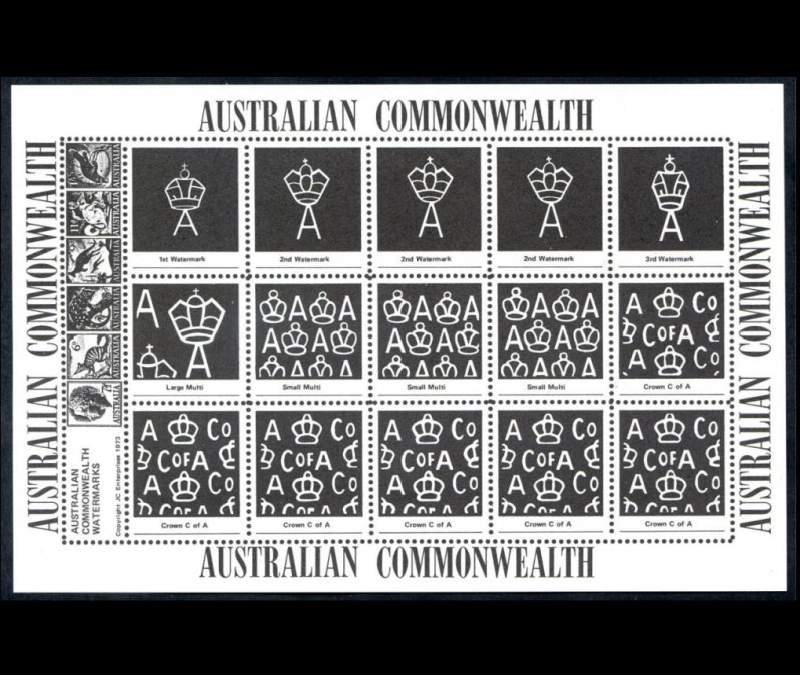 |
|
Send note to Staff
|
|
|
Pillar Of The Community
Australia
4034 Posts |
|
|
Sorry Rod I edited my perf count in above post but I did not beat your reply. It looks like the extra length is a pin jump during the perforation. Counting perfs for me at night is not the best daylight is my best time. Sorry for the confusion KGV |
|
Send note to Staff
|
|
|
Pillar Of The Community
Australia
4034 Posts |
|
|
Rod all the information that was put together on perforations as we unfolded the why of rough perfs was a great help in understanding why this stamp was longer than most. It just fell into place when I remembered how the perforation machine worked. Without this information nothing would of made sense,to know that the perforations happen a row at a time and not the whole sheet at once made all the difference it show that with the right info great things can happen in understanding stamping. Thanks KGV |
|
Send note to Staff
|
|
|
Pillar Of The Community
Australia
2027 Posts |
|
|
Bedrock Of The Community
Australia
38679 Posts |
|
|
That's lovely work there Jubilee.
Can I take a copy of your scans please?
|
|
Send note to Staff
|
|
|
Pillar Of The Community
Australia
2027 Posts |
|
|
Pillar Of The Community
Australia
4034 Posts |
|
|
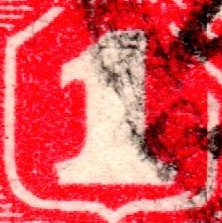
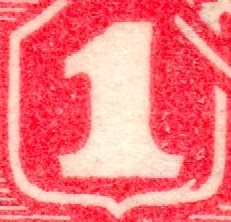
jubilee your images are very nice and clear. The progressive states showup exstremely well. It would be a real challange to put together the complete set of 20! Thanks for posting! |
|
Send note to Staff
|
|
|
Pillar Of The Community
Australia
4034 Posts |
|
|
1d red dieIIs are very interesting. They are the main stamp I look for in a bulk buy. The shades that stand out are the second thing I look for but the presence of die IIs means that the bulk lot is reasonably unpicked & there is a big chance of finding some of the rarer shades. Yes, 1d red die IIs are special to me for many reasons.
|
|
Send note to Staff
|
|
|
Bedrock Of The Community
Australia
38679 Posts |
|
|
 That's amazing! that's exactly what I do, and for the very same reason,  "unsorted by vendor" is an auction phrase that brings out the cynic in me. |
|
Send note to Staff
|
|
|
Pillar Of The Community
Australia
2027 Posts |
|
|
"Unsorted by vendor" may well be true. However, "sorted by ten vendors previously" would be even truer! |
|
Send note to Staff
|
|
|
Pillar Of The Community
Australia
4034 Posts |
|
|
Rest in Peace
Canada
6750 Posts |
|
|
A rambling on by me . . .
Notations are bothersome to me also.
I do not see them on modern stamps (yet) but on older stamps that have been around for a while. Indicating to me that this practice started or was common many years ago.
I remember reading somewhere years ago that to mount stamps in an album one must be sure to hinge along the top of the stamp so the stamp was readily able to be tilted upwards so as to examine the back. Perhaps during the period of watermarks and grills etc this was almost a necessity? Those stamps were relatively cheap then.
However, as time went on, and more people collected more modern issues the need for this checking the back diminished. When I first started out collecting with cheap stamps I couldn't understand the need for checking the back.
Since people were already hinging the stamps into their albums to be able to be tilted back up, why not use the back for notations of importance? Why use an extra piece of paper or space that would ruin the looks of the album page at the time?
Perhaps people do this today using the same reasoning. To me the stamp should not have to be constantly played with and moved about. Less chance of damage that way. Archival preservation I am thinking about here. But I can see that others would not mind doing this as the information is secondary to the aesthetics, the looks.
edit: Added note: The notating also seems to me to be possibly damaging to a stamp. A pencil can (and probably has) accidentally punched or pressed through a stamp while writing a note on. |
|
Send note to Staff
|
| Edited by Puzzler - 03/21/2010 08:30 am |
|
|
Pillar Of The Community
Australia
4034 Posts |
|
|
Thanks Puzzler for taking the time to answer this question.It is very nice to bounce off my beginner questions with someone.
As a self taught collector I have some beginner questions that I lack answers to and that's life! When my stamp knowledge is in the "I thought" or the "I assumed" it usually gets me into a lot of trouble somewhere down the track. Notations seem to have been popular in their day. It is nice to know how you view this issue. Thanks again! KGV |
|
Send note to Staff
|
| Edited by KGV Collector - 03/21/2010 9:40 pm |
|
|
Replies: 697 / Views: 136,256 |
|




 Posted 03/19/2010 06:50 am