[I don't know what the takeaway is from all of this, and there is definitely some conjecture on my part, but it was an interesting rabbit hole to go down...]I have maintained a census of Scott #R15e (2-cent USIR on green paper) for about 10 years, since I first discovered one in an
ebay lot and obtained a clean PF cert on it. I subsequently found a second one, which also got a clean PF cert.
It's a very rare stamp, with currently 28 reported examples, but some of those were subsequently determined to be bogus or duplicates. I think the current number of discrete genuine stamps is at most 24 stamps.
Its more common sibling, Scott #R6e (2-cent Bank Check on green paper) is still scarce in its own right. I've not been as focused on R6e, nor have I been maintaining census data on it, despite the two stamps ostensibly being from the same source and produced during the same period (1866).
However, working on my website updating the R15e census and scanning a new R6e acquisition caused me to revisit the two stamps a bit more closely, and I noticed a few things that I hadn't noticed previously. It turns out that Mike Mahler wrote about the connection between R6e and the Eagleton Manufacturing Co. in his superb book
U.S. Revenue Stamped Documents of the Civil War Era, a mandatory reference for anyone interested in the revenue documents of this period.
Every document with R6e on it reported to date(*) has a connection to the Eagleton Manufacturing Co. of New York.
* = There's one exception that I'll go into later.
Some examples:
Bill of lading from the Eagleton Manufacturing Co. I purchased this from Eric Jackson in 2009. Ex-Cunliffe.

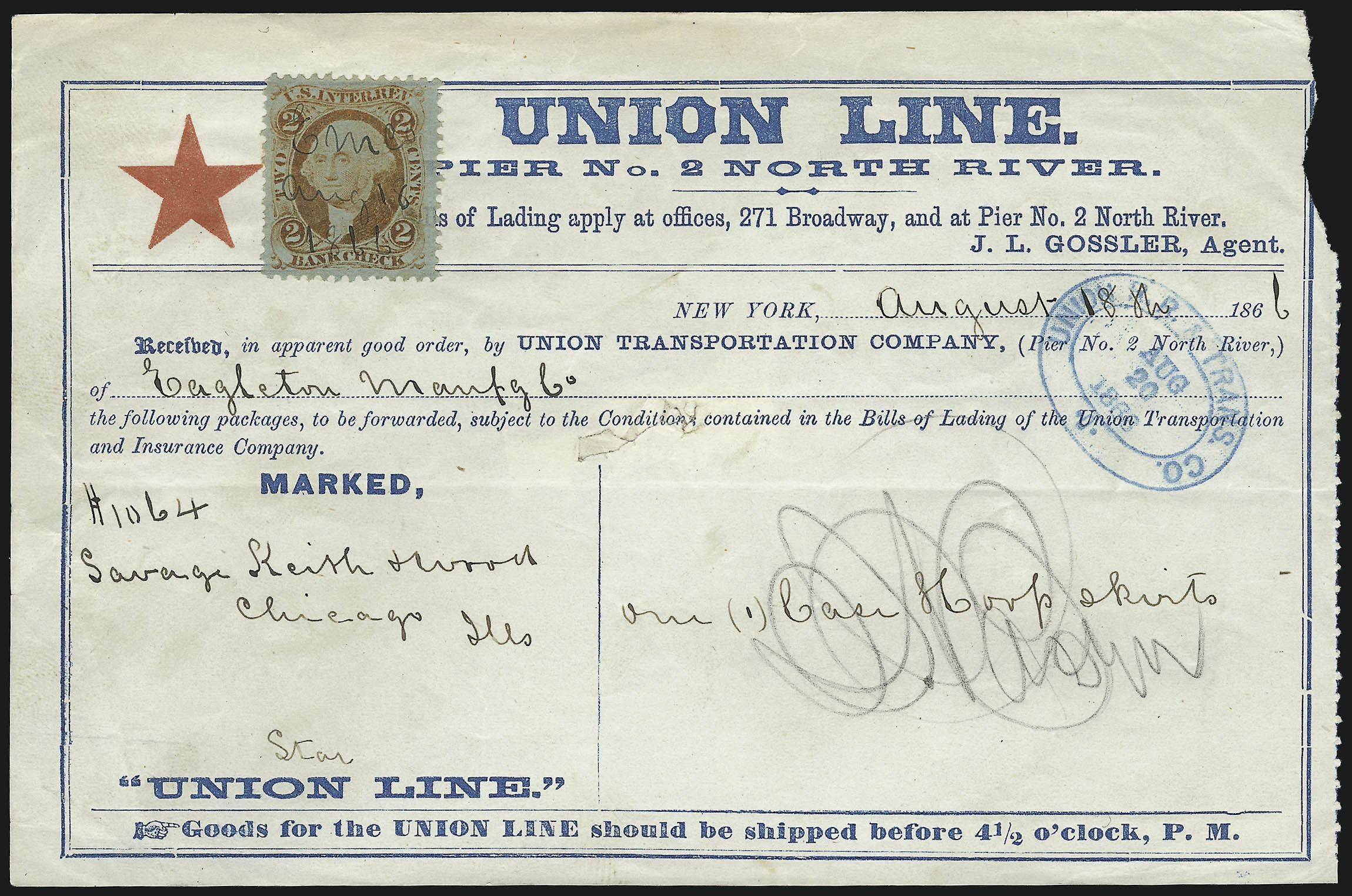
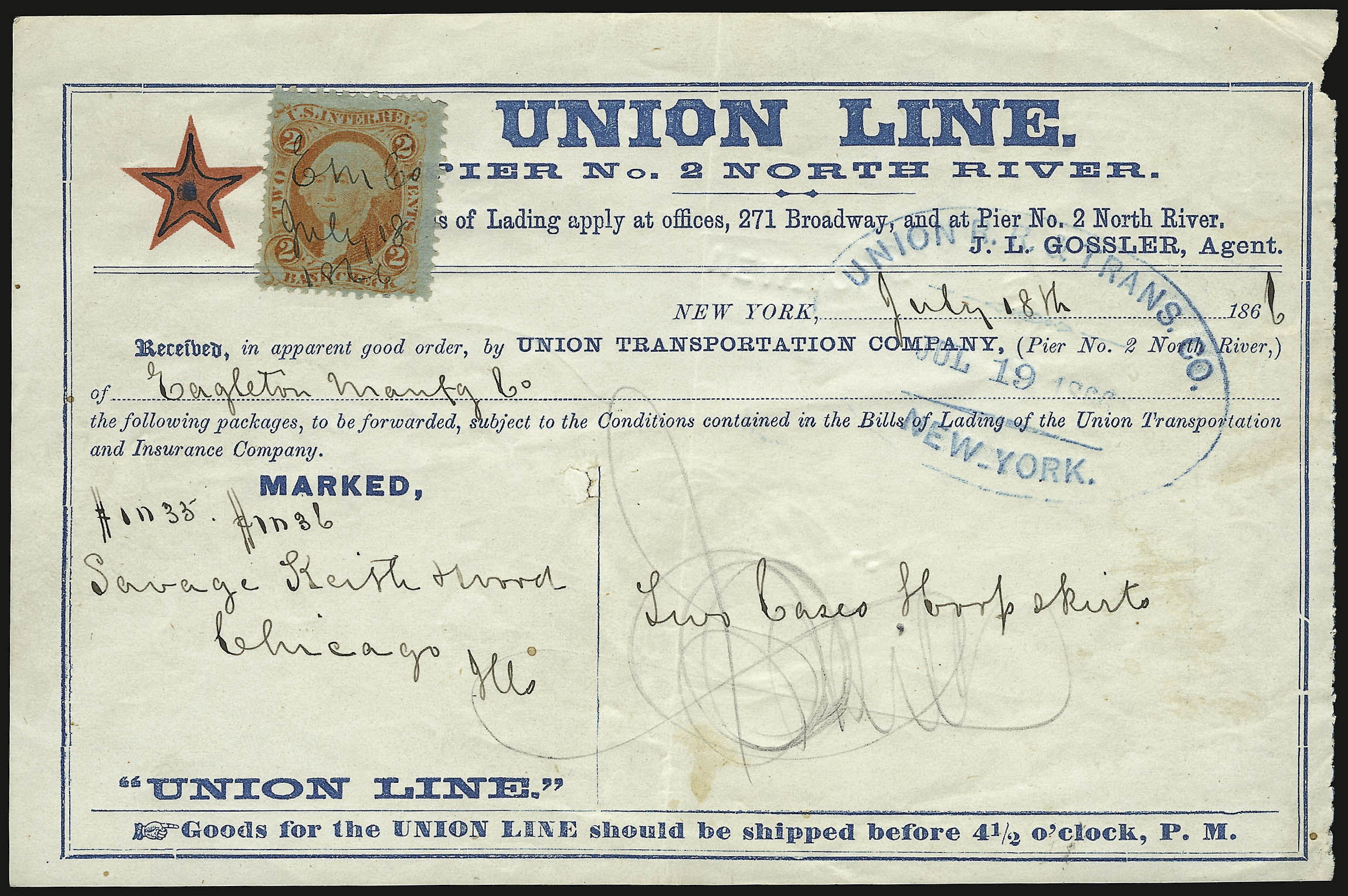
There are several examples shown at Siegel Auctions, including two bills of lading from "The Union Line" where the goods were provided by... Eagleton Manufacturing Co.
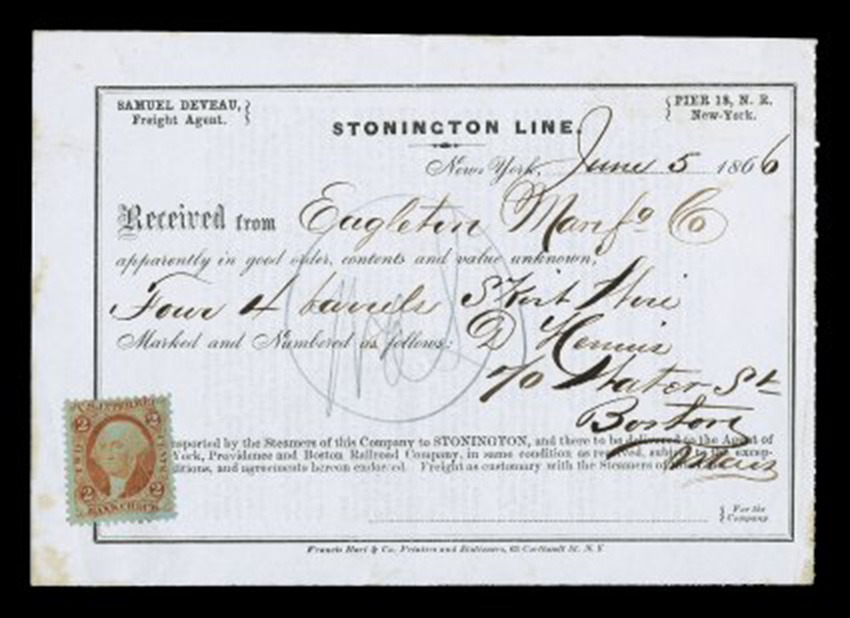
There is also a bill of lading from "The Stonington Line" which also received goods from the Eagleton Manufacturing Co. (Sorry for the poor image quality; it's the best I've got.)
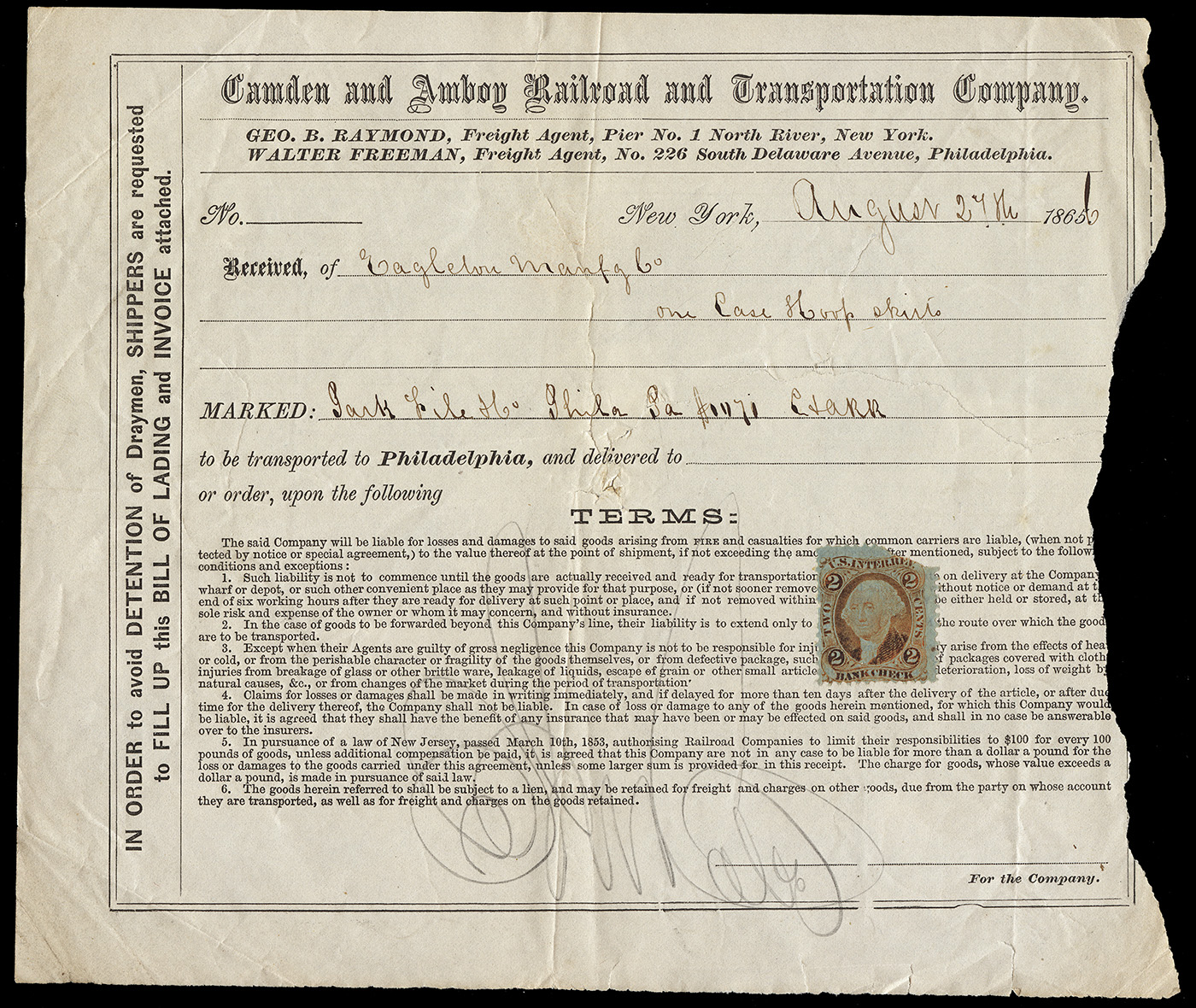
And lastly, the document I was scanning that caused me to notice, a bill of lading from the Camden and Amboy Railroad and Transportation, also with goods from the Eagleton Manufacturing Co. Both document and stamp are a bit mangled, but it is what it is. This came from the document balance lot in Brian Bleckwenn's collection sale at Siegel.
There are additional Eagleton-related R6e documents in the Philatelic Foundation's archive.
Normally, one would expect the stamp to be provided or affixed by the receiving company, but the common thread across all these documents seems to imply that Eagleton did the affixing of the revenue stamps.
The two Union Line documents indicate goods being shipped from New York to Illinois. The Camden & Amboy document indicates goods shipped from New York to Philadelphia.
New York... Illinois... Philadelphia... is there a relationship between those locations and the uses of the 1st issue green papers? If you then start looking at images of examples NOT on shipping documents, or on documents at all, one does start to see somewhat of a pattern.
Returning back to my R15e census, all save one are off document (more on that one later). Most of the cancels are manuscript with only initials and date, so not much can be gleaned there, but a few have handstamped cancels... all from Philadelphia or the area (one in New Jersey). There is one purported R15e with a San Franciscso handstamp, but it was offered without cert and subsequently withdrawn prior to sale, so I am exlcuding it.
The only identifiable company that has several examples in the R15e census is Coffin & Altemus, a Philadelphia dry goods merchant.


If you then search the Philatelic Foundation's archive for R6e examples, down at the bottom of the list is one lonely example of R6e with a Coffin & Altemus handstamp cancel.
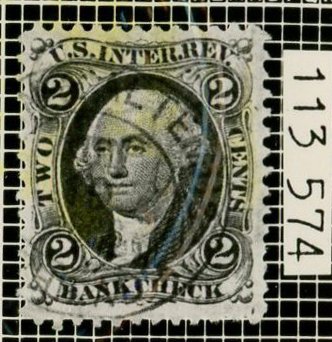
So at least at one point in time, the company Coffin & Altemus in Philadelphia, had BOTH 1st issue green papers in use. I've not seen that fact referenced anywhere before.
So we've got green papers being used in New York, including on documents with shipments to Philadelphia and Illinois. We've got both green papers being used by a company in Philadelphia.
So what's the Illinois connection other than some of the Eagleton bills of lading with R6e indicating shipments to Illinois?
Here's where it gets curious(er) or just random coincidence.
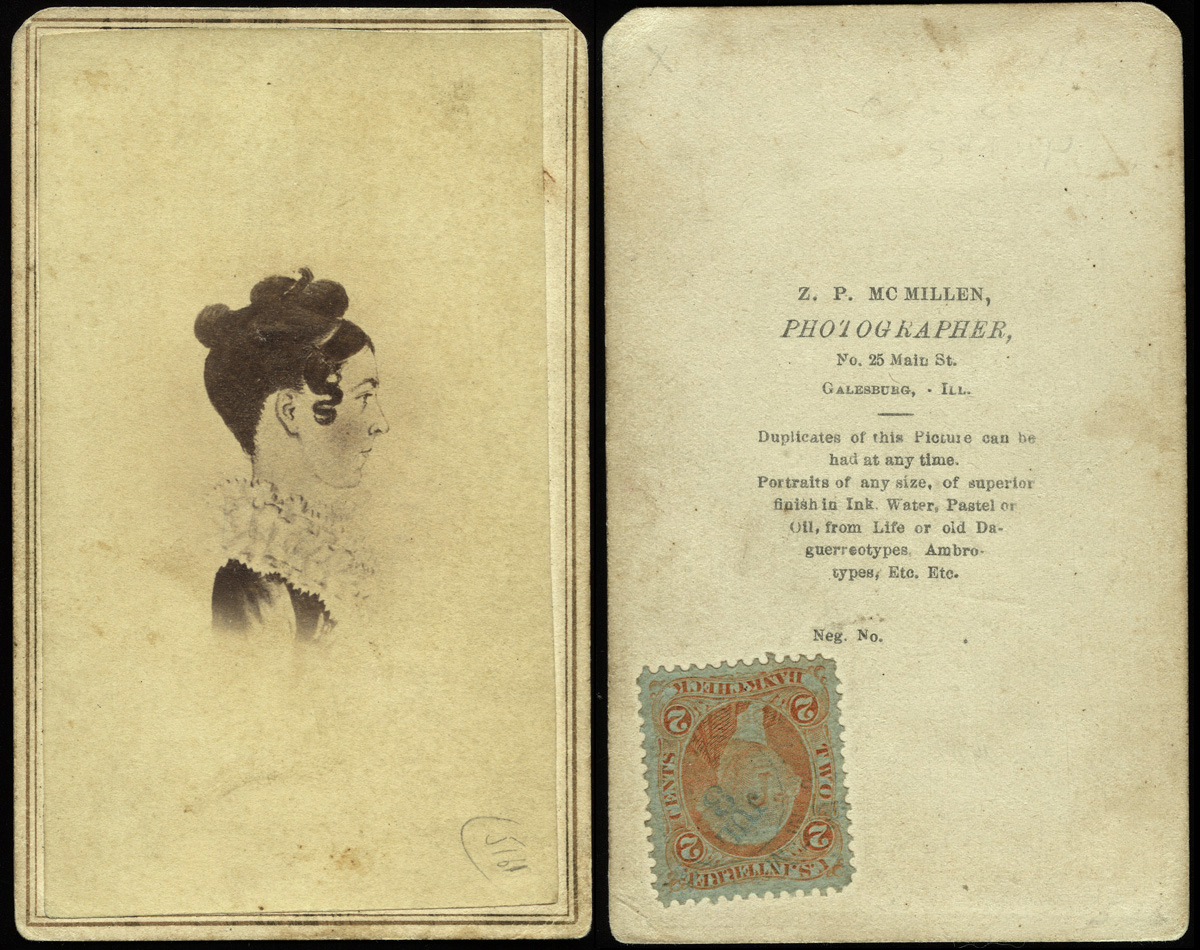
There is currently 1 known example of R6e on CDV (Carte de Visite) and 1 known example of R15e on CDV... both from Illinois photographers.
The R6e (ex-Baryla) is on a CDV from Z. P. McMillen in Galesburg, Illinois. The blue handstamp cancel matches the photographer on the CDV imprint.
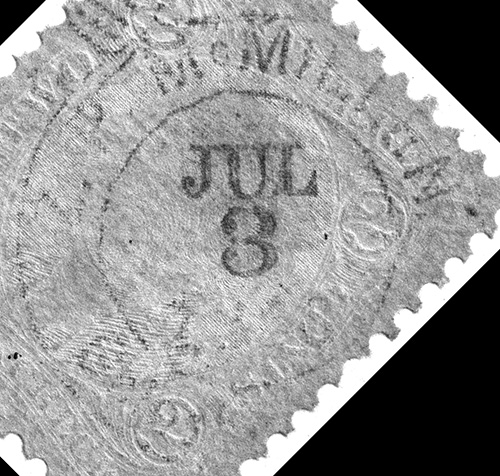
The R15e (APS and Crowe certs) is on a CDV from J. Thurlow in Peoria, Illinois.
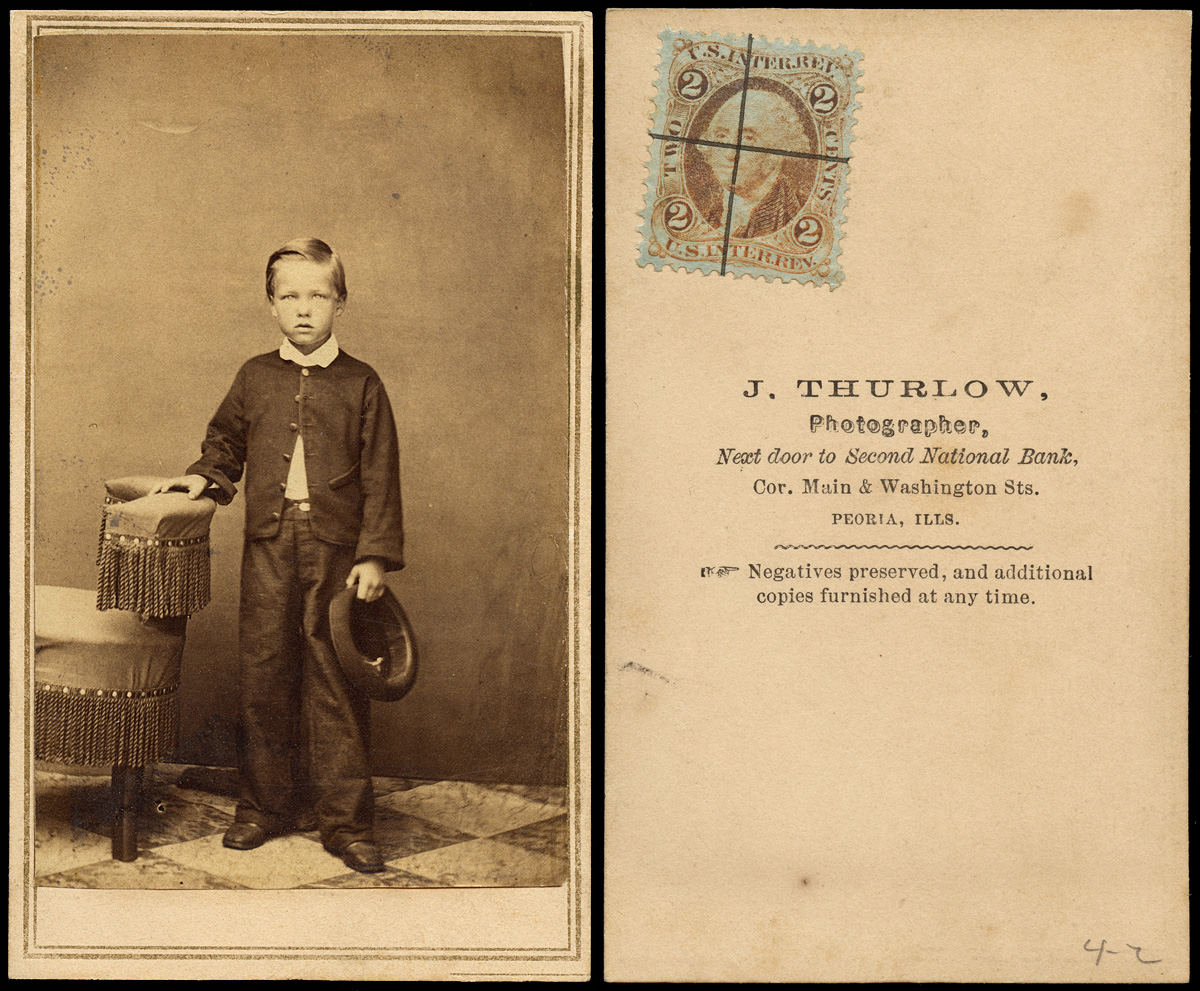
Peoria and Galesburg are only 47 miles apart, so it's not unthinkable that a supply of green papers made it to both towns, if a quantity were sent to the Chicago area.
So where does that leave us and what does it all mean?
I can't draw any conclusions from the dates on the New York and Philadelphia documents or the cancel dates on the individual stamps as to whether one preceded the other, and the Illinois CDVs are undated as to year. The only limiting factor as to the last is that CDVs were only taxed from August 1, 1864 through July 31, 1866, and the end of that window overlaps with the New York and Philadelphia uses of both R6e and R15e.
So it could be that there were batches of the green papers sent to New York, Philadelphia, and Chicago.
Thoughts?





 Posted 10/26/2024 7:29 pm





