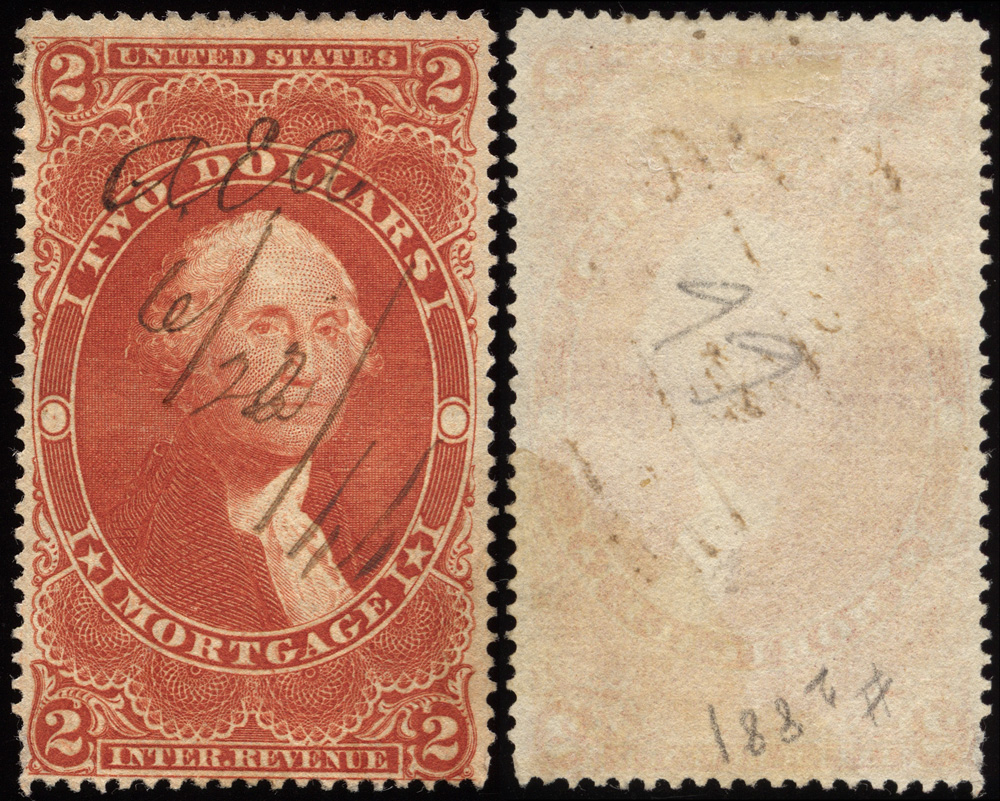
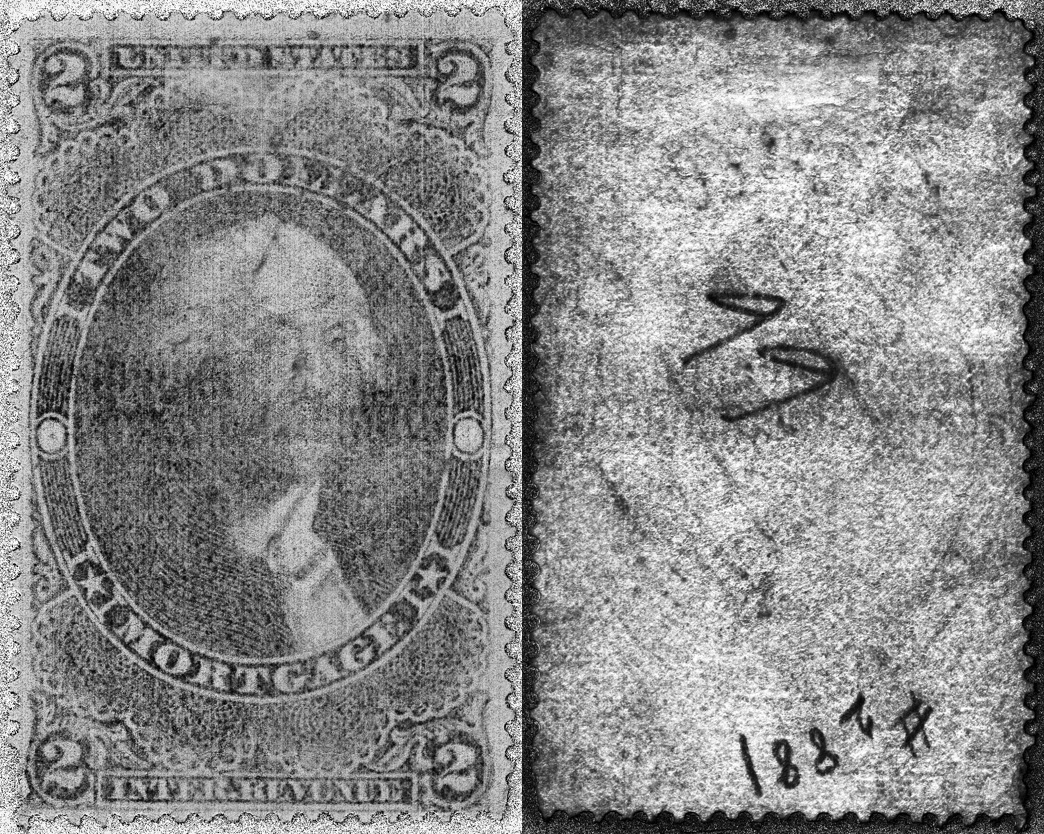
| Author |
 Replies: 24 / Views: 5,838 Replies: 24 / Views: 5,838 |
|
Pillar Of The Community
United States
770 Posts |
|
|
I received an ebay lot this weekend which contained an R27c that has a definite vertical ribbed appearance to the paper. It doesn't look/feel like an emboss an the stamp has a manuscript cancel Dec 16, 1863. It's difficult to scan but you can just make out the vertical pattern here. Any thoughts? 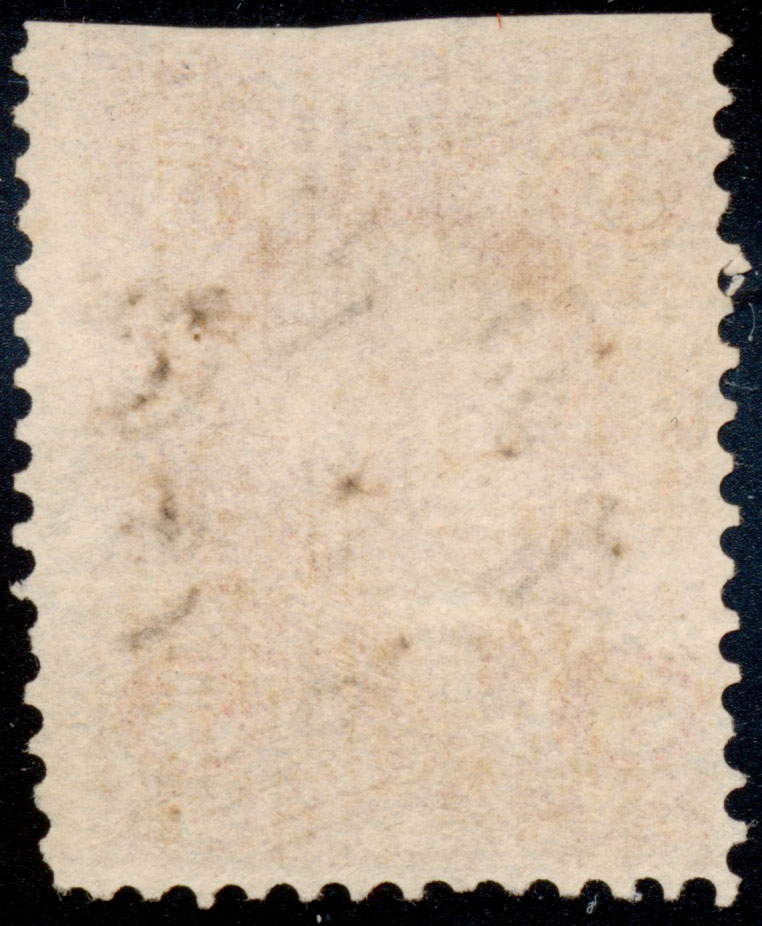 |
|
Send note to Staff
|
|
|
|
|
Pillar Of The Community
United States
770 Posts |
|
|
Rest in Peace
United States
1738 Posts |
|
|
Just a suggestion: I would search ebay in the Stamps section for "laid paper" and arrange the results by lowest price first. Then I would buy the cheapest one that I could get, and then compare them, side by side. Jim |
Send note to Staff 
|
|
|
Pillar Of The Community
United States
3224 Posts |
|
|
Does it look the same from the front? It would be harder to tell. If present, that would rule out a transfer of the pattern from the document paper it was on.
I'm assuming the shot is not from the stamp in fluid. -- how does it look in fluid? Obviously, if the lines disappear in fluid, it's not laid paper.
From the scan, it sure looks like laid paper. |
|
Send note to Staff
|
|
|
Pillar Of The Community
United States
770 Posts |
|
|
thanks for the suggestion H-B. Fully immersed in fluid you can still faintly see the stripes. When you pull the stamp out of the fluid, while it is evaporating, then you can really see the stripes. I have an R18 with a stitch watermark and it looks very similar. The one on the R27 is just much wider. You can't see it from the front. |
|
Send note to Staff
|
|
|
Bedrock Of The Community
United States
10866 Posts |
|
|
This type of stripes do not make it laid paper. Holding it up to the light would show laid lines if it is laid paper. However there is evidence of it being wove paper in the perfs (fibers and extra paper) as well as on the reverse generally. Laid paper is usually a stiff paper made from rags. |
|
Send note to Staff
|
|
|
Pillar Of The Community
United States
2555 Posts |
|
|
I have an R39c which I think is as good an example of laid paper as you will find on the 1861 issue postage stamps. There is a definite group of revenues that were printed on a paper that has to varying degrees, the characteristics of laid paper. Quote:Just a suggestion: I would search ebay in the Stamps section for "laid paper" and arrange the results by lowest price first. Then I would buy the cheapest one that I could get, and then compare them, side by side. While I don't think the OP's stamp appears to be a very good candidate, I am sure he has some clue as to what laid paper looks like. The implication of your suggestion is that all laid paper stamps look the same. Clearly, they do not. Should a litmus test for revenues on laid paper be a favorable comparison to a Russian laid paper stamp? Canadian? A U.S. #65b? Why? A better idea would be to compare them against other revenues without any preconceived notions. |
|
Send note to Staff
|
|
|
Rest in Peace
United States
1738 Posts |
|
|
The problem is: 1) There is no previous documented use of laid paper in the first issue revenues. Nothing in the Boston Revenue book, for example. Nothing in the Springfield list. Nothing in an early Dietz listing. 2) the Philatelic Foundation has never certified as genuine a first issue revenue stamp on laid paper. 3) The Scott Specialized catalog does not list a single variety of first issue revenue stamp on laid paper. 4) If a suspected stamp might be laid paper the best bet is to compare it to other, genuine, inexpensive examples of various varieties of laid paper, from various countries, in various colors, thicknesses, and so on, from various paper manufacturers, over a long period of usage. If you just want to compare it to other revenues on wove paper, that won't help too much. Jim p. s. A stitch watermark looks like this: 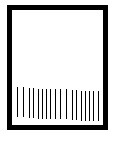 http://www.shaulisstamps.com/tips/Stitch.htm http://www.shaulisstamps.com/tips/Stitch.htm |
|
Send note to Staff
|
| Edited by James Drummond - 06/06/2017 11:28 pm |
|
|
Bedrock Of The Community
United States
10866 Posts |
|
|
All laid paper has certain characteristics when held up to the light, just as all wove paper has. Whatever country produced it. That is the method of telling them apart, looking at the back while holding them up to strong light. |
|
Send note to Staff
|
| Edited by revcollector - 06/06/2017 11:36 pm |
|
|
Rest in Peace
United States
1738 Posts |
|
|
The answer to the question of this topic is, in my opinion, no.
First issue revenue stamps that appear to have been printed on laid paper are the result of that stamp being applied to a document that was printed on laid paper, and, after being compressed against the document for perhaps a century or more, the stamp took on the appearance of the laid lines when it was eventually soaked off.
Jim
|
|
Send note to Staff
|
|
|
Pillar Of The Community
United States
770 Posts |
|
|
I can confirm that the paper appears exactly like most other pre 1869 first issue wove paper in all respects, very thin, hard, slightly transparent. As a graphic designer I'm well aware of the characteristics of laid paper. And yes, it does not have the characteristics of a thick, soft what we traditionally call laid paper. Maybe I should have called it a "ribbed" pattern. I can see Jim's suggestion of the stamp taking on the pattern of a document with a heavy laid or ribbed surface, although there is definitely no emboss to the stamp. A light burnishing between two pieces of paper does not affect the pattern. Maybe some type of chemical reaction over the years produced this. For now i'll set the stamp aside with a ?? |
|
Send note to Staff
|
|
|
Pillar Of The Community
United States
2555 Posts |
|
|
Quote:
If you just want to compare it to other revenues on wove paper, that won't help too much. Don't pretend to not know what I mean. Would you compare your #OX1 on thin paper to a #10A in a thin part India paper, a #17 on very-thin-but-not-part-India, or a #70c in thin paper? Of course not and tell me you would. You would compare it to other #OX1's. Common sense dictates that you compare stamps of the same issue to find outliers. Quote:
First issue revenue stamps that appear to have been printed on laid paper are the result of that stamp being applied to a document that was printed on laid paper, and, after being compressed against the document for perhaps a century or more, the stamp took on the appearance of the laid lines when it was eventually soaked off. Total fiction in what is probably most cases. Elliott Perry had this to say about the paper on which revenues are printed "...Sometimes it has the appearance of laid paper with the lines either horizontal, vertical or diagonal, and this affect is more common on the very thin paper of the early printings. The laid appearance is particularly noticeable when the stamps are wet. The reasonable theory has been accepted by some students that this affect is caused by the stamps having been affixed to documents which were of true laid paper, age and certain amount of pressure acting to transfer the laid effect from the documents to the stamps, but stamps showing the laid characteristics very plainly have been removed from a document printed on perfectly smooth wove paper and the "transfer" theory can hardly be the true explanation..." Quote:
All laid paper has certain characteristics when held up to the light, just as all wove paper has. Whatever country produced it. That is the method of telling them apart, looking at the back while holding them up to strong light. The #24b laid paper stamp is still listed in the Scott catalogue as far as I know. Examples have been certified by both the APS and the PF, despite the great Dr. Chase believing that no 1851 or 57 stamp had ever been printed on "real laid paper", I doubt they would survive your bright light test. I doubt all of the certified laid paper stamps from the 1861 issue would survive either, or at least not pass with flying colors. My point is that your bright shiny light test has not been the standard. |
|
Send note to Staff
|
|
|
Rest in Peace
United States
1738 Posts |
|
|
Not sure what your true agenda is, but, sure, everybody else throughout history is wrong or misinformed, but you're absolutely right. Laid paper for revenues, whatever you'd like to call it.
Best of luck with that endeavour.
Jim
p.s. Though perhaps it might seem like it at this moment, you don't have one chubby nerd to convince on one chat board that you have a legitimate argument; you in fact have an enormous resistive, long-term culture to overpower with your determination that laid paper was used on first issue revenue stamps. Without a single confirmation message of any kind to back that up.
|
|
Send note to Staff
|
| Edited by James Drummond - 06/08/2017 11:38 pm |
|
|
Pillar Of The Community
United States
6469 Posts |
|
|
Bedrock Of The Community
United States
10866 Posts |
|
|
Apparently it has not occurred to some people that every stamp on every document occupies a different place in space-time, and that they are not all subjected to identical circumstances. The fact that stamps do not always meet equal criteria does not prove laid paper exists.
If you are so sure that you have a laid paper first issue then spend the $27 plus postage and send it to the Philatelic Foundation for a cert. I assure you that the people who are there know laid paper when they see it and have the modern technology to prove their findings. |
|
Send note to Staff
|
|
|
Bedrock Of The Community
United States
10866 Posts |
|
|
For some reason stitch watermarks were very popular in the 20's and 30's but fell out of favor afterwards. Of course finding one is totally luck; I don't imagine many collectors sit a dealer table dipping every single first issue they see looking for one. |
|
Send note to Staff
|
|
|
Replies: 24 / Views: 5,838 |
|




 Posted 06/05/2017 11:54 am